News Flash
By Kamal Uddin Chowdhury
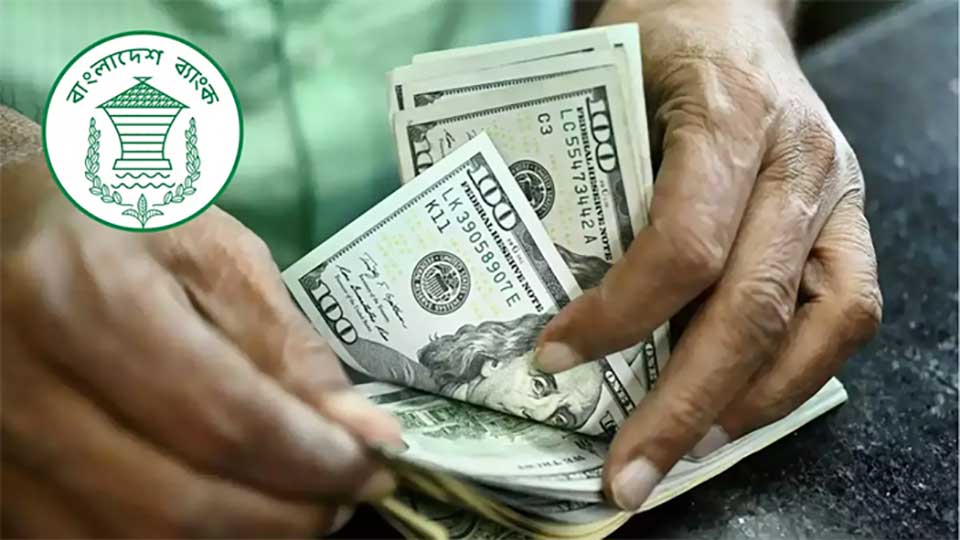
DHAKA, April 22, 2026 (BSS) — Bangladesh is witnessing a steady rise in remittance inflow, offering renewed support to the country’s foreign exchange reserves and overall economic stability, officials and analysts observed.
According to data from Bangladesh Bank, the country has maintained a significant upward trajectory in remittance earnings over the last two fiscal years, achieving historic milestones that have surpassed all previous benchmarks.
During the 2023–24 fiscal year, the nation recorded US$23.9 billion in inflows. Growth accelerated sharply in FY 2024–25, reaching a record high of $30.3 billion, which represented a year-on-year increase of more than 25 percent.
The momentum has continued into the current 2025–26 fiscal year, with the July–March period alone bringing in $26.21 billion, compared to $21.79 billion during the same period in the previous year.
Most recently, data from July through April 20 of FY 2025–26 shows that remittance inflows reached $28,426 million, significantly outpacing the $23,666 million collected during the same timeframe last year.
The central bank has attributed the growth to a combination of incentives, stricter monitoring of informal transfer systems, and the gradual recovery of global labour markets.
Economists noted that remittance earnings remain one of the key pillars of Bangladesh’s economy, alongside exports. The inflow has helped ease pressure on the balance of payments and stabilize the exchange rate amid ongoing global economic uncertainties.
The government has been encouraging migrant workers to send money through official banking channels by offering 2.5 percent cash incentive for sending money through formal channels.
Officials from the Ministry of Expatriates' Welfare and Overseas Employment mentioned that awareness campaigns and digital financial services have also contributed to the increasing trend.
Bangladeshi workers in the Middle East, Europe, and Southeast Asia continue to be the main contributors to remittance inflows. Countries such as Saudi Arabia, the United Arab Emirates, and Malaysia remain among the top sources.
Experts, however, emphasized the need for diversification of overseas job markets and skill development initiatives to sustain long-term growth in remittance earnings.
They also called for further reduction in transaction costs and expansion of mobile financial services to each rural household more effectively.
Renowned economist Dr. Zahid Hussain stated that Bangladesh’s macroeconomic stability has been restored, albeit modestly, and external indicators like the balance of payments and foreign exchange reserves remain in a comfortable position.
He credited the economy's current stability to the adoption of a flexible exchange rate system.
The economist said that the remittance surge played a crucial role in replenishing reserves, noting that issues faced during the dollar crisis—such as difficulty opening letters of credit (LC) for banks—has already become normal.
The economist, however, urged the government to urgently explore alternative overseas labour markets as the ongoing Middle East conflict threatens to disrupt migration and remittance inflows, a key pillar of the country’s economy.
He said Bangladesh’s heavy dependence on Gulf countries for overseas employment has created vulnerability, particularly at a time when geopolitical tensions are affecting labour demand, recruitment processes and worker mobility.
“Any prolonged conflict in the Middle East could significantly affect manpower export and remittance inflow. It is now crucial to diversify labour markets to minimise risks,” he added.
Bangladesh Bank Executive Director and Spokesperson Arif Hussain Khan said remittance inflows to the country remain stable despite ongoing tensions in the Middle East, although the situation is being closely monitored due to Bangladesh’s heavy reliance on migrant workers in the region.
“Remittance inflow has shown a positive trend in recent months, which is helping stabilise the foreign exchange market,” he said.
“Remitters now feel encouraged to send their money through formal banking channels instead of the illegal ‘Hundi’ system, which can help boost the country's foreign exchange reserves,” he added.
Foreign exchange reserves, according to Bangladesh Bank data released on April 16, currently stand at US$ 35.04 billion.
However, when calculated using the International Monetary Fund (IMF) methodology under the Balance of Payments and International investment position Manual (BPM6), the reserves total 30.37 billion.
Deputy Managing Director (DMD) of the Dutch-Bangla Bank Limited, Mohammed Shahid Ullah confirmed that demands for ‘Hundi’ and ‘Hawala’—illegal cross-border money transfer channels—have declined following a crackdown on operators after the political changeover, diverting more remittances through formal banking channels.
He added that the positive effects of the remittance boom are highly visible across Bangladesh, particularly in rural communities that rely heavily on money sent from relatives working abroad.
He noted that remittances have consistently increased since August 2024, providing the interim government with a respite following the rapid depletion of foreign exchange reserves.
Mohammed Shahid Ullah, however, noted that remittance enhances financial inclusion by encouraging recipients to engage with formal banking systems.
“It also supports domestic investment through increased savings and liquidity in the financial sector. In times of global economic stress, remittance has proven more stable compared to foreign direct investment or portfolio flows, thus acting as a buffer against external shock,” he added.
Despite progress, he mentioned, there remains substantial scope for further improvement.
“Reducing transaction costs and ensuring near real-time fund transfers (T+0 settlement) would make formal channels more competitive. Expanding banking access in rural areas and strengthening partnerships with international money transfer operators can further streamline inflows,” he added.
He described that remittance is not merely a financial inflow; it is the lifeblood of Bangladesh’s socio-economic progress.
“It strengthens macroeconomic stability, uplifts millions of households, and fuels sustainable development. While the country has made commendable strides in increasing remittance through formal channels, sustained policy innovation, technological advancement, and global labour market integration will be key to unlocking its full potential in the years ahead,” he added.