News Flash
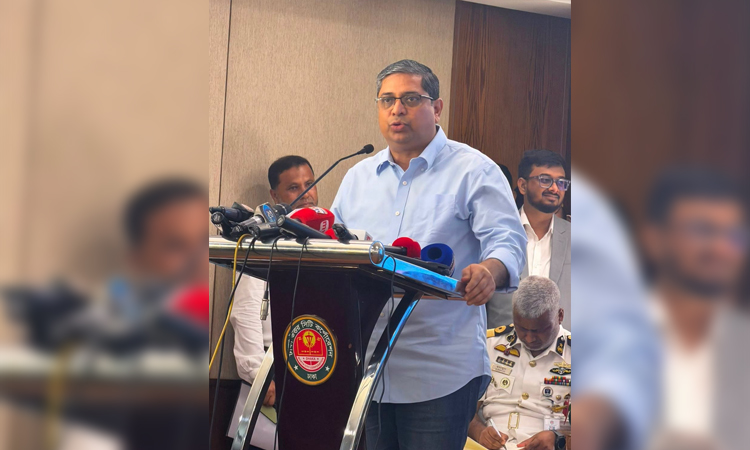
DHAKA, July 15, 2026 (BSS) - State Minister for Local Government, Rural Development (LGRD) and Cooperatives Mir Shahe Alam has stressed the need to introduce an integrated "City Government" system to improve the urban management.
The lack of coordination among various agencies and service providers is the main obstacle to effective urban management in the capital, he said while addressing a seminar titled "Urban Waste Management: A Shared Responsibility" organized by the Dhaka North City Corporation (DNCC) as the chief guest.
The state minister said the city corporations are often held responsible for all urban problems despite having no authority over the key agencies such as the traffic police, WASA, RAJUK and the power distribution authorities.
"If these institutions are brought under a unified City Government framework, it may not solve every problem, but it could resolve 50 to 70 percent of the city's challenges," he said.
He noted that inter-ministerial coordination meetings are currently required to address many of Dhaka's urban issues because city corporations cannot compel all relevant agencies to participate in joint planning and implementation.
The state minister said the Prime Minister remains deeply committed to improving urban management, cleanliness, greening initiatives, restoration of canals and lakes and waste management.
Highlighting the importance of public participation, Mir Shahe Alam said the government initiatives are insufficient to build a clean city.
"Many people still litter despite the availability of dustbins. This long-standing habit must change. Awareness about cleanliness should be promoted through families, educational institutions and society," he said.
He announced that primary school textbooks from next year will include lessons on cleanliness, waste management, environmental conservation, ethics and social responsibility.
The state minister said the government is implementing several waste-to-energy projects to provide a long-term solution to the waste management.
Under an agreement with a Chinese company, the Aminbazar landfill project aims to supply 43 megawatts of electricity to the national grid by July-August in 2028. The project, which had remained stalled for three years, has resumed following the Prime Minister's intervention.
He said more than 12 million tons of wastes have accumulated at the Aminbazar landfill, prompting the government to undertake special measures for its management.
Mir Shahe Alam also said a memorandum of understanding (MoU) has been signed with a South Korean company to develop the Dhaka South City Corporation landfill. The company will finance the project independently to generate electricity, organic fertilizer, fish and poultry feed, fuel oil from plastic waste and construction materials.
He said the government will not invest in the project. Instead, the company will pay land rent and compensate the city corporation at a rate of 10 paisa per kilogram of waste used.
An inter-ministerial meeting led by the Local Government Division secretary will be held tomorrow (Thursday) to review the project's progress, while a presentation will be prepared within the next 10 days in line with the Prime Minister's directive, he added.
The state minister said untreated sewage flowing directly into lakes is a major source of pollution in Gulshan, Banani, Baridhara and Hatirjheel.
Although the Dasherkandi Sewage Treatment Plant (STP) is the country's largest sewage treatment facility, only about 30 percent of its capacity is currently being utilized due to inadequate sewerage connections.
He said a Development Project Proposal (DPP) has already been submitted to the Planning Commission to connect the sewerage networks of Gulshan, Banani, Baridhara and Hatirjheel with the Dasherkandi STP. Once implemented, the project is expected to significantly increase the plant's utilization and reduce pollution in canals and lakes.
Shahe Alam also encouraged apartment buildings to install small-scale sewage treatment plants, allowing treated water to be reused for gardening, vehicle washing and other purposes.
To resolve overlapping jurisdiction among different agencies, he said Dhanmondi Lake has been handed over to Dhaka South City Corporation for 50 years under the Prime Minister's directive. Excavation, beautification, lighting and public infrastructure development are currently underway there, while restoration work is also continuing at Hatirjheel, Gulshan, Banani and Baridhara lakes.
Expressing regret over the recent water logging in the capital, the state minister said heavy rainfall and the drains clogged with waste had hampered water drainage. City corporation workers are working to remove the water as quickly as possible.
"Transforming this unplanned metropolis into a planned and livable city will take time. The government is fully committed, but success will not be possible without the cooperation of citizens," he said.
He urged the residents to refrain from littering and to actively participate in maintaining cleanliness and proper waste management, saying a cleaner, safer and more livable city can only be achieved through joint efforts by the government and the public.
Minister of State for Youth and Sports Md. Aminul Haque also attended the seminar as a special guest. The event was chaired by DNCC Administrator Md. Shafiqul Islam Khan.