News Flash
By S M Zahid Hossain
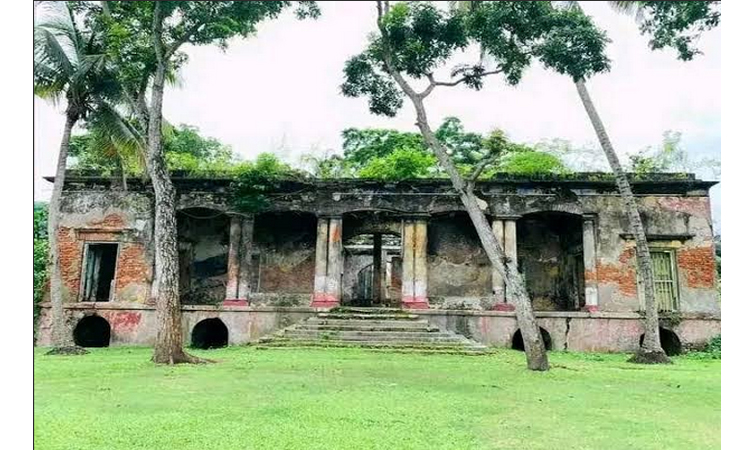
KHULNA, Jan 23, 2026 (BSS) - The historic 'Kuthi Bari' in Morrelganj, Bagerhat, built by Robert Morrel of the British East India Company, is on the verge of destruction due to river erosion and illegal encroachment.
The centuries-old structure, which reflects the harsh history of indigo cultivation and colonial oppression, has suffered severe damage from neglect.
Recently, the Department of Archaeology officially listed the Kuthi Bari as a protected archaeological site and announced that preservation work will begin soon.
Historical records indicate that after Robert Morrel's death in 1849, his wife settled on the western bank of the Panguchi River with their two sons and started indigo cultivation under the Sundarbans settlement system.
At that time, Bagerhat was not yet a subdivision, and Khulna was part of Jashore district. Using laborers from Barishal, the family cleared forestland and built the sprawling Kuthi Bari complex.
Following the suppression of the 1857 Sepoy Mutiny, the British strengthened control in the region through Kuthi-based administrative structures, with the Morrel residence serving as a key example.
The Kuthi Bari included stables, entertainment halls, warehouses, torture chambers, quarters for armed guards, court offices, detention rooms, and storage for agricultural equipment, all surrounded by a high wall to protect against wild animals, including tigers.
Robert Morrel, recorded as "Captain Robert Morrel of the 2nd Edmonton Royal Middlesex Militia Rifle Regiment," oversaw the area. According to historian Satish Chandra Mitra, the Morrel family also established coconut and betel nut plantations and a marketplace on the eastern bank of the Panguchi River.
The market grew into Morrelganj, later declared a port by the British and nicknamed "Little Calcutta" for its commercial activity, though river sedimentation eventually led to its closure.
The Morrel family was notorious for oppressing local farmers, including a violent conflict with Rahimullah, son of farmer leader Jahangir from Baroikhali village, over land rent in 1861.
Rahimullah initially resisted by sending a wooden box containing torn women's shoes as a protest. Subsequent armed clashes led to his death, prompting an investigation by local magistrate and writer Bankim Chandra Chattopadhyay. By 1878, the Morrel family had withdrawn from Morrelganj, ending their rule.
Local residents claim that valuable architectural elements of the Kuthi Bari, including doors, windows, iron grills, chests, and staircases, have been looted. River erosion has washed away parts of the land, while other portions have been allegedly encroached.
Villagers Mohiuddin Ahmed, Sabbir Ali, Shahid Gazi, and Nuru Mia told BSS that a higher secondary school was built on encroached Kuthi Bari land, with ownership records reportedly manipulated. Elderly resident Rabiul Islam said the historic structure is now on the brink of collapse.
Morrelganj Upazila Nirbahi Officer Habibullah said the Department of Archaeology is aware of the situation and responsible for preserving the site.
Khulna Field Officer of the Department of Archaeology, Mosammat Irene Parvin confirmed that the Kuthi Bari has been officially listed as a protected archaeological monument and that preservation work will begin soon.
However, she warned that restoring the original land area and safeguarding the site without riverbank protection along the Panguchi River would be challenging due to limited resources and manpower.