News Flash
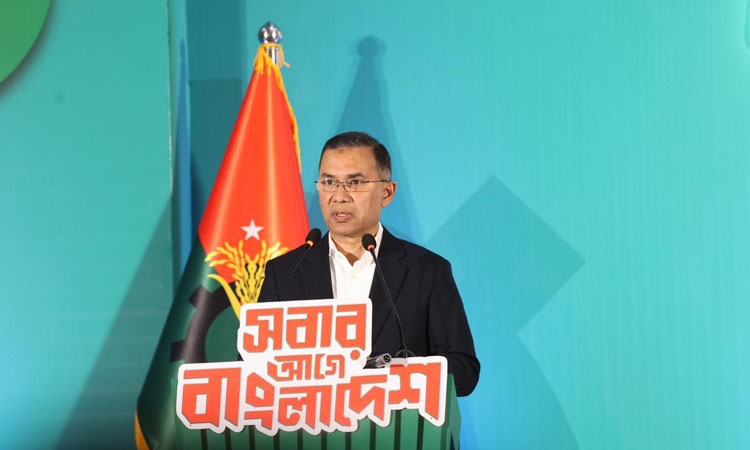
DHAKA, Feb 6, 2026 (BSS) - Bangladesh Nationalist Party (BNP) has declared a policy of "zero tolerance" against corruption as the party announced its election manifesto ahead of the upcoming 13th parliamentary elections.
Party Chairman Tarique Rahman made this firm commitment while formally unveiling the party's election manifesto at a city hotel this afternoon while BNP Secretary General Mirza Fakhrul Islam Alamgir chaired the event.
BNP said if it comes to state power, it will not make any kind of compromise with corruption and will undertake far-reaching reform measures to ensure transparency and accountability.
The manifesto stated that BNP believes good governance is the foundation of development. The rule of law and accountability will be ensured at all levels of the state, and the foundation of governance and the judiciary will be justice.
A merit-based, transparent, efficient and people-friendly public administration will be built across all state institutions. Alongside curbing corruption and money laundering, ensuring independence of judiciary and speedy justice, BNP's core philosophy of good governance includes establishing the fundamental ideals of the great Liberation War-equality, human dignity and social justice. Combating corruption and maintaining law and order will be the top priorities.
The manifesto further mentioned that due to BNP's far-reaching measures in the past, Bangladesh was freed from the stigma of being labeled the world's most corrupt country.
It noted that when BNP assumed office in 2001, Bangladesh was branded a "champion" in corruption, but as a result of the BNP government's strict anti-corruption measures, the country came out from that disgrace. Bangladesh had long been free of the label of corruption champion and had gained recognition globally as an "emerging tiger" by the time BNP left state power in October 2006.
Continuing in that spirit, the manifesto reiterates that BNP will not compromise with corruption. To rein in corruption that has spread like cancer across all levels of society, systemic and legal reforms will be undertaken alongside measures to ensure transparency and accountability.
Open tendering, real-time audits, performance audits of government expenditures and projects, and the implementation of a single-window clearance system will be ensured, the manifesto said.
Necessary initiatives will be taken to prevent money laundering and to bring back laundered funds accumulated during the fascist period.
The manifesto asserts that no form of rule by "black laws" or unlawful repression in the name of the rule of law will be acceptable.
It stated that the Special Powers Act of 1974 will be repealed. Justice will be ensured for crimes against humanity committed during the fascist era, including the July-August 2024 mass uprising. Legal measures in line with international standards will be taken to prevent enforced disappearances.
Transparent government recruitment processes will be ensured to build a meritocratic Bangladesh.
It also pledged the formation of commissions for administrative bodies, strengthening the Public Service Commission (PSC), and establishing a public administration that is accountable and free from politicization.
Full independence of the judiciary will be ensured. Access to speedy, harassment-free justice and modernization of judicial services will be achieved.
A law on the appointment of judges will be enacted and a Judicial Commission will be formed, while maintaining continuity of the Supreme Judicial Council.
At the same time, the police will be developed as a people-friendly, service-oriented force. Steps will be taken to rebuild police morale, expand online complaint filing systems, and review the Police Commission Act.