News Flash
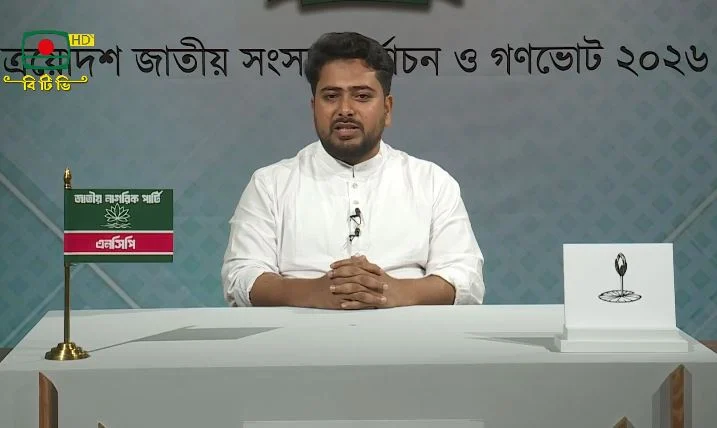
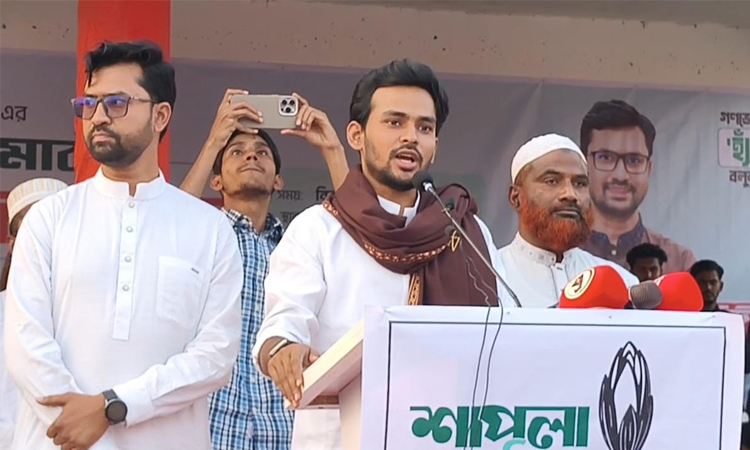
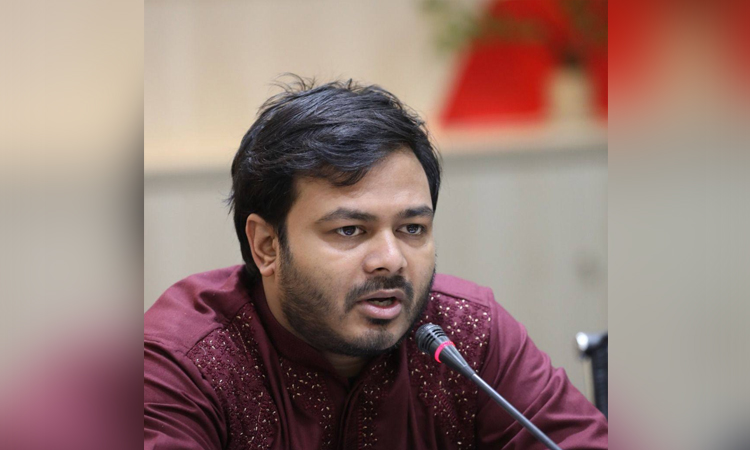
DHAKA, Feb 8, 2026 (BSS) - National Citizen Party (NCP) Convener Nahid Islam has pledged to establish a fair and transparent market system to bring relief to citizens struggling with soaring commodity prices, declaring that stabilizing the essentials market will be one of his government's top priorities if elected.
Nahid sharply criticized past governments for failing to control spiraling costs of daily necessities and accused a corrupt nexus of businessmen, politicians, and bureaucrats of manipulating the market for personal gain.
"A welfare-oriented state has the responsibility to ensure that every citizen can purchase essential goods at fair prices," Nahid, also former adviser to the Interim government, told the address broadcasted by Bangladesh Television (BTV) this evening.
Islam, who was a key coordinator of Anti-Discrimination Student Movement that toppled Sheikh Hasina in 2024, said, "When people are struggling under the weight of uncontrolled prices, the government's role must be to actively restore discipline in the market."
He noted that Bangladesh consistently records the highest commodity prices among South Asian countries, attributing this to "a corrupt syndicate of businessmen, politicians, and bureaucrats who control the market and pocket enormous profits."
Nahid vowed to dismantle these syndicates and bring offenders to justice. "Artificial crises created by unscrupulous groups will not be tolerated. We will enact laws to break these syndicates and ensure swift trials. Those proven guilty of manipulating markets, hoarding illegally, or engaging in price-fixing will face strict punishment," he said.
He emphasized that farmers and wholesale traders must be able to sell their produce without extortion or illegal levies. "We will ensure that farmers can sell their crops without paying bribes or tolls, and that wholesalers are not forced to give a single extra taka to anyone. Only then can fair prices for agricultural products be guaranteed," he said.
Islam acknowledged the burden borne by ordinary citizens due to extortion and middlemen. "Because of extortionists and intermediaries, people across the country are forced to pay unjustified prices," he said.
To counter this, he pledged to expand the government's Open Market Sale (OMS) program. "We will broaden OMS so that low- and middle-income families can easily purchase goods at affordable prices," he said.
Nahid also addressed the risks of overdependence on a single neighboring country for imports. "We will reduce reliance on one large neighbor and diversify our sources of imports. No one should be able to hold us hostage by restricting supplies," he said.
To increase competition, Islam promised to support new entrepreneurs with loans and government backing. "We will identify new business entrepreneurs and provide them with accessible credit and state support," he said.
He also pledged to modernize supply chains and storage facilities. "Cold storage will be built for perishable goods, digital systems will be introduced for market management, and transport costs will be made fair through effective measures," he said.
Seasonal products, he added, would be managed through advance government planning. "We will purchase and store seasonal goods in advance to stabilize markets," he added.
Summarizing his economic vision, Nahid said: "Our goal is clear-a fair, transparent, and people-friendly market system." He argued that stabilizing commodity prices is not just an economic necessity but a moral responsibility.
"When citizens cannot afford basic goods, governance itself loses legitimacy. We will restore confidence by ensuring that markets serve the people, not exploit them," he said.
While commodity prices were the centerpiece of his remarks, Islam's speech also touched on broader themes of governance, accountability, and unity.
He accused past governments of perpetuating inequality and pledged to build a welfare-oriented state. "Education, pensions, healthcare-these are rights, not favors," he said.
He promised to root out corruption, decentralize development, and empower local communities. "Development cannot be dictated from the capital alone. Local communities must have a voice in shaping their future," he argued.
Unity was another recurring theme. "We must heal the wounds of division. Our strength lies in unity, not exclusion," he said. "No one should feel like a second-class citizen in their own country."