News Flash
By Ridwan Ahmed
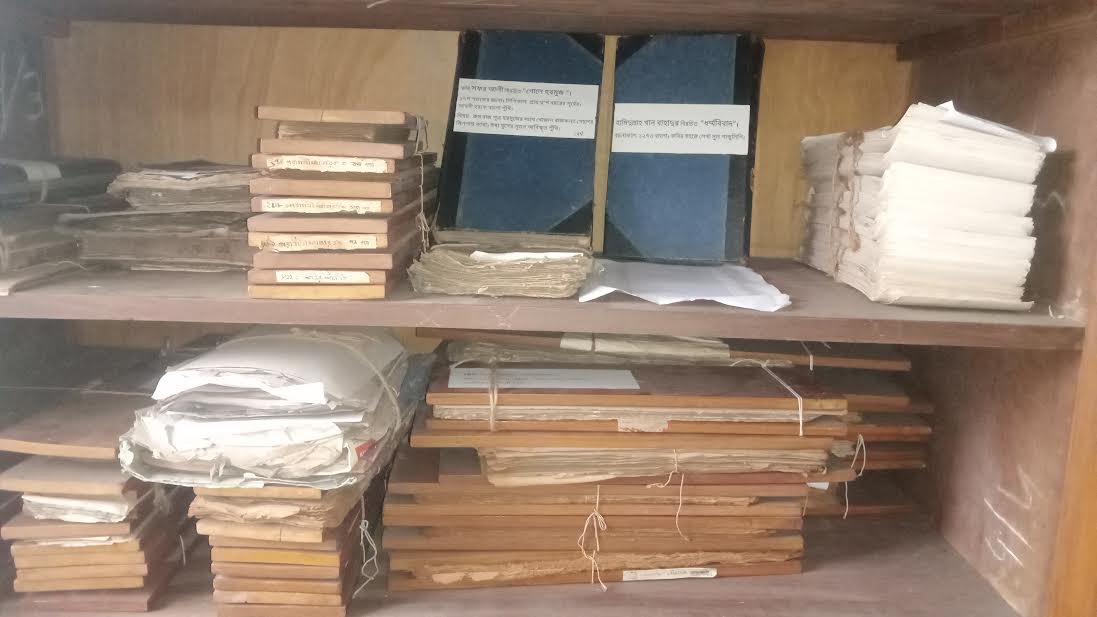
CHITTAGONG UNIVERSITY, April 30, 2026 (BSS) - A vast and invaluable collection of rare Bangla puthis preserved at Chittagong University (CU) Library remains largely unexplored, raising concerns among academics over neglect of a significant part of the country's literary and cultural heritage.
The Rare Section of the CU Library houses 166 Bangla puthis, many dating back three to four centuries. Written on palm leaves and traditional handmade tulot paper, these manuscripts reflect the evolution of Bangla language, literature and socio-cultural life over centuries.
The repository was established by noted collector Abdus Sattar Chowdhury during his tenure at the university. It includes several unique manuscripts unavailable elsewhere in Bangladesh. Among them is a complete copy of "Gol-E Hormuz," a medieval romance composed by poet Sofor Ali between the 17th and early 18th centuries.
Another key manuscript, "Bijoy Hamza" by 18th-century poet Khan Goyas, is believed to be the only copy in the country. Discovered by Abdus Sattar Chowdhury and transcribed by Madhuram, the text narrates the heroic exploits of Hazrat Amir Hamza (RA).
The collection also features "Dhormobibad" by poet Hamidullah Khan, recovered by litterateur Mahbubul Alam with assistance from Chowdhury. Other works by 19th-century poet Abdul Jalil-"Jahagir Charit O Baromasee," "Jarigan," and "Muneyabader Itibritta"-are also preserved.
Newly identified manuscripts include "Moniul Bedayat" by Jinnat Ali, "Gyantrisha" by Ejahar, "Nabi Bongsher Itibritta" by Syed Abul Khayer Mohammad Samsher, "Alep Layla" by Amin Ullah, "Mokam Manjiler Kotha" by Badiuddin, "Horogourir Puthi" by Syed Gazi and "Kaimul Islam" by Aminuddin.
The archive contains the only surviving copy of "Gyan Prodip," a 17th-century yoga-based manuscript by Sheikh Chand. Other notable works include "Padmapuran" by Narayan Dev, "Rahunama" by Syed Nuruddin and "Shariyatnama" by Khandakar Nasrullah Khan, offering insights into religious, literary and social traditions.
A rare 1867 manuscript of Alaol's "Padmabati" is preserved in full at the library. The collection also includes a 200-year-old "Manasamangal" manuscript and a rare copy of "Gangabhakti Tarangini," written by Durgaprasad in 1776.
Among other significant items is a complete manuscript of "Jagannath Bijoy" by Dwij Mukunda dated 1804, along with several volumes of Krittibas' "Ramayan," including a transcription by Gokul more than 225 years old. A large portion of Kashiram Das's "Mahabharata," around two centuries old, is also held in the archive.
An incomplete manuscript of "Laili Majnu" by Daulat Uzir Bahram Khan, likely transcribed in the late 18th or early 19th century, is also part of the collection. Additional works include "Sardamangal" by Dwij Madhab (1832) and a rare complete "Shonir Panchali" by Jadunath.
The repository further preserves "Sudam Mangal" by Bipra Parashuram and 57 Baromasi poems, along with verses by Alaol, Samsher, Shahadullah and Boksha Ali. In total, the collection includes 242 printed puthis published between 1839 and 1969, alongside manuscripts in Arabic, Persian, Sanskrit, Urdu and Burmese.
Experts believe this diverse archive holds immense potential for research in language, literature and cultural history.
Beyond the main library, the Abdul Karim Shahityavisharad Reference Library at the CU Museum holds an additional 15 to 20 manuscripts. These include "Kissaye Jaigun" by Moinuddin, "Sob Chanir Panchali" by Kalidas Chakraborty, "Nosiyatnama" by Shri Asd Ali and "Shahanshahnama" by Mirza Kasem, dating back to the 18th century.
Other preserved works include Urdu, Persian and Bangla texts such as "Kissaye Benazir" by Shaikh Hasan Ali, "Masnavi Sharif" by Maulana Jalaluddin Rumi and "Bosta" by Sheikh Saadi. The museum also holds 91 printed puthis from the 19th and 20th centuries.
Despite its richness, the collection remains largely neglected. Library officials say very few researchers or readers visit the section, leaving many manuscripts vulnerable to decay, insect damage and fading.
Assistant Registrar of the Rare Section Ali Azgar said no researcher has visited the section in the past decade. "Even 10 to 12 years ago, researchers from abroad used to come. This collection is extremely valuable, but it remains underutilized due to lack of research interest," he said.
Professor Dr Mohammad Anwarul Islam of the History Department highlighted the importance of puthi literature as a historical source.
He noted that accounts of events such as Sultan Nusrat Shah's conquest of Tripura and Alauddin Hussain Shah's campaign in Chattogram are derived from such manuscripts.
Acting Librarian Professor Dr Md Alamgir said efforts are underway to digitize the collection using modern scanners. He emphasized that preservation is critical, warning that once lost, these manuscripts cannot be recovered.
Chittagong University established its Manuscripts and Rare Collection Section in 1972, following its founding in 1966. The initiative was supported by noted scholars Syed Ali Ahsan, Dr Abdul Karim and Dr Anisuzzaman, and was developed under the supervision of Abdus Sattar Chowdhury, who served until his death in 1982.