News Flash
DHAKA, May 16, 2026 (BSS) – The latest Bangladesh Multiple Indicator Cluster Survey (MICS) 2025 has revealed a mixed picture of progress and growing challenges for women and children, highlighting gains in child survival and maternal healthcare while warning of rising malnutrition, environmental hazards and declining social protection.
The survey, implemented by the Bangladesh Bureau of Statistics in collaboration with UNICEF, presents what UNICEF described as a “mirror” of the country’s current realities for children and families.
“Reliable data are far more than numbers on a page, they tell us a story, the story of children, families, and communities across Bangladesh,” said UNICEF Representative to Bangladesh Rana Flowers.
One of the key findings of the survey is the continued decline in under-five mortality. The rate dropped to 33 deaths per 1,000 live births from 40 in 2019.
However, the report identified the neonatal period as a major concern, noting that roughly three-quarters of infant deaths still occur within the first month of life.
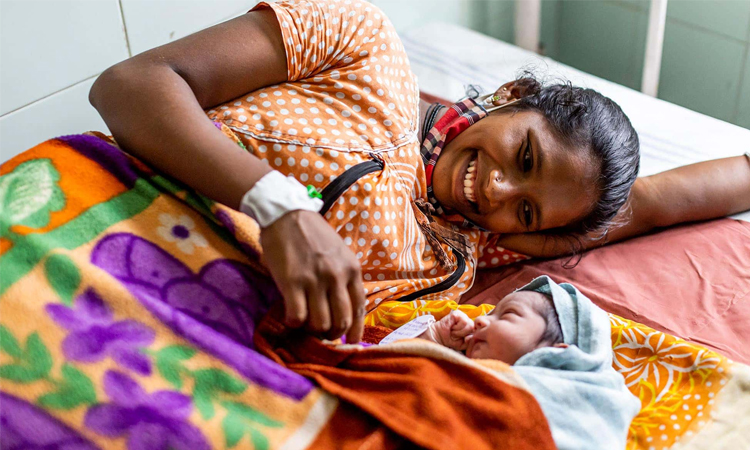
The survey also recorded major progress in maternal healthcare services. According to the findings, 89.7 percent of women now receive at least one antenatal care contact from skilled personnel, while 71 percent of births take place in health facilities.
At the same time, the report raised concerns over what it termed the “over-medicalization” of childbirth. The national caesarean section rate rose to 51.8 percent, with the rate climbing to 56 percent in urban areas.
The report warned that high caesarean rates place pressure on both family finances and the national health system, calling for the “right care at the right time”.
The nutrition situation among children presents another area of concern. While stunting, a sign of chronic malnutrition, continued its long-term decline and now stands at 24 percent, wasting or acute malnutrition increased sharply.
The wasting rate rose from 9.8 percent in 2019 to 12.9 percent in 2025, which the report linked to recent price shocks and seasonal vulnerabilities.
The survey also found that only 30 percent of children aged between six and 23 months receive a minimum acceptable diet. The report noted that poor nutrition is not only linked to economic hardship but also to lack of awareness regarding diverse diets, even among wealthy households.
In a first for national biomarker surveillance, MICS 2025 identified lead exposure as a major environmental hazard.
According to the findings, 38.3 percent of children aged 12-59 months and 7.5 percent of pregnant women have elevated blood lead levels. The report further found that lead exposure frequently overlaps with anaemia, which affects 43.9 percent of children and 53.1 percent of pregnant women.
Although 98.6 percent of the population has access to basic drinking water, the survey identified concerns regarding water safety and hygiene. E. coli contamination was found in 47.1 percent of source water and 84.9 percent of water stored at the household level.
The availability of hand washing facilities with soap and water also declined to 68.6 percent since 2019, according to the report.
The findings additionally highlighted concerns regarding child protection and adolescent wellbeing. While the child marriage rate among women aged 20-24 declined slightly to 47.2 percent, the proportion of currently married adolescent girls aged 15-19 increased to 38.9 percent.
Child labour also increased, affecting 9.2 percent of children aged between five and 17 years. The report described the decline in social safety net coverage as one of the most serious concerns identified in the survey.
The percentage of household members receiving social transfers dropped from 58.1 percent in 2019 to 34.4 percent in 2025.
According to the report, this decline weakens an important protection mechanism for children against economic shocks and increases the risk of setbacks in nutrition and education.
The findings of MICS 2025 called for urgent and targeted measures, including restoring child-focused social protection, reducing unnecessary caesarean procedures and integrating lead exposure responses with nutrition and anaemia services.
“Data alone cannot change lives... Let us use these findings boldly to shape smarter policies,” Rana Flowers said.