News Flash
By Mah Alam
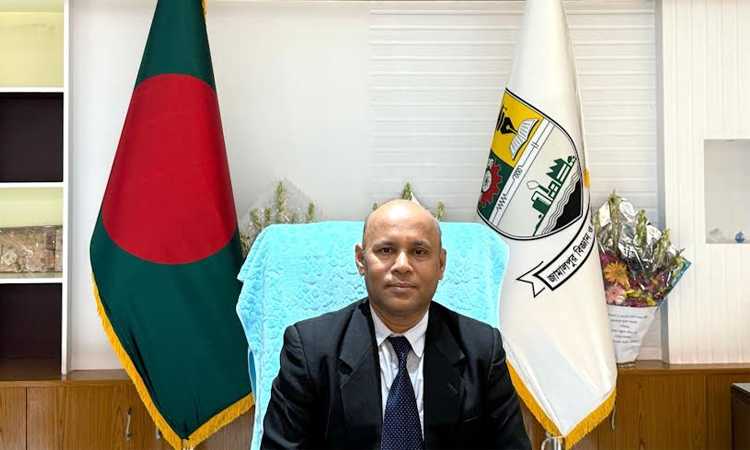
JAHANGIRNAGAR UNIVERSITY, June 4, 2026 (BSS) - Jamalpur Science and Technology University (JSTU) Vice-Chancellor and environmental scientist Dr Amir Hossain Bhuiyan has called for urgent and coordinated action to protect the country's rivers, wetlands and forests, warning that continued environmental degradation is posing serious threats to biodiversity and ecological balance.
He made the remarks in an interview with Bangladesh Sangbad Sangstha (BSS) ahead of World Environment Day to be observed tomorrow.
The expert said Bangladesh has adequate environmental laws, but weak enforcement and lack of public awareness remain the biggest challenges in ensuring environmental protection.
"Rapid population growth, unplanned urbanisation and excessive pressure on natural resources are continuously degrading ecosystems and increasing environmental risks," said Prof Amir.
He observed that climate change, once considered a distant concern, has now become a reality for Bangladesh, with its impacts being felt more severely due to the country's geographical location.
"Nature is responding to the pressure we are putting on it, and we are already witnessing the consequences through natural disasters, biodiversity loss and environmental degradation," he said.
Highlighting major environmental challenges, the scientist identified deforestation, encroachment of rivers and wetlands, destruction of natural habitats and inadequate environmental education as key threats to biodiversity conservation.
He stressed that biodiversity conservation requires proper mapping, scientific research and effective protection measures, which remain insufficient in Bangladesh.
Dr Bhuiyan said the Department of Environment plays a crucial role in environmental protection but continues to suffer from manpower shortages and weak enforcement capacity.
"Although Bangladesh has environmental laws, including the Environment Conservation Act, their implementation at the field level remains inadequate," he added.
He called for strengthening the department through recruitment of skilled and trained professionals capable of addressing emerging environmental challenges.
In his message marking World Environment Day, Dr Bhuiyan called upon citizens to plant trees, segregate and recycle waste, and adopt environmentally friendly practices in their daily lives.
"If every individual contributes from their respective position, we can build a sustainable, healthy and beautiful environment for future generations," he said.