News Flash
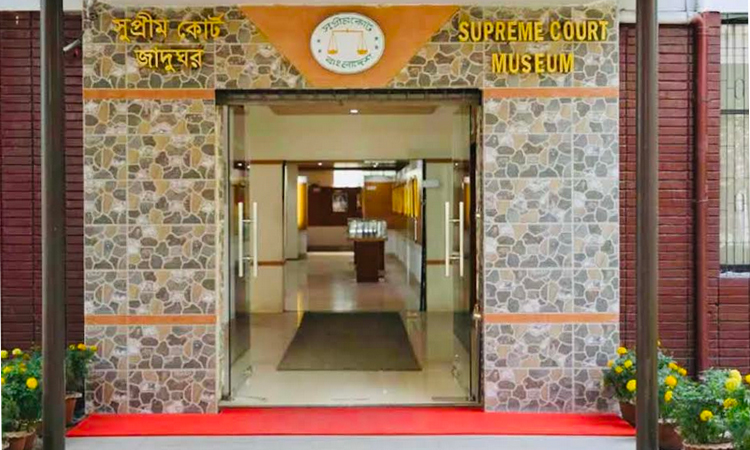
DHAKA, June 09, 2026 (BSS) - A rare verdict written on a palm leaf in 1710 stands as one of the most remarkable attractions of the Supreme Court (SC) Museum, which preserves important documents, historic verdicts, artefacts, and photographs reflecting the country's judicial heritage.
Located within the Supreme Court premises, the museum has emerged as a point of interest for lawyers, litigants, researchers and visitors seeking to learn about the evolution of Bangladesh's judiciary.
The museum offers a chronological presentation of the development of the judicial system, bringing together significant records and memorabilia from different periods. Among its collections are important judicial documents from before and after independence, items once used in courtrooms, photographs of former chief justices, copies of historic verdicts and visual depictions of the judiciary's journey over the years.
One of the museum's most notable exhibits is the rare verdict written on a palm leaf in 1710. The document was sent from the record room of the Barishal District and Sessions Judge Court to the Patuakhali District and Sessions Judge Court. It was later collected from the record room of the Patuakhali District and Sessions Judge Court and preserved at the Supreme Court Museum.
The museum also houses a handwritten copy of Bangladesh's original Constitution and the verdict of the historic Bhawal Sannyasi case. Wall clocks from the then Calcutta High Court and Dhaka High Court are among other notable exhibits on display.
Visitors can also view inkpots, pens, bands, gowns and wigs once used by judges, offering a glimpse into the traditions and practices associated with the judiciary.
A significant section of the museum is dedicated to personal items used by former chief justices and distinguished judges, including gowns, pens, files, spectacles and furniture. These preserved belongings reflect the heritage and prestige of the country's judicial institutions.
Photographs depicting court buildings from different periods, judges' oath-taking ceremonies and historic judicial proceedings further enrich the museum's collection and provide visitors with an insight into the history of the judiciary.
Supreme Court Registrar General Muhammad Habibur Rahman Siddique told BSS that the museum is helping to increase public confidence and interest in the judiciary's heritage.
He said new lawyers and law students can also gain practical knowledge about the history and traditions of the country's judicial system through the museum.
The Bangladesh Supreme Court Museum was inaugurated on October 27, 2014, by then Chief Justice Md Muzammel Hossain.