News Flash
By Jahidul Khan Sourav
SHERPUR, Feb 25, 2026 (BSS) - The historic Maisaheba Jame Mosque, a 250-year-old religious landmark, continues to stand proudly in Sherpur district of Mymensingh division, reflecting centuries of faith, tradition, and architectural heritage.
Located in the heart of the district town, just south of Sherpur Government College and near the Sherpur-Jamalpur bus stand, the mosque remains a central hub of religious and social activities for the local Muslim community.
According to historical accounts and local folklore, the mosque was originally established in the late 18th century when the region was largely riverine and agriculture-dependent. The need for a permanent place of worship and religious education led to its foundation.
One popular narrative traces the mosque's origin to an invitation extended by the Tinani Zamindar of Sherpur to the Zamindar of Muktagachha. During his visit, the Muktagachha Zamindar rested at a revenue collection house in Sherpur and later expressed interest in acquiring the site.
Before returning home, he decided to dedicate the land for religious purposes. An Islamic preacher, Mir Abdul Baki, was identified to oversee the establishment. However, the preacher reportedly accepted only the amount of land necessary for constructing a mosque. The mosque was later formally founded in 1861.
After the death of Mir Abdul Baki, his wife Salemun Nesa Bibi took responsibility for preserving and supervising the mosque. Known affectionately as "Ma" by locals for her devotion and piety, the mosque eventually became known as "Maisaheba Jame Mosque", deriving its name from her title. Following her death, the responsibility passed to her nephew Syed Abdul Ali.
The mosque has withstood three major historical eras-- British rule, the Pakistan period and independent Bangladesh-- while maintaining its significance as a religious and social institution.
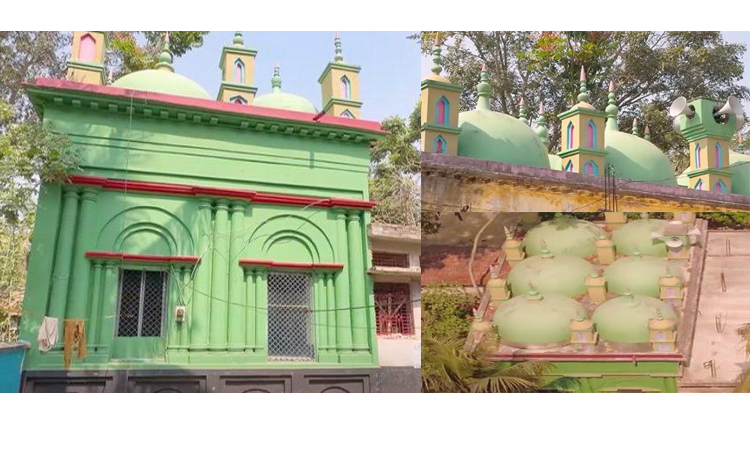
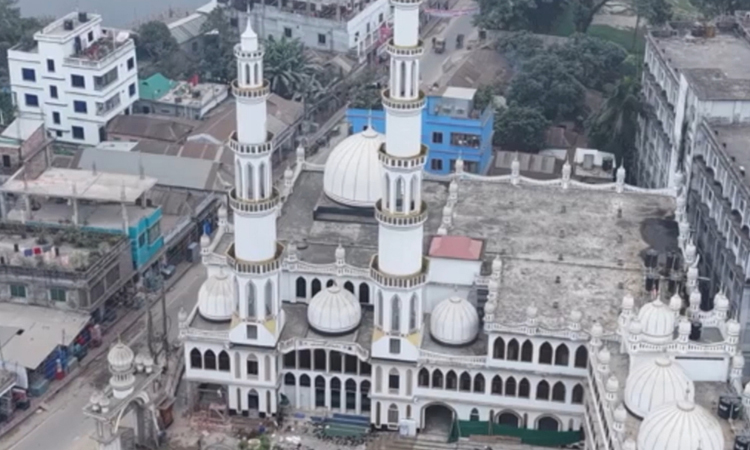
The Maisaheba Jame Mosque is noted for its Mughal-style architecture blended with local craftsmanship.
The rectangular structure features multiple hemispherical domes, with a comparatively larger central dome flanked by smaller ones, creating a balanced and majestic appearance. Elegant arched entrances and windows reflect classic Mughal design elements.
The mosque's thick walls, constructed from burnt bricks and lime-surki mixture, exemplify traditional building techniques. These materials help regulate indoor temperatures and enhance durability.
A Hujrakhana (Muazzin's room) is located on the second floor. Separate ablution facilities are situated on the north and south sides, accommodating over 200 worshippers simultaneously.
An open field in front of the mosque hosts two Eid congregations annually. The mosque reportedly underwent major reconstruction at an estimated cost of Taka 4 crore. Donation collections reach approximately Taka 2-3 lakh every Friday.
Security measures include closed-circuit cameras and two guards - one appointed by mosque authorities and another by municipal authorities.
Beyond daily prayers, the mosque serves as a focal point for social and cultural engagement. Thousands of worshippers gather for Friday prayers each week, offering special prayers for the country and the Muslim Ummah.
During Ramadan, around 400 to 500 fasting individuals break their fast at the mosque daily. Tarawih prayers, Quran recitation sessions, and religious education programmes for children and teenagers are also conducted throughout the holy month of Ramadan.
Large congregations are held during Eid-ul-Fitr and Eid-ul-Azha, reinforcing the mosque's role as a community anchor.
Although parts of the mosque have been renovated over time, local residents believe more structured preservation initiatives are necessary to safeguard its historical and architectural value.
Community members have called for proper research and recognition of the mosque's archaeological significance, suggesting it could qualify for national heritage status. They also see tourism potential surrounding the site, which could further enhance Sherpur's cultural identity.
Standing firm for 250 years, the Maisaheba Jame Mosque remains not merely a place of worship but a symbol of Sherpur's enduring history, religious devotion, and communal unity-- a treasured asset of Bangladesh's rich heritage.