News Flash
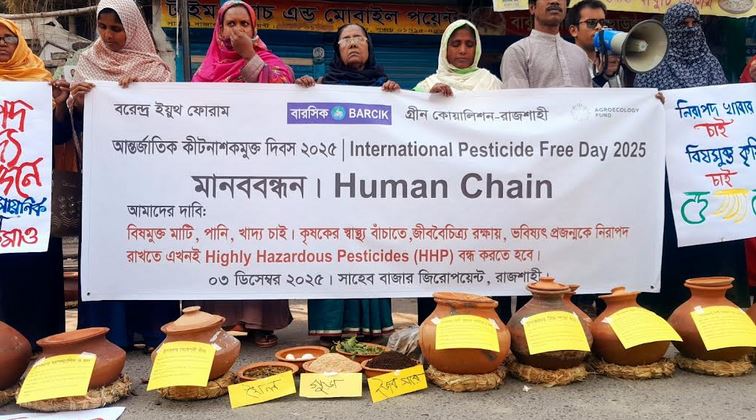
RAJSHAHI, Dec 3, 2025 (BSS)- Social watchdogs and development activists at a street-corner meeting here today unequivocally called for drastic action against marketing and selling of highly hazardous pesticides to protect farmers health, biodiversity and future generation.
They highlighted the significant health and environmental risks from the widespread use of hazardous pesticides in the Barind area.
In the meeting, many of the grassroots male and female farmers were seen saying immediate health issues after applying pesticides and long-term exposure is linked to chronic diseases.
Banned pesticides remain available under different names, and pesticide use has reduced biodiversity.
Bangladesh Resource Centre for Indigenous Knowledge (BARCIK), a research-based development organization, organized the human chain-cum-meeting at Saheb Bazar Zero point pressing home their four point demands to mark the world Pesticide Free Day 2025.
Green Coalition, Barendra Unnayan Forum (BUF), Youth Action for Social Change (YASC) and Barendra Youth Organizations supported the meeting.
The main theme of the day is “Pesticides are a dead end for civilization”. The day commemorates the 1984 Bhopal chemical disaster and calls for a future free from the toxic effects of hazardous pesticides.
Shahidul Islam, Regional Coordinator of BARCIK, readout the theme paper, illustrating various bad impacts of using highly hazardous pesticides.
YASC General Secretary Atikur Rahman, Convener of July-36 Mahmud Jamal Kadery, President of Adibashi Juba Parishad Upen Rabidas, Organizing Secretary of Jatiya Adibashi Parishad Subhash Chandra Hembrom and farmers Rahima Begum, Mijanur Rahman and Renuka Begum, among others, addressed the meeting.
Shahidul Islam said widespread and often unregulated use of hazardous pesticides in agriculture is posing a serious threat to both public health and the environment in the region, particularly in the Barind area.
He mentioned that many grassroots-level farmers are frequently experiencing acute health problems such as sneezing, skin rashes, dizziness, and headaches during pesticide application.
"Long-term exposure to pesticides has been linked to chronic health conditions, including cancer, endocrine disruption, neurodegenerative diseases, and reproductive issues," he said.
Atikur Rahman said pesticide residues in food-especially vegetables-pose significant risks to consumers, as many farmers do not follow the recommended withdrawal periods before harvesting.
Children and pregnant women are particularly vulnerable due to the bioaccumulative nature of these chemicals, he added.
"Pesticides often kill non-target organisms, leading to disruptions in the delicate balance of ecosystems," he said.
Upen Rabidas said pesticide runoff is contaminating surface and groundwater, thereby impacting drinking water sources and aquatic ecosystems. He also warned that persistent pesticide presence in soil is affecting soil health and hampering plant growth.
Referring to the Barind region, a major agricultural zone in Rajshahi, he noted a decline in groundwater levels due to excessive irrigation, which is further exacerbated by chemical inputs like pesticides. Crops such as beans and eggplants are particularly prone to pesticide overuse in this area, he added.
In his remarks, Mahmud Jamal Kadery stressed the importance of raising awareness among farmers about the risks of pesticide misuse and promoting safe handling practices. He called for stricter enforcement of regulations concerning pesticide application and withdrawal periods.
He also emphasized the need for promoting integrated pest management (IPM) and other eco-friendly farming practices to reduce reliance on hazardous pesticides.
"Regular monitoring of pesticide levels in food, water, and soil, alongside further research on long-term health impacts, is essential," Subhash Chandra Hembrom said.
Highlighting a major concern, he revealed that many banned pesticides are still available in local markets, often sold under new names. "Farmers and even pesticide dealers are often unaware that they are using or selling banned substances," he added.