News Flash
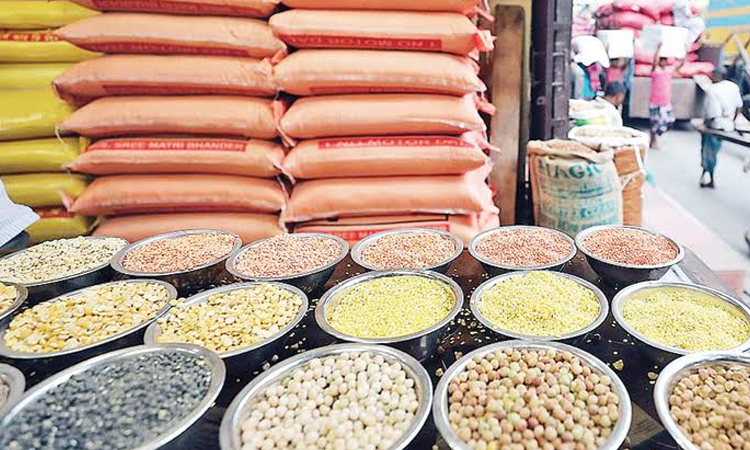
CHATTOGRAM, Feb 19, 2026 (BSS) - Khatunganj wholesale market in Chattogram is bustling with activity during the holy month of Ramadan. Buyers and sellers are busy with their transactions, and workers are hard at work. Traders have said that prices of various goods are decreasing due to rise supply.
On the first day of Ramadan, a visit to the market today found a lively atmosphere with brisk sales and purchases taking place.
Trucks from all over the country are delivering products to the market, meeting the demand for chickpeas during the iftar of Bangladesh fasting people by importing them from Australia. In the first seven and a half months of this financial year, approximately 194,798 tons of chickpeas were unloaded at the Chittagong port. Additionally, there are unsold chickpeas from the previous year available in the market.
According to market sources, there is a discrepancy between wholesale and retail prices, as chickpeas are being sold at Tk 90 to Tk 115 in the retail market. He also said that the chickpea harvesting season in Australia typically runs from October to November.
In Bangladesh, there is currently no dollar crisis, leading to an increase in opening Letter of Credit (LC). This situation has alleviated concerns about a crisis in the chickpea market. Dr. Mohammad Shah Alam, deputy director of the Plant Quarantine Center at Chattogram Seaport, stated that approximately 250,000 metric tons of chickpeas are imported annually through Chattogram port.
The majority of chickpea imports come from Australia, and this year's import levels are normal. Around 200,000 metric tons of chickpeas have already been offloaded at Chattogram port, with more in the pipeline. Necessary measures have been taken to expedite their unloading and here is no anticipated instability or price increase in the chickpea market this time.
Chickpea imports through Chattogram port have been on the rise, with 498 tons arriving in July 2025, 883 tons in August, 870 tons in September, 5,177 tons in October, 42,343 tons in November, 57,461 tons in December of 2025 and 79,771 tons in January this year, and 7,795 tons from February 1-15. The demand for dates in the country during Ramadan is 70 to 80 thousand tons. To meet this demand, the government has increased date imports by reducing customs duties, leading to a 15 to 30 percent decrease in wholesale prices compared to last year.
Currently, dates are being sold at Tk 170 to a maximum of 1,200 per kg. In the Falmondi area, a wholesale dates market in the city, Zahidi dates are priced at Tk 1,700 to Tk 900 per carton (10 kg), betel dates at Tk 1,600 per carton, Sukkari dates at Tk 1,700 to Tk 900 per carton, and Amber dates at Tk 5,500 to a maximum of Tk 7,000 per carton. The prices of more expensive dates like Maryam, Medjool, and Ajwa are slightly lower this year compared to that of last year.
During Ramadan last year, Ajwa dates (5 kg carton) were priced at Tk 4,500, but this year they are being sold at Tk 3,500 per carton. Maryam dates were sold at Tk 5,000 per carton last year, and this year the price is Tk 4,800. Sapabi dates, which were sold at Tk 3,200 per carton last year, are now being sold at Tk 2,200 to Tk 3,000. Mashruk dates were sold at Tk 2,500 last year, and this year they are priced at Tk 2,000. Nagal dates, which were sold at Tk 2,900 per carton last year, are now being sold at Tk 2,600. Import data from the Chattogram seaport shows that the import of dates has increased in 2025 compared to 2024, with at least 18,043 tons more dates imported this year.
Ahsan Ullah Zahedi, former general secretary of Khatunganj Artdar Samity, mentioned that the sale of Ramadan products has doubled due to the ongoing onion season in the country. However, the price of sugar has increased by up to Tk 6 per kg in a week. In the Khatunganj market, local onions are being sold wholesale for Tk 48-55, garlic for Tk 170-175, ginger for Tk 105, potatoes for Tk 15, peas for Tk 51-76, lentils for Tk 75-76, Indian cardamom for Tk 4,600, Guatemalan cardamom for Tk 4,000, Indian cumin for Tk 620, Iranian cumin for Tk 800, raisins for Tk 800, turmeric for Tk 250-255, local chili for Tk 200-230, and Indian chili for Tk 390-400.
Mohammad Mohiuddin, general secretary of the Chaktai-Khatunganj Aratdar General Traders Welfare Association, said that there is currently no shortage of Ramadan-related products in the market, including chickpeas, peas, and dates, and the supply system is functioning normally. The price of chickpeas has decreased significantly compared to last year due to excess imports. Australian chickpeas are now being sold at Tk 68 to Tk 75 per kg, down from Tk 90 to Tk 95 last year. Thick lentils are currently priced at Tk 73, compared to Tk 85 last year.
Comparison of prices – thin lentil was sold last year at Tk 140 per kg while the current rate is Tk 125 per kg, peas was at Tk 55 last year while current price is Tk 48 per kg, sugar price was Tk 114 per kg last year while the current price is Tk 94 per kg, cardamom price was Tk 3,000 per kg last year while current price is Tk 4,400 per kg, clove was sold at Tk 1,200 per kg last year while the current price is at Tk 1,100 per kg, cumin price was Tk 550 per kg last year while the current rate is Tk 530 per kg, Palm oil was sold at Tk 4,500 per maund last year while the current rate is Tk 5,800 per maund, Soybeans was sold at Tk 6,600 per maund last year while the current rate is Tk 6,300 per maund, local onions was Tk 45-55 per kg last year while the current price is Tk 30-40 per kg, Indian onion was Tk 70-75 per kg last year while the current rate is Tk 65-68 per kg.