News Flash
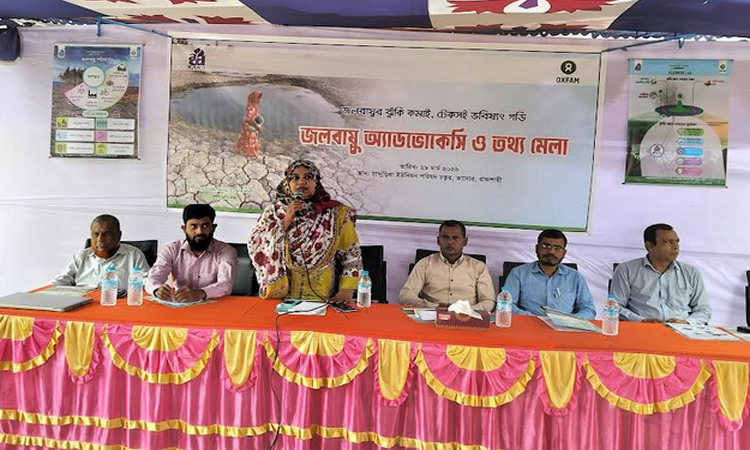
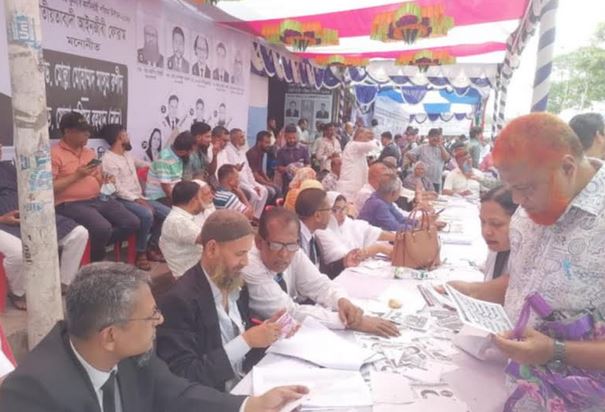
RAJSHAHI, March 29, 2026 (BSS)- A day-long “Local Climate Advocacy and Information Fair” was held today at Chanduria Union Council premises in Tanore Upazila of the district.
The event was organized by Association for Community Development (ACD) with support from Oxfam in Bangladesh under the “Cultivating Change” project.
The fair brought together around 100 participants, including indigenous women farmers and individuals from diverse professional backgrounds.
Raising awareness about climate change risks and to enhance access to financial opportunities for climate adaptation and mitigation was the main objectives of the fair.
It created a collaborative platform involving upazila-level government officials, local government representatives, farmers, youth, students, media personnel, NGOs, and CSOs.
Information-sharing stalls were set up by the Department of Agricultural Extension, Department of Livestock Services, Department of Social Services, Department of Youth Development, Department of Women Affairs, and ACD.
Participants gained practical knowledge on climate-resilient agricultural practices, alternative livelihoods, and available climate finance mechanisms.
Upazila Women Affairs Officer Habiba Khatun, Agriculture Officer Md. Soaib Hossain, Social Service Officer Tanzibur Rahman and Livestock Officer Toufikul Islam spoke on the occasion. Union Parishad Chairman Mizanur Rahman presided over the meeting.
Representatives from relevant government departments were present. ACD Project Coordinator Subrata Kumar Paul moderated the discussion.
The fair featured expert discussions on climate resilience strategies, panel discussions on climate finance, and a capacity-building workshop.
Indigenous women farmers also showcased climate-resilient agricultural products, including organic fertilizers.
The discussants unanimously emphasized the critical role of women in addressing climate change impacts at the community level.
Participants highlighted that although expanding drought-tolerant crop cultivation is essential, indigenous women are constrained by limited access to training, modern technologies, and irrigation facilities.
Strengthening their capacity through specialized training and policy support is critical to enhancing resilience against climate change impacts.
Organizers expressed that such initiatives will significantly contribute to strengthening local climate resilience and fostering coordination among government and non-government stakeholders.