News Flash
By Md Mamun Islam
RANGPUR, March 29, 2026 (BSS) - The just implemented EIR project is
effectively contributing to boosting crop yields along with revitalising
ecosystems, conserving surface water and recharging groundwater levels in the
greater Rangpur region.
Barind Multipurpose Development Authority (BMDA) has implemented the five-
year (2019-2025) term "Expansion of irrigation in greater Rangpur district
through best uses of surface water and conservation of rainwater (EIR)
project" at Taka 288-crore.
The project has been implemented in 35 upazilas of Rangpur, Nilphamari,
Kurigram, Lalmonirhat and Gaibandha in greater Rangpur district.
The project is aimed at conserving surface water, free vast land area from
water-logging, providing irrigation and supplementary irrigation for
increasing food production, forestation and reviving the ecosystems and
improving environment.
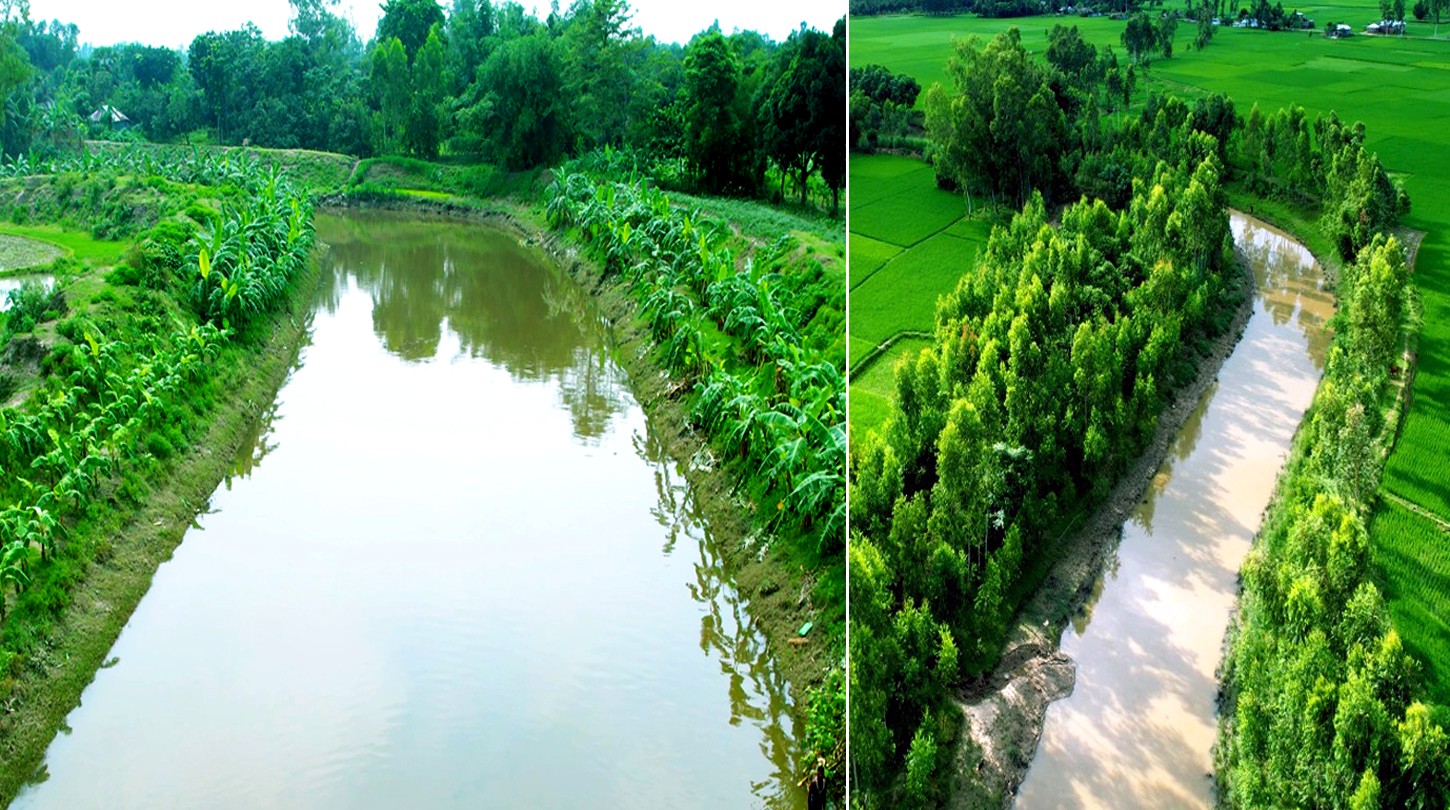
Through re-excavation of extinct rivers, canals, beels and ponds, and
extensive tree plantation on their banks, these reservoirs have been
transformed into sanctuaries for endangered algae, fish, birds, animals and
other fauna, creating a breathtaking beauty.
Rural people are benefiting from this project in multiple ways through
agriculture, fisheries and tree plantations, cultivation of vegetables,
bananas and grasses for livestock feed, and raising ducks for improving
livelihood.
The re-excavated extinct canals, rivers, beels, and ponds are now filled with
the calls of various native and migratory birds, aquatic plants, extinct
animals and insects, and rare species of trees on the banks, creating a
charming scene.
BMDA officials said re-excavation of 33 extinct canals and rivers and many
Beels and ponds has freed over 30,000 hectares of land from water-logging
after four decades turning those cultivable and benefiting two-lakh people.
Successful implementation of the surface water conservation EIR project is
helping farmers to produce more than two-lakh tonnes of additional Aman paddy
worth over Taka 700-crore annually in the region.
Besides, stored rainwater in these re-excavated reservoirs is contributing to
reloading groundwater tables and conserving surface water and its optimal
utilization in agriculture and household activities.
Farmers said re-excavation of extinct water bodies under the project has
freed their lands from decades-long water-logging enabling them to cultivate
Aman paddy and two other crops every year for the first time in four decades.
Along with increasing crop production, they are witnessing revival of the
lost ecosystems in the extinct water bodies with fresh environment and
biodiversity again.
Farmer Mashiur Rahman of Sangkarpur village in Badarganj upazila of Rangpur
said re-excavation of the extinct river Mora Teesta has freed his 2.62
hectares of land from water-logging and enabled him in cultivating Aman rice
there after four decades.
Housewives Halima Khatun and Mahfuza Begum of the same village said they are
improving livelihoods by rearing ducks and farming banana, vegetables and
Napier grass on the banks following re-excavation of the river Mora Teesta.
Abdul Halim and Mohammad Tuhin of the same village said they are fishing in
the re-excavated river Mora Teesta where the nature has become green
following plantation of tree saplings on the banks, reviving the ecosystem
too.
Through re-excavation of the 11.59-acre Bharardaho Beel in Badarganj upazila
of Rangpur, a beautiful landscape has been created by planting 6,500 trees of
213 species of rare timber, fruit, medicinal and flower trees on its 100-feet
wide bank.
"The Beel with plentiful flora and fauna, native and migratory birds has
become a sanctuary for fish, birds and animals in revived ecosystems. People
are rushing there to enjoy the loveliness," said Abdur Rahman of nearby
Dangapara village.
Abdul Motaleb of Berubari union in Nageshwari upazila of Kurigram said BMDA
has re-excavated the Boalerdara canal benefitting 40,000 people of 25
villages.
"Re-excavation of the canal alongside plantation of saplings on the banks has
improved the environment. Local people are using conserved water for
irrigation, rearing ducks, farming fish and household activities," he added.
Farmer Abdul Halim of nearby village Char Berubari said re-excavation of the
canal has freed his two acres of land from water-logging paving an
opportunity to cultivate three crops there annually after four decades.
Talking to BSS, BMDA Superintending Engineer and EIR Project Director
Engineer Md Habibur Rahman Khan said many people are enjoying enormous
benefits from the project in the greater Rangpur region.
The project has promoted agriculture making best use of conserved surface
water, forestation and improved environment and biodiversity and revived
ecosystems and sanctuaries for fish, aquatic plants and animals, insects and
birds.
Farmers are providing supplementary irrigation to croplands using conserved
surface water in re-excavated water bodies and producing more crops and
vegetables, including two-lakh tonnes of additional Aman paddy worth Taka
700-crore annually.