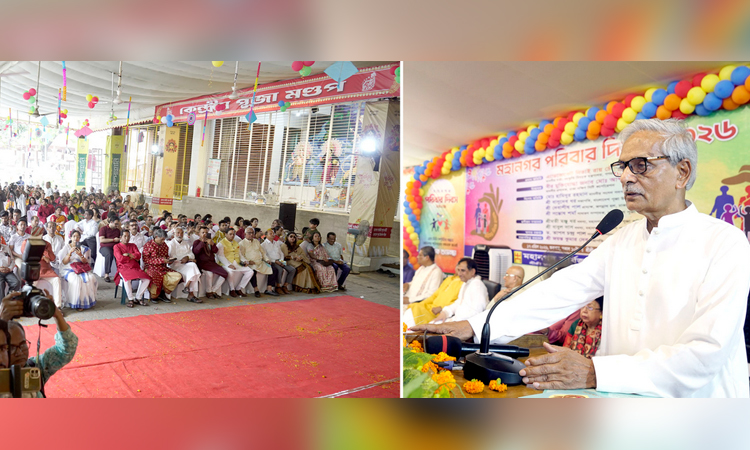
News Flash
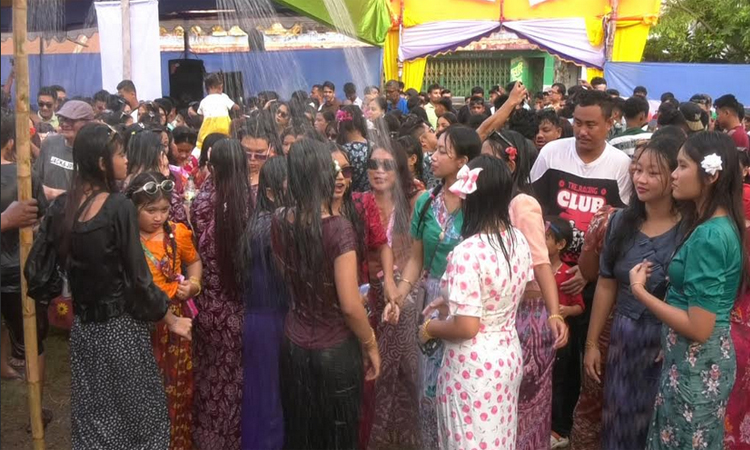
COX’S BAZAR, April 17, 2026 (BSS) – Jalkeli, the largest festival of the Rakhine community in Cox’s Bazar, began today to celebrate the New Year of Rakhine calendar.
Traditionally, children, youths, and the elderly take part by dancing, singing, and splashing water on each other in a joyful atmosphere.
During this time, groups carrying musical instruments move from one pavilion to another while dancing.
Organizers said the year 1387 of the Rakhine calendar ended at sunset yesterday (Thursday).
The New Year 1388 began at sunrise on Friday. To bid farewell to the old year and welcome the new one, the Rakhine community will celebrate the three-day Sangrain (Water Festival) starting today (Friday).
The festival is being held in various parts of Cox’s Bazar town, including east and west fish markets, Phulbagh Road, Kyang Para, Hangor Para, Tekpara, Burmese School Road, Buddhist Temple Road, and Chaul Bazar. It is also being celebrated at least fifty pavilions across the district, including Maheshkhali, Teknaf, Chakaria, Harbang, Ramu, and Chowfaldandi.
The festival’s formalities begin on the day of Chaitra Sankranti (the last day of the Bengali year). From that day, the Rakhine people start observing various religious rituals at Buddhist monasteries. After completing these rituals, the Water Festival or Sangrain begins on the first day of the Rakhine New Year, April 17, and continues for three days.
Mongchen Hla Rakhine, central president of the Rakhine Buddhist Welfare Association, said on Friday morning, children, youths, and elders from each Rakhine village go to Buddhist monasteries in processions.
The younger participants carry earthen pots, while the elders carry symbolic Kalpataru (wish-fulfilling tree), Mongchen said adding after completing religious rituals there, young people in the afternoon visit different festival pavilions in groups with musical instruments.
He added that each pavilion is decorated with various flowers and colorful papers. In the center, there are drums and containers filled with water, he said, adding young women stand on one side and young men on the other, joyfully dancing and splashing “auspicious water” on each other.
The Rakhine people believe that this ritual washes away the sorrows, pain, and shortcomings of the past year, Mongchen said.
He also said the festival will continue until Sunday, and alongside the water festivities, various traditional cultural performances are being organized.
Cox’s Bazar Deputy Commissioner Md. A. Mannan told BSS that Bangladesh is a diverse country of different religions and ethnic groups, with a long-standing tradition of communal harmony and Jalkeli festival reflects that spirit. Participation by both the Rakhine community and local residents has turned it into a universal celebration, he said.
He added that security measures have been strengthened for the three-day festival.