News Flash
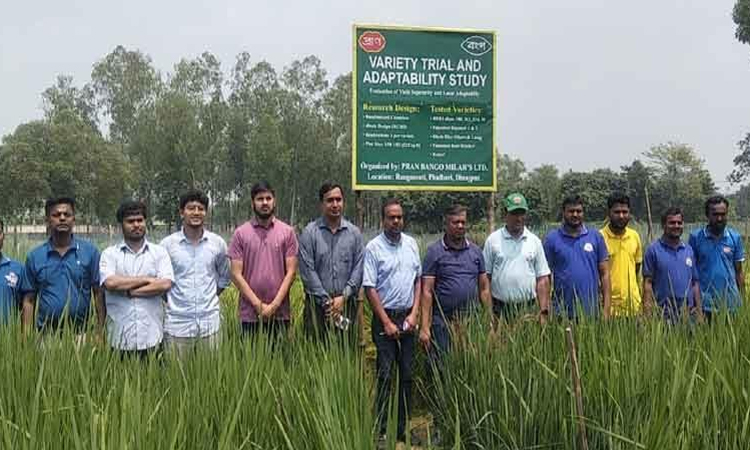
DINAJPUR, May 2, 2026 (BSS) - A promising breakthrough has been achieved in the experimental cultivation of premium rice varieties, including Basmati, in Phulbari upazila of the district.
Under the initiative of Pranabango Millers, a total of 12 improved rice varieties-featuring Pakistani and Indian Basmati, black rice from Vietnam and Indonesia and several advanced local strains-are being tested for adaptability and yield in local conditions.
Deputy Director of the district Department of Agriculture Extension (DAE) Md. Afzal Hossain recently visited the experimental fields and expressed satisfaction with the overall crop performance.
He said that the cultivated varieties have shown encouraging growth and yield potential.
According to agronomist Md. Naushad Hossain of Pranabango Millers, the initiative aims to reduce Bangladesh's dependence on imported Basmati rice by producing high-quality aromatic and specialty rice domestically.
He added that the project is also focused on building a sustainable value chain to ensure fair pricing for farmers while providing consumers with premium-quality rice at accessible prices.
Field observations revealed successful cultivation of all 12 varieties in demonstration plots.
Among them, Basmati rice stood out for its length and fragrance, while black rice-known for its dark purple-black color and nutty flavor-has attracted attention for its high antioxidant content and potential health benefits, including resistance to diseases such as cancer and diabetes.
The initiative also includes locally significant varieties such as Katari paddy, alongside improved strains developed by the Bangladesh Rice Research Institute, including BRRI Dhan-50, 108, 113, and 114, as well as Banglamati and two coarse aromatic varieties. Seeds for several of these varieties were sourced internationally.
In the initial phase, cultivation is being conducted under controlled management. If the results continue to meet expectations in terms of yield and quality, there are plans to expand distribution of seeds to farmers on a larger scale.
Experts believe that this initiative could significantly impact the country's agricultural economy. Professor Dr. ATM Shafiqul Islam of the Agriculture Department at Hajee Mohammad Danesh Science and Technology University said that successful adaptation of these varieties to local soil and climate could open new avenues for the production of export-quality aromatic rice.
Officials involved in the project expressed optimism that increased domestic production of premium rice varieties will reduce import dependence and create new economic opportunities for farmers across Bangladesh.