News Flash
TEHRAN, July 8, 2026 (BSS/AFP) - US President Donald Trump said the ceasefire with Iran was "over" Wednesday but left the door open to more talks, after fighting flared sparked by Iranian attacks on ships in the vital Strait of Hormuz.
The strategic shipping route remains a flashpoint in the conflict, which began in late February with massive US-Israeli strikes on Iran.
Tehran insists on controlling the waterway, saying it will charge fees for passage and threatening to hit vessels that deviate from its authorised route.
Its military struck at least three ships in recent days, prompting extensive US strikes against Iranian targets Tuesday followed by retaliatory attacks from Iran on Gulf countries.
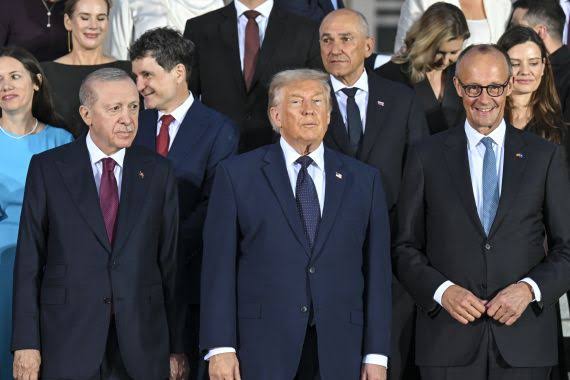
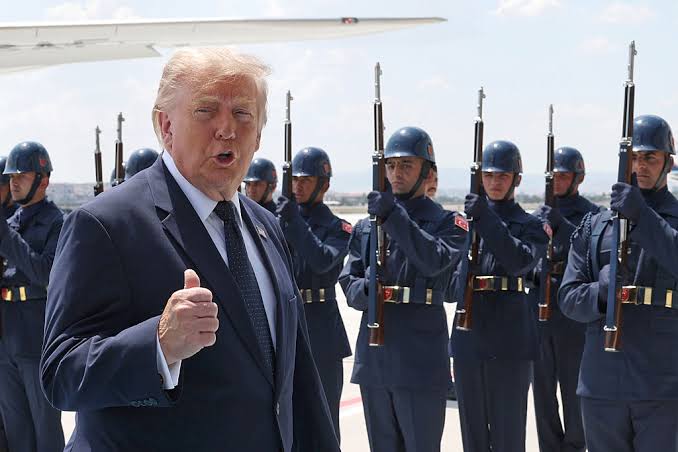
"As far as I'm concerned, it's over," Trump said at a NATO summit in Turkey on Wednesday when asked if the truce was intact.
"It's just a waste of time dealing with them," he added.
"I'll let our wonderful negotiators keep talking if they want, but I don't see it. I don't like these people."
Oil prices immediately jumped five percent after Trump's remarks, having already reached their highest level in two weeks.
Both the US and Iran said they had hit dozens of targets, placing fresh strain on their interim deal to end the Middle East war.
Iranian state media reported a wave of explosions around the strait, including six on the island of Qeshm, seven in the city of Sirik and more in the major port city of Bandar Abbas.
It later reported a series of blasts in the coastal city of Bushehr, which hosts the country's only civilian nuclear power plant and lies near Kharg island, the main oil terminal through which 90 percent of Iran's crude exports transit.
State media said a member of the military's Revolutionary Guards (IRGC) had been killed, while the foreign ministry said monitoring and observation sites had been hit on the southern coast.
- 'Anxious' -
US Central Command (CENTCOM) said its forces had struck over 80 targets, including Iranian air-defence systems, coastal radar sites and 60 IRGC small boats.
The strikes aimed "to degrade Iran's ability to continue attacking international commerce flowing through the international trade corridor", it said.
Mark Rutte, secretary general of NATO, said at the summit in Ankara that the American strikes were "absolutely necessary".
Tehran's reply came quickly, with the Guards saying they hit dozens of US military facilities in Kuwait and Bahrain, where an AFP journalist heard blasts.
Kuwait said it intercepted two ballistic missiles and 13 drones, while the Iranian army said it had also attacked US forces at Sheikh Isa air base in Bahrain.
Nawal Saad, a Bahraini civil servant, lamented that "the spectre of war is looming once more", saying "I do not want to go through that experience of fear and anxiety again".
Hamad Althunayyan, an assistant professor at Kuwait University, said Tehran views Bahrain and Kuwait "as the most accessible and lower cost pressure points in the Gulf".
"It allows it to project power, impose costs, and test US and GCC resolve," he said.
Oman, which sits on the other side of Hormuz from Iran, condemned the targeting of Bahrain and Kuwait as well as the strikes on ships, but without blaming Iran.
The former mediator has not blamed Iran for attacks throughout the war in an effort to maintain its neutrality, which is being tested by talks with Tehran over the administration of Hormuz.
Washington wants free passage for ships while Iran is insisting on fees and has refused to allow vessels to pass through Omani waters.
All three vessels recently struck were sailing close to Oman, which had proposed a temporary transit corridor hugging its coastline.
- 'Hyperbolic rhetoric' -
Maritime traffic had tentatively resumed after Washington and Tehran signed the deal last month, but Iran has insisted there will be no return to free passage.
Almost 6,000 seafarers "remain stranded" in the area, International Maritime Organisation chief Arsenio Dominguez said Wednesday.
An analyst told AFP the cost of returning to full-blown war would be too high for both sides.
Such a move "is going to be associated with significant economic and military costs. I think Trump's rhetoric is, as usual, hyperbolic, and doesn't necessarily mean that the MoU has collapsed", said Ali Vaez, Iran project director at the International Crisis Group.
"Both sides are trying to negotiate the fine print of the MoU through the use of force because the MoU left a lot of issues either unresolved or ambiguous," he added.
"When Iran tries to enforce its control over the strait, it doesn't matter who violates it. They believe this is the most important achievement that they have had in this war. They've shed blood for it. And they're not going to give it away."