News Flash
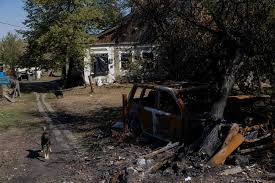
GENEVA, Sept 8, 2026 (BSS/AFP) - Cluster munitions killed or injured more than 1,000 people worldwide in 2025, most of them in Ukraine, a monitor said Tuesday, with civilians accounting for the vast majority of victims.
In total, the Cluster Munition Coalition (CMC) registered at least 1,063 casualties from the widely-banned weapons across nine countries last year -- one of the highest annual totals on record.
As has been the case since Russia expanded the invasion of its western neighbour in February 2022, Ukraine registered by far the highest casualty figure at 927, making up 87 percent of the total.
Cluster munition casualties were also recorded in Afghanistan, Cambodia, Iraq, Laos, Lebanon, Myanmar, Russia and Syria, CMC said in its annual report.
Cluster munitions can be dropped from planes or fired from artillery before exploding in mid-air and scattering bomblets over a wide area.
They pose a lasting threat since many fail to explode on impact, effectively acting as landmines that can explode years later.
The often colourful bomblets "tend to be attractive to particularly children," Erik Tollefsen, head of the weapon contamination unit at the International Committee of the Red Cross, told reporters last week.
Civilians accounted for a full 87 percent of casualties last year, Tuesday's report found.
It noted that five countries had used cluster munitions in 2025.
Both Russia and Ukraine had continued to use them on the territory of both countries, while Myanmar had used them domestically.
Iran was meanwhile known to have used the weapons in Israel, while Thailand had done so in its border conflict with Cambodia.
They had also been used in Mali by as yet unconfirmed actors, the report said.
- 'Slippery slope' -
None of those known to have used weapons were among the 112 states that are party to the 2008 Convention on Cluster Munitions, which prohibits their use, transfer, production and storage.
Last year also saw reports or allegations of use by a number of other countries that are not party to the convention, including Israel, Pakistan and the United States, as well as Yemen's Iran-backed Houthi rebels.
The findings came as countries were preparing to meet in Laos next week for a third review conference on the convention, amid growing concerns that the stigma associated with the weapons may be weakening.
The report shows that the convention "keeps delivering results to affected communities," CMC chief Tamar Gabelnick said in a statement.
"Yet the rising human toll, continued and new use, production, and transfers by states not party are stark warnings that these gains cannot be taken for granted," she said.
Deep cuts to international development and aid funding have also taken a toll on clearance and survivor support, CMC said.
Particularly concerning, experts say, was the message sent by the first-ever withdrawal of a state party when Lithuania slammed the door last year.
Lithuania, along with Poland, Latvia, Estonia and Finland, also quit a treaty banning anti-personnel landmines amid concerns over "Russia's aggression".
"Of course, states have the the right and the sovereignty to protect their borders," said Fahad Amed, an ICRC legal advisor.
"But prohibited weapons have been prohibited with a reason. And if we start going down the slippery slope of saying: 'Well, some prohibited weapons are fine, then where are we going?" he asked.
"Is it going to be chemical weapons or biological weapons or nuclear weapons?... It's a very dangerous slope to go down."