News Flash
By Kabir Ahmed Khan
DHAKA, Dec 1, 2025 (BSS)- BNP will bring necessary reforms in the health sector as it enshrined in the 31-point reform agenda of the party if it comes to power.
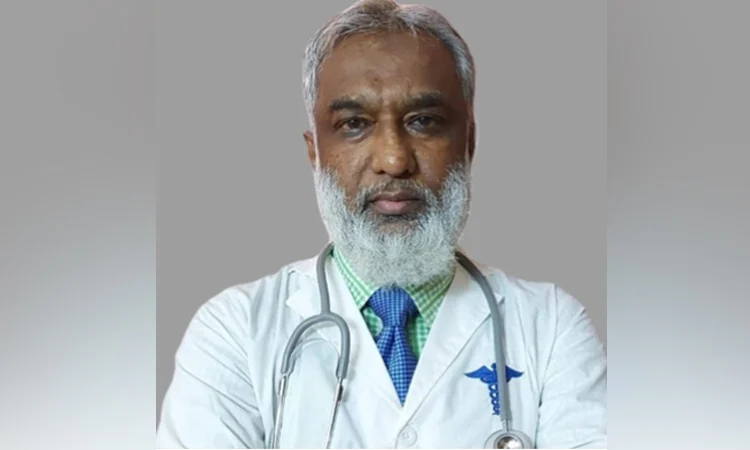
Dr. Md. Zahirul Islam Shakil, Secretary General of pro-BNP Doctors Association of Bangladesh (DAB) and a leading asthma, chest disease, and medicine specialist, said BSS while sharing his plans and expectation.
He said, access to healthcare is a fundamental right of the citizens, which people want to receive within the country, not abroad.
Dr Shakil said as significant infrastructural development in both government and private sectors is in place now it is necessary to improve treatment methods, raise the quality of care, and keep the treatment costs affordable.
Doctors should be prioritizing gaining patients’ trust with a view to dispense same quality of treatment at low cost to both rich and poor to move forward the health service sector, he added.
Dr. Shakil, also Vice Chairman of the Bangladesh Medical Research Council (BMRC) and President of the Chest and Heart Association of Bangladesh, said if BNP comes to power, the health sector will be developed according to the 31-point outline given by the party’s Acting Chairman Tarique Rahman.
“There will be a complete overhaul of the health system, including in the areas of disease prevention, workforce development, and research. People trust will be restored in the country’s healthcare system, he said.
Dr Shakil said, since independence, there has been remarkable progress in the health sector. Child and maternal mortality rates have significantly declined, and average life expectancy has risen to over 72 years, he said.
Dr Shakil said the immunization programme is nearly fully implemented while a large number of skilled workers have been developed at the community level. However, a large portion of the population is still deprived of basic healthcare.
Particularly at the Upazila level, he said, there is a severe shortage of doctors, health workers, and medicines despite having huge infrastructural development.
He said, the most notable aspect of the country’s healthcare system is infrastructural improvement like any other country. Bangladesh still remains one of the cost effective countries in Asia in terms of operating expenses and investment in healthcare as only slightly more than three percent of the annual budget is allocated to this sector against the desiring allocation for at least five percent.
Terming manpower shortage as the biggest challenge in the health sector, he said about 80 thousand posts of the health sector remained vacant, which is 32 percent of total approved posts.
Of these vacancies, the highest 62 percent posts of nursing and midwifery and 40 percent posts of physician are vacant, he said adding that the highest vacancy is in Sylhet division at 40 percent, and the lowest in Mymensingh Division at 26 percent.
“At the thana level, where eight doctors are required, only four are available. Many health centers cannot provide proper service in lack of technicians to operate equipment. Many machines remain out of order,” he said adding that dialysis and OT facilities must be established at the thana level.
Pointing to lack of coordination in many areas of the healthcare system, he said concerned people are often not performing their designated roles.
“To improve healthcare services, more advanced diagnostic equipment must be procured. There is also a shortage of specialist doctors. The private sector must operate under proper regulation. Treatment costs must be kept affordable. Recruitment and promotion policies must be established,” he said.
Regarding the trend of patients traveling abroad for treatment, he said that this is often due to a lack of trust.
“There is also mismanagement. Additionally, medical tourism plays a role as many people travel together for treatment,” he said.
He noted that Bangladesh’s treatment methods are similar in India, Singapore, Thailand, and other countries. Quality healthcare exists in Bangladesh as well.
However, in some complex cases—like liver and bone marrow transplants and kidney transplants—there is still a shortage of advanced equipment, he added.
On drug production, he said that Bangladesh now produces medicines of international standard, and locally manufactured medicines are exported abroad.
Through a national drug policy, all companies can be encouraged to produce quality medicines, he said. But medicines for some complex diseases, such as heart and liver cancer, may still need to be imported, he added.
“Bangladesh has advanced significantly in primary healthcare. The country is also far ahead in immunization. Now we need advanced equipment, more trained nurses, technologists, and support staff,” said Dr Shakil.
Increasing the allocations for research and training is essential to develop skilled doctors, nurses, and technologists, he said.
Highlighting the importance of nurses, he said that half of treatment outcomes depend on nursing care, so competent nurses must be a priority.
He stressed the need to maintain the quality of medical education. Standards must be upheld to produce specialist doctors, he said.
“Without quality control, competent physicians cannot be built up. There must also be behavioral and procedural improvements between doctors and patients to build trust. In short, a patient-friendly medical system must be introduced. Drug prices must be fixed and maintained through proper regulation,” said Dr Shakil.
He said that more government hospitals need to be built nationwide, including several hospitals modeled after Dhaka Medical College and Bangladesh Medical University, so that ordinary people can easily access hospital beds and treatment.
Through a citizen charter, treatment costs must be regulated in both public and private sectors, he said adding that healthcare must be delivered to people’s doorsteps.
If the government takes initiatives, treatment facilities and services can be significantly improved, he said.
He said, although many people receive treatment in government hospitals and Upazila health complexes, the services are not satisfactory.
“To restore public trust, the sector needs more skilled manpower. The government must increase its focus on research and technological advancements. All of this requires clear planning and adequate funding,” he said.
According to the Directorate General of Health Services (DGHS) Health Bulletin report, as of December 2023, the number of registered doctors in the country is 141,999.
Bangladesh has 0.83 doctors for every 1,000 persons. Meanwhile, the Health Reform Commission’s report stated that the country needs 310,500 nurses, but currently only 56,734 are employed.
After the interim government assumed power, it initiated strong reforms in the health sector and established a Health Reform Commission. In its recommendations, the Commission emphasized substantial budget allocation for the sector. It recommended that at least 15 percent of the national budget should be allocated for health.