Wednesday
19 August, 2026

Borun Kumar Dash and Abdur Rouf
DHAKA, Dec 10, 2025 (BSS) - While the health sector in Bangladesh already suffers from an overall shortage of funds, the allocation for research on mental health is even lower. Due to insufficient budget and a shortage of research officers, progress in this sector is being hindered.
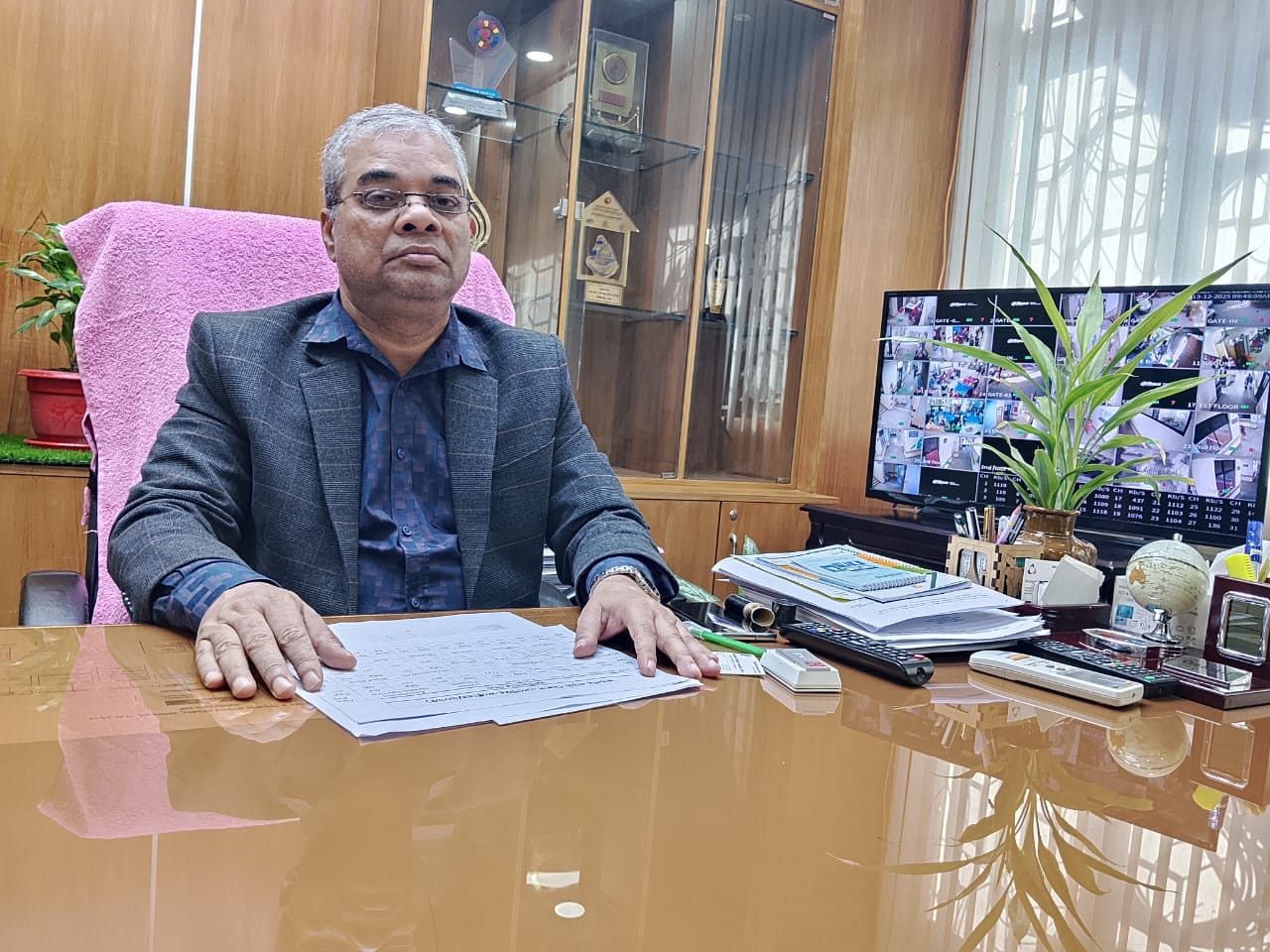
Dr. Noor Ahmed Giasuddin, Head and Associate Professor of the Psychiatry Department at Dhaka Medical College Hospital (DMCH), said this in an interview with BSS.
Responding to a question about whether the budget and government allocation for mental health research are sufficient, Dr. Noor Ahmed said, "Even for general healthcare, our national budget is inadequate. Against that backdrop, the budget for research is very low. Moreover, we lack the number of research officers needed to identify the causes of mental illnesses and develop remedies. Therefore, alongside increasing the budget, it is essential to create and appoint research officer posts for the development of this sector."
When asked whether the number of mental health patients in the country is increasing, he said, "At present, the number of mental health patients appears higher. There are several reasons behind this. First, extensive awareness campaigns across various media have made people more conscious about mental health. People now understand that the mind can also fall ill and that medical help is necessary. Because of this awareness, more people are seeking medical care than before.
Secondly, due to the complexities of modern society and various environmental factors, people are experiencing intense mental stress. These social and personal pressures are leading to the rise of mental health disorders. Although the increase has been slow, the number of mental health specialists and treatment centres has increased, enabling patients to access care more easily. All these factors combined make it seem that the number of mental health patients and outpatient visits is higher now than before."
Regarding the prevalence of mental illness in Bangladesh, Dr. Noor Ahmed referred to recent epidemiological surveys: "So far, two epidemiological surveys have been conducted in the country. According to the latest survey, 14 to 18 percent of the population suffered from some form of mental illness in the past year. This means that out of every 100 people, 14 to 18 experience mental health issues. Among them, 2 to 4 percent suffer from severe mental illnesses, while 12 to 14 percent suffer from mild conditions or neurotic disorders, including anxiety and depression."
He added, "These figures are consistent with global statistics. Worldwide, the prevalence of severe mental illness ranges from 1 to 4 percent, while mild conditions affect about 10 to 12 percent of people."
Responding to a question about whether the number of specialists and hospitals is adequate, he said, "Although the number of mental health specialists and treatment centers has increased, it is still not enough. The biggest challenge is that the number of psychiatrists is low compared to the
number of patients, and most specialists are concentrated in Dhaka. Patients from outside Dhaka must travel long distances for treatment, causing physical, mental, and financial hardship. Many discontinue treatment midway due to the cost and inconvenience.
Therefore, to ensure mental healthcare, we must increase not only the number of psychiatrists but also supporting professionals such as clinical psychologists and psychiatric nurses. Most importantly, specialists must be posted outside Dhaka, at district level, to decentralize and expand services."
On the need for specialized hospitals, Dr. Noor Ahmed said, "Currently, we have two full-fledged mental hospitals: Pabna Mental Hospital and the National Institute of Mental Health and Hospital in Sher-e-Bangla Nagar, Dhaka. Besides these, government medical colleges have psychiatrists, but district-level hospitals-particularly in districts without medical colleges-do not have any sanctioned posts for mental health specialists. As a result, people there lack access to mental healthcare."
He recommended creating junior and senior consultant posts for psychiatry at district hospitals so that grassroots-level patients can receive treatment locally.
Discussing treatment methods and physician training, he noted, "Mental health treatment differs from general treatment because there is no specific blood test, CT scan, or MRI that can confirm a diagnosis. Diagnosis depends entirely on the physician's observation-seeing the patient, talking to them, and analyzing their behavior. Thus, training under qualified specialist
teachers is essential for psychiatrists."
He said, "The current institutes and training centers in Bangladesh are mostly adequate for training psychiatric physicians. However, for specialized or advanced research, overseas training may be required."
Offering advice on staying mentally healthy, Dr. Noor Ahmed said, "To stay well, both society and individuals must follow certain practices. The key to good mental health is positive thinking, healthy eating, associating with good people, and accepting good advice."
He also emphasized reading good books, watching quality films, and maintaining a disciplined lifestyle.
Identifying drug abuse as a major cause of mental illness, he said, "Anyone who wants to avoid mental illness must stay away from alcohol, smoking, and all kinds of addictive substances. Unhealthy lifestyles and eating habits must also be avoided."
Highlighting early detection and prompt treatment, he said, "Often we fail to notice that we or our loved ones are developing mental health problems. If someone's usual behavior changes suddenly, one should immediately consult a specialist. It is proven that the earlier the treatment begins, the better the chances of recovery. So, instead of resorting to superstition or spiritual rituals, people should seek medical help as soon as such symptoms appear."