News Flash
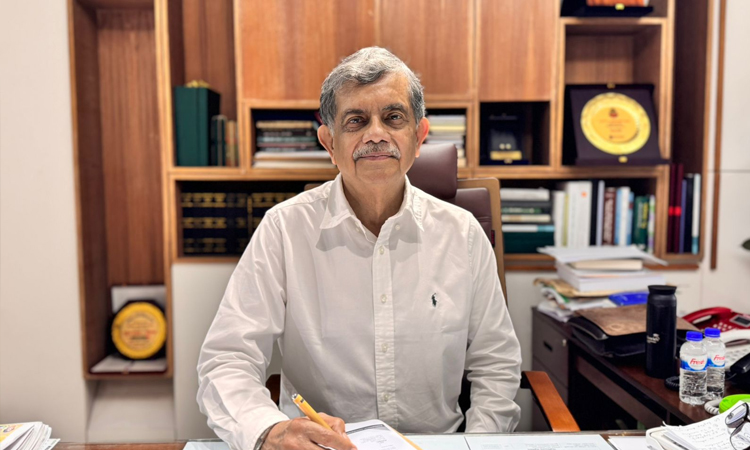
By Moshtaq Ahmed
DHAKA, Feb 3, 2026 (BSS) - Education Adviser Professor Dr. Chowdhury Rafiqul Abrar today said the government for the first time has taken an initiative to enact an integrated education act in the country.
“The main objective of this law is to bring the education system under a legal framework and establish education as a citizen’s right,” he said in an exclusive interview with BSS at his Secretariat office here.
Prof Abrar said, “We have long been saying that education is a right. But until now, there was no integrated law that recognized education as a right. This law is filling that gap for the first time.”
He said laws are never very detailed; rather, they provide direction. “In the future, rules and policies will be formulated to make it more effective,” he added.
Rejecting allegations that the law was prepared hastily, he said it is the outcome of extensive discussions. Consultations were held at the field level with students, teachers, education administrators, educationists, and stakeholders from various districts, he said.
“Making a law is like cooking. Before cooking, you need to gather the ingredients. We have done that preparation,” said Prof Abrar.
The Education Adviser said the proposed law includes several notable changes.
He mentioned the introduction of a Unique Identification Number (UIN) for every student, merger of unnecessary and substandard educational institutions, a phased-out approach to reduce dependence on coaching centers and guidebooks, a proposal to establish a National Education Academy, expansion of technical, ICT, and AI-based education, and legal emphasis on student safety and humane education.
The law also prioritized students’ mental development, morality, human rights, and safety, and proposes punitive measures by identifying sexual and mental abuse as misconduct.
On this issue, the policymaker said education is not only about examination results. “The goal of this law is also to ensure that a student grows up as a humane having ethical values,” he said.
The adviser considers the Unique Identification Number (UIN) important for reducing students’ hassles. Through this system, students’ information—from primary to higher education—will be stored in a single database.
He explained that this will eliminate the need for repeated verification during admissions, certificate verification, or transfers from one institution to another.
At the same time, the law emphasizes the primacy of the Bangla language while stressing the importance of English and other languages. It proposes considering language as a skill, he said.
The law also includes provisions to expand technology-based education, particularly the use of ICT and artificial intelligence (AI), he added.
Noting that the law is not flawless, the adviser said there is scope for improvement.
“But it is not right to say that it was rushed or is unacceptable. This is the first integrated education act in Bangladesh—that is its greatest achievement,” he added.
Sources said that until now, education had been governed by various circulars, policies, and rules, which were fragmented and inconsistent. The new education act aims to bring all these aspects together to create a comprehensive and effective framework.