News Flash
By Abu Shyem Akhund
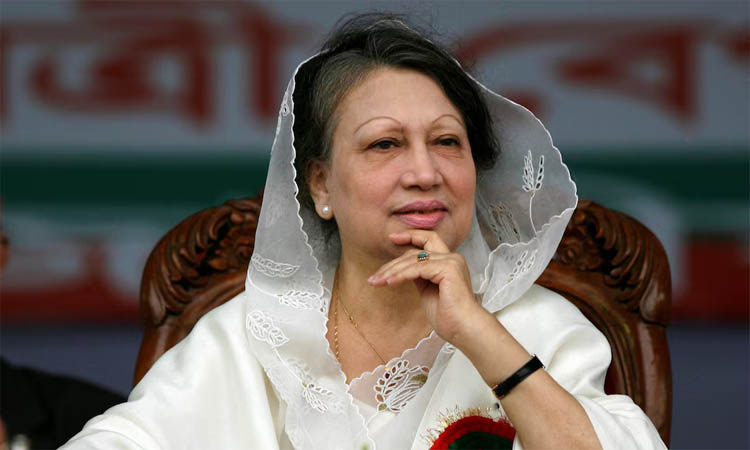
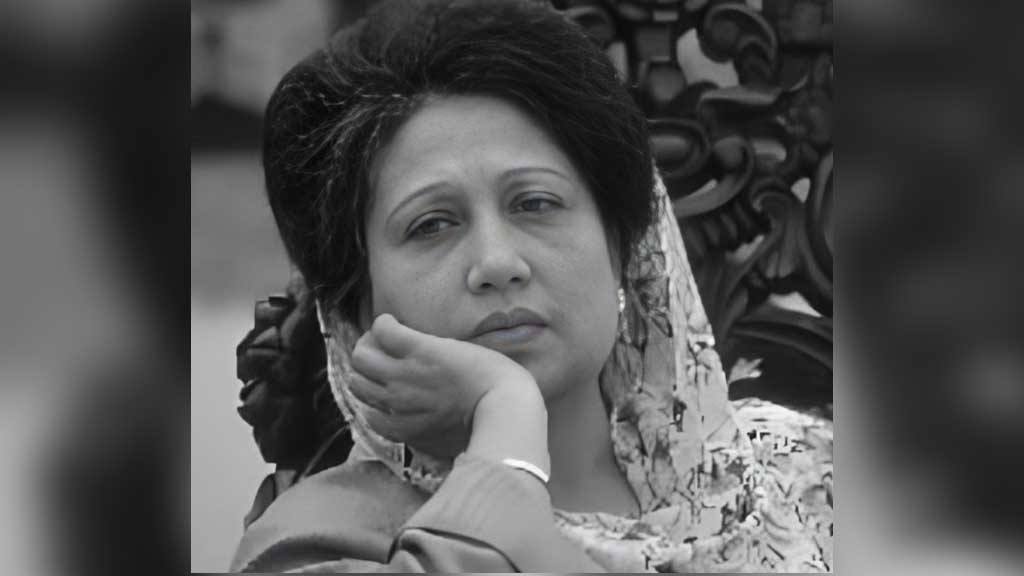
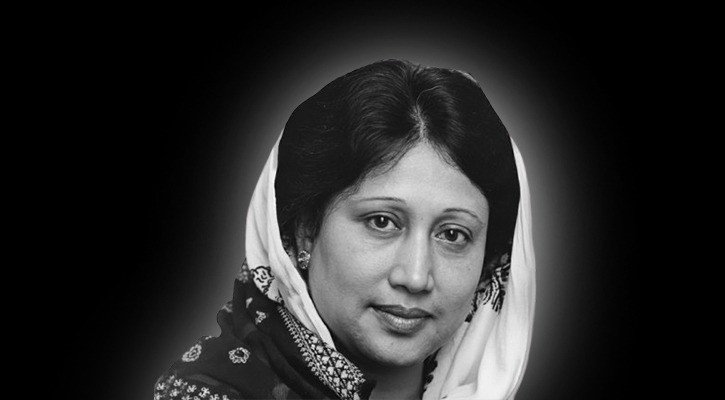
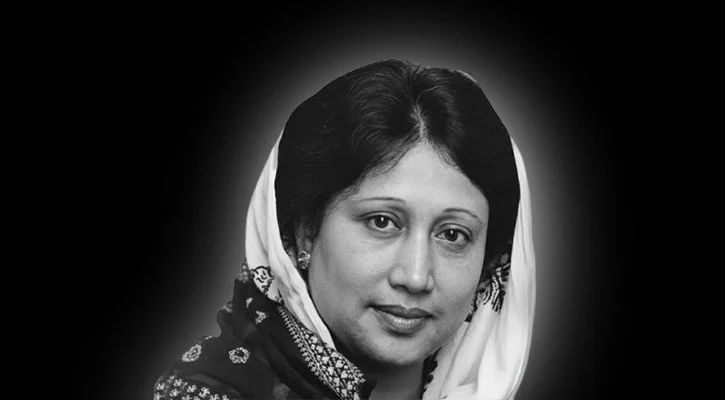
DHAKA, Dec 30 ,2025 (BSS) - Her face, beaming with self-confidence, sobriety and a natural state of aristocracy, her eyes – bright and looking in the distant, a portion of her sari carefully drawn over the rear of her puffed up hair and above all the dignified way she carried herself around, the way she maintained her mental compose at moments of gravest personal losses, the way she spoke to her opponents at heated moments, never losing her mind to utter words that do not befit her stature – all these externalities point to an inner awareness, a granite resolve that made her from a simple housewife into a guardian to the nation.
Swept into politics by the assassination of her husband, Shaheed President Ziaur Rahman in 1981, Khaleda Zia would have been all the happier to remain within the bounds of her family life, raising children and staying close to relatives. But it was not to be. The call of duty took her out, to carry forward the tasks of Ziaur Rahman, who is credited, and rightly so, with having saved the nation left in tatters by lawlessness stemming from one-party rule of the previous regime. He restored the multi-party parliamentary system. He set the country back on the development track, and spearheaded the formation of SAARC with the intent of withstanding the untoward interference by a domineering neighbour. She (Khaleda Zia) had all these tasks to accomplish and would not let others spoil them.
Dealing with a despot:
After the assassination of President Ziaur Rahman, the state power was usurped by the then Army Chief Hussain Muhammad Ershad, who took over as chief martial law administrator in 1982, suspending the constitution. This is the year when Khaleda Zia became a member of BNP, the party her husband had founded. Coincidence it may seem but every time a Pharaoh rises to the throne, a Moses is born somewhere.
As Ershad started militating against BNP, so did Khaleda Zia start a movement demanding restoration of the Constitution. In March 1983, she became BNP Vice-Chairman, and in May of the year, she became the Senior Vice-Chairman. In September, she addressed a huge rally at Paltan, giving a call for an all-out movement. She, along with her 7-party alliance leaders, took part in a siege of the Secretariat building. Police swung to action and had arrested hundreds of leaders and activists. She was put under house arrest. But by then, she had found a place in the hearts of masses and would not be separated from them by internment.
House arrests became a regular phenomenon for her. The ruler might have thought she would give up and find family life desirable. But things went the other way for them. When Abdus Sattar resigned as BNP chief, citing failing health, in 1984, she stood up to steer the party. No sooner had she become the party chief than she launched a mass movement, joined by other parties that set the whole country in a rage. The autocrat was compelled to declare a date for general election in 1986 in show of compliance with the people’s demand. Some parties that hitherto been in the movement against the autocrat had fell to the allurement. But Khaleda Zia stood steadfast, boycotting the election. She was put under house arrest again while others, including Awami League, took part in the election, only to lose in the premeditated election game and be frustrated.
The uncompromising leader, who dragged down a despot:
This resoluteness earned her the epithet of ‘uncompromising leader’, which she continued to be. She was set free only after the election. While others, including Sheikh Hasina, joined the parliament of Ershad, Khaleda Zia took to the streets, calling for a greater movement. This time the call grew bigger and found echo in every quarter. The 7-party alliance, led by Khaleda Zia, organised a series of strikes from February to July 1987. In October, BNP along with Awami Leauge announced the Dhaka Siege programme for 10 November to overthrow Ershad. Thousands of leaders and activists were rounded up to forestall the anti-government movement. On the day of programme, ruthless police action caused deaths and total chaos prevailed. Khaleda Zia was arrested from Hotel Purbani from where she was coordinating the movement. On her release from house arrest, Khaleda Zia held a press conference where she reiterated that she was ‘prepared to die’ to oust the despot.
Through these years of struggle, the noose round the neck of the despot was tightening and his hold on people was loosening every day. By 1990, BNP’s student wing Jatiyatabadi Chhatra Dal (JCD) had swept the students’ union election, winning in 270 out of 321 students unions, thanks to the rising popularity of Khaleda Zia. The new DUCSU committee launched a fresh movement, which helped to forge a greater alliance across all the opposition forces. This combined push forced the autocratic ruler to step down, ending his 9-year rule. He was put behind the bars.
Her rise to premiership and moments of failings:
Through an election in 1991, overseen by a caretaker government, first of its kind in Bangladesh, BNP came to power, with Khaleda Zia sworn in as the Prime Minister. She was instrumental in abolishing the presidential rule through 12th amendment unanimously approved in parliament and thus effectively returning to the parliamentary system. BNP formed the next government in 2001.
Trials and trying time again:
During the wrangling over who to become the chief adviser of the next caretaker government after the BNP government tenure ends in 2006, a military-backed takeover took place in the wake of nationwide protests by Awami League and its allies in 2007. She and her two sons were charged with corruption. She was arrested and detained in a makeshift prison. She was released on bail in 2008. In the December 2008 election, the Awami League got a landslide victory. In 2010, she and her family were evicted from the Dhaka Cantonment house where she lived for around 40 years. Hundreds of opposition leaders and activists were arrested arbitrarily. Many of them were killed extra judicially while many were victims of enforced disappearance.
In the 2011, the Awami League government abolished the caretaker government, hinting that the election will be held when and how it willed. BNP boycotted the 2014 general election, demanding restoration of the non-partisan caretaker government. The boycott removed the BNP as the official opposition for that parliamentary term.
Zia Orphanage Trust and Zia Charitable Trust cases:
Khaleda Zia was sentenced to 17 years in prison in the two corruption cases, which disqualified her from contesting the 2018 general election. Her health severely declined in prison. She was released from jail in 2020 on condition that she would remain under house arrest, in which she had been until 5 August 2024, when a student-led uprising toppled the authoritarian Awami League government and forced Sheikh Hasina to flee the country. In November 2024 and January 2025, the court acquitted Khaleda Zia of the graft charges. She was free at last.
Although her ancestral home is at Phulgazi in Feni, Khaleda Zia was born in 1945 in Jalpaiguri in the then undivided Dinajpur district of Bengal Presidency. Through her marriage to a captain in Pakistan army Ziaur Rahman in 1960, she launched into a life as tumultuous as the sea, drifting from one place to another. From Dinajpur, she moved to West Pakistan where her husband was posted and lived there under shadow of Indo-Pak war in 1965. From there the family moved to Chittagong in 1969. When the Liberation War broke in 1971, she had to shift to Dhaka with her two sons, leaving behind her husband in the battle field. And here too, she had to be always on the move, from one house to another, to avoid being arrested by the Pakistani forces. At last, the family got caught and was kept in army custody. They were released only after the Victory came on 16 December.
This life, caught in the storm of momentous events, had prepared a statesperson, who would know how to remain steadfast in the midst of a raging cyclone, and who would not hesitate to risk the life for a cause.
She never left us alone.