News Flash
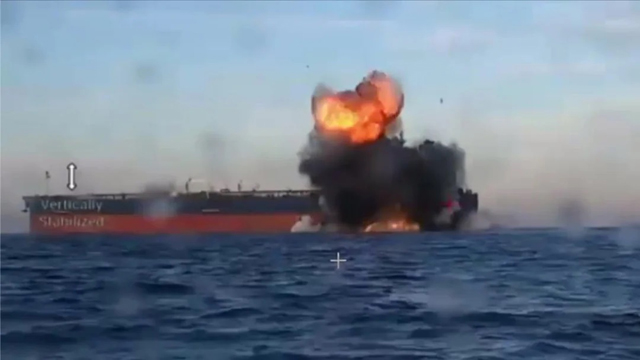
DAKAR, Dec 3, 2025 (BSS/AFP) - An oil tanker was struck off the coast of Dakar by four external explosions last week after it left Russia, AFP learned from the Turkish shipowner and Senegalese port authorities, as experts questioned whether geopolitics were involved.
Security measures were implemented about 10 kilometres (six miles) off the coast of Dakar to stabilise the Mersin, a Panamanian-flagged tanker operated by the Turkish shipping company Besiktas, which was carrying nearly 39,000 tonnes of fuel.
The cause of the explosions was unknown Tuesday, but the ship's Russian provenance suggests the possibility of a Ukrainian attack, according to several experts who spoke with AFP.
"While the vessel was at anchor off the coast of Dakar, Senegal, four external explosions occurred" on Thursday around 11:45 pm (local and GMT) Besiktas Shipping said in a statement Monday, adding that "seawater ingress into the engine room" had occurred.
According to the shipowner, there were no injuries or loss of life and "the situation was immediately brought under control".
It additionally stated that "no pollution" occurred and the vessel remained "safe and stable".
Dakar port authorities told AFP on Tuesday that they had responded to a distress call from the Mersin on Thursday, before evacuating the predominantly Turkish crew and deploying resources to address the damage.
According to ship-tracking website myshiptracking.com, the Mersin had sailed from the port of Taman, located on the Kerch Strait which connects Russia to Crimea, a Ukrainian territory annexed by Moscow.
- Ukrainian involvement? -
Several experts who spoke to AFP suggested the Mersin may have been attacked because of its ties to Russia.
The explosions come as Turkey reported that three Russia-linked tankers came under attack off its coast in the Black Sea over the last few days.
A Ukrainian security source told AFP its forces had used naval drones to hit two of the tankers, which were attacked Friday, claiming that both vessels were "covertly transporting Russian oil".
Then on Tuesday, Turkey reported a third vessel coming under attack, which it said was carrying "sunflower oil" and was on its way from Russia to Georgia when struck.
The Mersin "has repeatedly carried Russian crude/products", Martin Kelly of consulting firm EOS Marine said in a LinkedIn post, adding that the boat had made calls in Russia at Novorossiysk, Tuapse and Ust-Luga in 2025.
Dirk Siebels, an analyst at Risk Intelligence in Denmark, said the external explosions were not likely accidents.
"It's fairly safe to assume that it goes back to the Ukrainian government or the Ukrainian military", he said.
However, Igor Delanoe, deputy director of the Franco-Russian Observatory, does not believe a Ukrainian attack was certain.
"If Ukraine were directly or indirectly responsible for these explosions, it would be a first in this geographical area", he said.
The Mersin does not appear on the lists of ships sanctioned by the UN or the European Union, but two other ships belonging to the Besiktas shipping company are subject to Ukrainian sanctions.
- Pollution 'possible' -
Several incidents in which ships representing Russian interests were targeted have occurred in recent years without Ukraine claiming responsibility.
A year ago, the sinking of the Russian cargo ship Ursa Major in international waters in the Mediterranean Sea was described as a "terrorist attack" by the ship's owner, a company belonging to the Russian Ministry of Defence, without providing any evidence.
Dakar is a major west African port located along several Atlantic shipping routes that connect Africa and Europe, as well as Africa and the Americas.
Port authorities said they acted to create a security perimeter around the ship and an anti-pollution boom following the explosions.
Pollution is "possible but could be avoided if the actions taken are successful", Ibrahima Diaw, senior commander of the Port of Dakar, told AFP.