Thursday
20 August, 2026
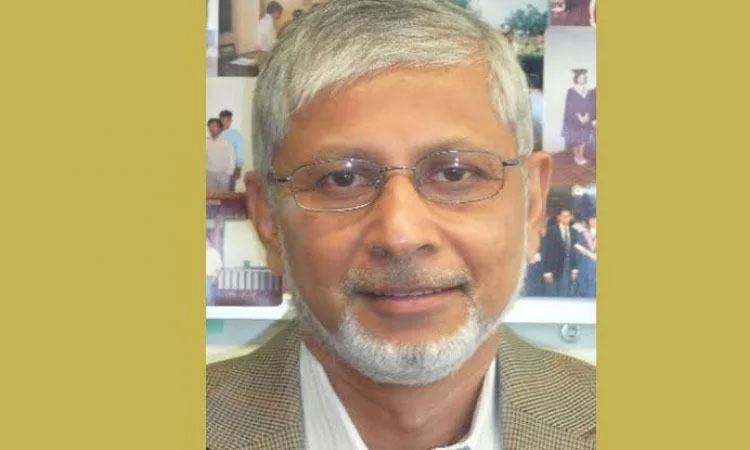
DHAKA, Dec 8, 2025 (BSS) – Special Assistant to the Chief Adviser Dr Anisuzzaman Chowdhury today said recent reforms—exchange rate stabilisation, lower inflation, stronger remittance channels and improved financial discipline—have helped restore confidence in the country’s macroeconomic fundamentals.
However, he cautioned that reforms have no fixed sequence.
The Special Assistant made the remarks while addressing the dissemination seminar on the Bangladesh State of the Economy 2025 and Sustainable Development Goals Bangladesh Progress Report 2025 as the chief guest at the NEC Conference Room in the city’s Sher-e-Bangla Nagar.
The General Economics Division (GED) of the Planning Commission organised the event.
Dr Anisuzzaman Chowdhury said Bangladesh has successfully stabilised key macroeconomic indicators despite disruptions.
He emphasised that the country’s forthcoming LDC graduation must be fully aligned with national development planning, structural reforms and the Doha Programme of Action.
He noted that despite various shocks, Bangladesh avoided negative GDP growth—unlike several countries experiencing similar political unrest.
Foreign direct investment rose by 90 percent, although he pointed out that the base was still small. “Countries like Vietnam attract large volumes of FDI because they developed trade agreements and regional integration early on. Bangladesh must now focus on similar long-term strategies,” he said.
Dr Anisuzzaman highlighted the longstanding issue of donor-driven development projects and capacity-building programmes. “For fifty years, our capacity-building loans could not fully build the skills we need. Even project and tender documents are often drafted by external consultants. This must change if we want sustainable development,” he said.
The Adviser stressed that poverty trends must be analysed through economic fundamentals. “Globally, poverty rises when GDP drops, inflation surges and exchange rates collapse. None of these have happened here recently. So explanations must be structural, not speculative.”
Calling institutional coordination a key weakness, he urged stronger coherence among ministries. “Brilliant people are working in every sector, but coordination and integration are missing. Effective policy requires coherence across planning, budgeting, trade and sector strategies.”
He also highlighted logistical improvements—including the National Single Window, digital customs clearance and new scanning systems in Chattogram—but said further efficiency gains are essential to reduce the cost of doing business.
“Honest, evidence-based debate is necessary for achieving consensus. Reforms must continue with coordination, coherence and integrity,” the Special Assistant added.