News Flash
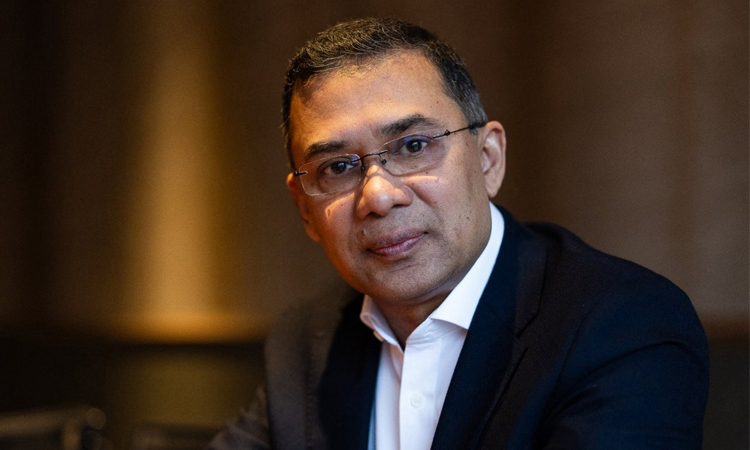
By Tahmid Shakib
DHAKA, Feb 17, 2026 (BSS)- After more than a decade of political turbulence, disputed national polls and recurring street unrest, Tarique Rahman was sworn in today as Prime Minister of Bangladesh following his party’s decisive victory in the 13th parliamentary election on February 12, 2026.
The win by the Bangladesh Nationalist Party (BNP) in the 13th national parliamentary polls marks the first broadly participatory election in over a decade, ending a prolonged period of political deadlock and opposition boycotts.
Election observers, political analysts and civil society members described the 2026 polls as fair, competitive and orderly. The outcome, they say, reflects a clear public mandate and signals a potential restoration of confidence in the country’s democratic process.
A decade of polarization Bangladesh’s political landscape since 2014 has been characterized by intense rivalry between the BNP and the Bangladesh Awami League, repeated allegations of electoral irregularities and declining trust in institutions.
The 2014 parliamentary election, boycotted by BNP, returned Sheikh Hasina to office amid controversy over unopposed win of a significant number of aspirants and turnout figures in other seats.
The 2018 polls were followed by opposition claims of widespread irregularities, including pre-election intimidation and ‘night voting.’
Political tensions escalated further after the 2024 election, when allegations of administrative bias and voter suppression triggered nationwide demonstrations in July that year.
Students, youths and civil society organizations mobilized across major cities demanding indiscrimination and institutional neutrality.
Amid mounting pressure, an interim government led by chief adviser Prof. Muhammad Yunus was formed to oversee reforms and organize fresh national elections.
The interim government introduced measures aimed at strengthening the election commission’s autonomy and enhancing judicial oversight.
Tarique Rahman’s decisive victory:
The electoral triumph of Tarique Rahman in the 13th national parliamentary election represents more than a numerical majority - it marks a political consolidation shaped by strategy, timing, and public sentiment.
Unlike previous cycles marked by boycotts and low participation, the 2026 election saw robust turnout across urban and rural constituencies. The participation of opposition parties and independent observers under a reformed electoral framework helped legitimize the outcome, transforming the vote into a credible contest rather than a procedural formality.
A critical factor behind the victory of Tarique Rahman was his ability to unify and mobilize disparate opposition forces under the banner of the Bangladesh Nationalist Party (BNP). Over the preceding years, he consolidated alliances with smaller parties, youth movements, and civil society reform advocates. This broadened coalition expanded the BNP’s electoral base beyond its traditional strongholds.
The party’s campaign infrastructure was also significantly modernized. Digital outreach, grassroots mobilization, and policy-centered messaging replaced traditional personality-driven tactics. By engaging first-time voters and urban middle-class the BNP widened its appeal to constituencies and groups that had previously shown political disengagement.
Tarique Rahman’s victory carries symbolic weight. After a prolonged period dominated by the leadership of Sheikh Hasina and Bangladesh Awami League, the outcome reflects a generational and political transition.
For many voters, the election was not solely about party preference but about resetting the democratic process itself. For Rahman, the victory marks the culmination of years spent repositioning himself from an opposition figure into a national contender advocating reconciliation.
In his post-election address, Tarique Rahman emphasized unity, pledged to protect opposition rights, and committed to institutional neutrality- signalling awareness that electoral victory must now translate into inclusive governance.
Analysts say the decisive electoral success raises expectations. The same electorate that delivered a strong mandate will demand tangible results: economic stabilization, administrative reform, and protection of civil liberties.
In that sense, Tarique Rahman’s decisive victory is both an achievement and a test - an endorsement of reformist promises that must now be realized through effective and accountable governance.
Policy priorities and challenges:
Tarique Rahman earlier outlined an ambitious agenda for his government, emphasizing the need to strengthen parliamentary oversight and institutional checks and balances, ensure media freedom and protect civil liberties, and reform public administration to reduce political interference. He also pledged to address economic inequality and rising inflation, encourage investment and job creation, and promote regional cooperation across South Asia.
Calling for national unity, Tarique Rahman urged all political actors to work together to ensure stability, development, and constructive nation-building.
Despite celebrations among BNP supporters, analysts caution that Tarique Rahman faces immediate challenges: stabilizing the economy and managing high public expectations.
Life and political journey of Tarique Rahman:
Tarique Rahman was born into one of Bangladesh’s most prominent political families. He is the son of Ziaur Rahman, a founding leader of Bangladesh, and a key figure in the establishment of the Bangladesh Nationalist Party (BNP), and Khaleda Zia, first female prime minister of Bangladesh.
From an early age, Tarique Rahman was actively involved in youth and policy-driven initiatives within the party, consolidating his influence while carrying forward his family’s political legacy.
Since 1990s, he held key positions in the central leadership of the BNP. His political life has been marked by both challenges and achievements. His experience navigating party politics, opposition pressures, and public scrutiny enabled him to develop resilience and strategic acumen. His victory in the 2026 election represents not only a personal milestone but also a symbolic new chapter in Bangladesh’s political history.
A new chapter of Bangladesh:
The 2026 general election is widely regarded as a watershed moment in the political evolution of Bangladesh. After more than a decade defined by disputed mandates, street protests, institutional strain, and growing public cynicism, the peaceful and credible transfer of power to Tarique Rahman signals what many describe as a long-awaited democratic reset.
At the heart of this new chapter lies the promise of institutional renewal. Tarique Rahman had pledged to restore judicial independence, ensure merit-based civil service appointments, and strengthen parliamentary oversight of the executive branch.
Depoliticizing the bureaucracy - long criticized for partisan alignment - will be a major undertaking. Transparent recruitment, professional training, and independent accountability mechanisms are expected to form part of broader administrative reforms. Likewise, reinforcing the autonomy of the judiciary could enhance checks and balances, helping to prevent executive overreach.
If implemented effectively, these reforms could shift governance from personality-driven politics toward rule-based institutional continuity. Beyond economics and governance, the 2026 transition presents an opportunity to heal social divisions deepened by years of political confrontation.
Inclusive development policies- targeting rural communities, urban working classes, women, and minority groups- could help bridge longstanding inequalities.
For many Bangladeshis, this moment represents a chance to rebuild faith in government and reaffirm the power of the ballot. The symbolic weight of Tarique Rahman’s premiership extends beyond party victory - it reflects the possibility of a political system recalibrated toward accountability, participation, and institutional integrity.