News Flash
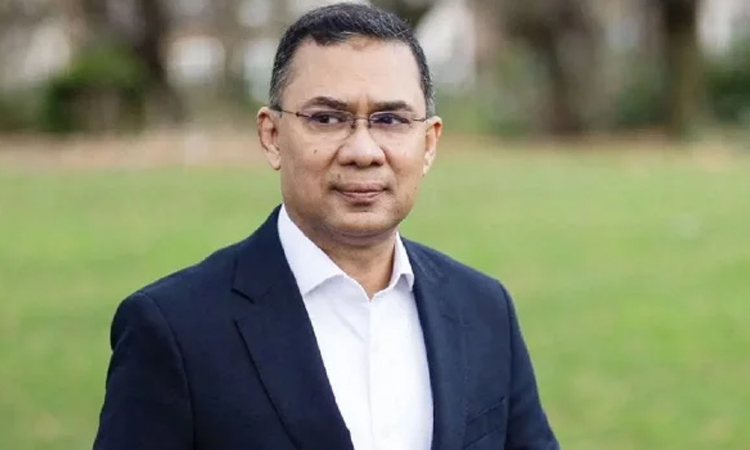
Tahmina Nupur
DHAKA, Feb 17, 2026 (BSS) - Tarique Rahman has a plan, and the people of Bangladesh believed in it. That belief was vividly reflected in the 13th National Parliamentary Election, when the Bangladesh Nationalist Party (BNP), under his leadership, secured a landslide victory. The result sent a resounding message: even after years away, a leader with a clear and compelling vision can still earn the unwavering trust of the people.
Tarique Rahman took the oath as Prime Minister of Bangladesh this afternoon, becoming the country’s first male Prime Minister in the last 35 years. Just a year ago, he was living in exile; today, he assumes leadership of the nation after securing a decisive mandate, with the BNP winning nearly two-thirds of the parliamentary seats.
How did a leader who spent more than 17 years in exile—far from the streets, rallies, and daily political life—retain such strong loyalty? How did he capture the support of young voters who mostly know him through digital platforms? To answer these questions, it is essential to examine his journey, step by step.
A Legacy Rooted in Bangladesh’s Political History
Tarique Rahman’s story is inseparable from modern Bangladesh’s political narrative. His father, Shaheed President Ziaur Rahman, declared independence for the nation in 1971 during the Liberation War, founded the Bangladesh Nationalist Party (BNP), championed multiparty democracy and centrist politics, and was later assassinated. His mother, Begum Khaleda Zia, rose from an ordinary homemaker to become the country’s first female Prime Minister. She rebuilt a fractured BNP, delivered major electoral victories, and emerged as a symbol of resistance against military-backed regimes. Despite facing arrests, illness, and prolonged imprisonment, she remained a towering political figure.
In 2008, amid intense political upheaval, Tarique Rahman went into exile in London, where he remained for over 17 years. Communication with the homeland was restricted, the political environment grew increasingly repressive, and many party activists faced hardship. Yet from afar, he continued to guide the BNP. He coordinated strategy across time zones, preserved party unity, and quietly rebuilt organisational strength. Distance turned him from a frontline leader into a long-term strategist.
The Homecoming and the Plan
Tarique Rahman returned to Bangladesh in December 2025 after 17 years in exile. On his arrival, he delivered one simple message: “I have a plan.”
That plan, which resonated deeply with voters, is built around the slogan “Shobar Agey Bangladesh” — Bangladesh First. It envisions an inclusive Bangladesh where development benefits every citizen, not just a privileged few.
The foundation rests on the BNP’s earlier 31-point framework, which calls for restoring democratic balance, ensuring credible elections, strengthening judicial independence, combating corruption, and decentralising power. These institutional reforms provide the structural backbone.
Equally important were the practical measures addressing everyday realities—measures that proved to be the decisive factor in the election.
Empowering Women: A Bold Alternative Vision
While rival parties, such as Bangladesh Jamaat-e-Islami, proposed limiting women’s office hours to five per day to prioritise childcare, the BNP placed women—nearly half the electorate—at the very centre of its agenda. The party’s outreach focused particularly on villages and low-income households, positioning women not only as caregivers but as decision-makers, leaders, and equal contributors to the national progress.
A flagship initiative is the Family Card, to be issued to the female head of each household. It provides direct monthly support in cash or essential goods, recognising the value of unpaid domestic labour and granting women financial autonomy and dignity.
Complementing this is the Health Card programme, which expands access to healthcare, strengthens local health complexes, improves maternal and child health services, and recruits additional health workers—predominantly women. This approach links healthcare reform with employment generation.
Further proposals include dedicated electric bus services for women in urban areas and expanded day-care facilities for working mothers, enhancing both safety and work-life balance.
Jobs, Opportunity, and Good Governance
The manifesto sets an ambitious target of creating 10 million new jobs within five years, with special emphasis on information technology, freelancing, and small industries. Temporary allowances for unemployed graduates, skills development programmes, as well as microcredit schemes for rural women and homemakers are designed to bring economic opportunities directly to communities and reduce forced migration.
On corruption, Tarique Rahman has openly acknowledged past shortcomings within the BNP and committed to zero tolerance, promising stronger oversight and greater transparency.
Education and youth development also feature prominently, with increased investment in quality learning and expanded skills training tailored to Bangladesh’s large young population.
This combination of institutional reform and direct support for ordinary citizens—communicated door-to-door in clear, relatable language—addressed the core concerns of economic security, safety, and dignity.
A New Chapter Begins
The political reality has now changed. Tarique Rahman is the Prime Minister of Bangladesh.
From long years in exile in London to the highest office in the land, his political journey is remarkable. Family legacy may have opened the door, but effective governance will define the future.
The plan is in place.
The mandate is clear.
Expectations are high—as they always are in Bangladesh.
The question is no longer whether he has a plan.
The real question now is: How will Prime Minister Tarique Rahman translate this vision into reality? Can he deliver an inclusive Bangladesh amid the complex challenges of governance?