News Flash
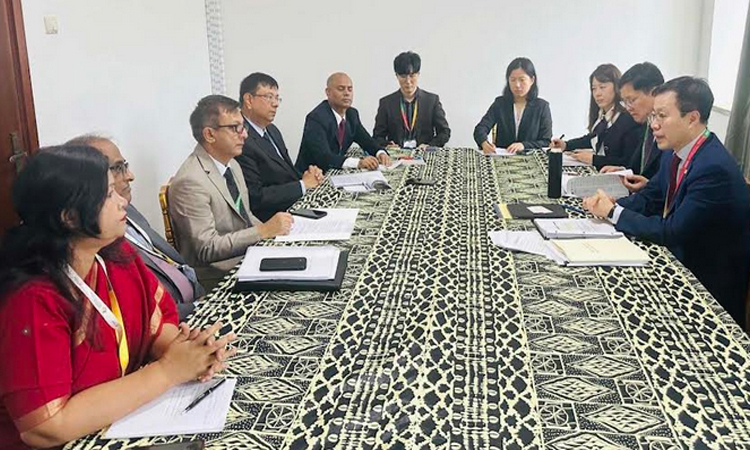
DHAKA, March 30, 2026 (BSS) - Bangladesh and South Korea held a bilateral meeting Sunday on the sidelines of the 14th WTO Ministerial Conference (MC14) in Yaound‚, Cameroon to enhance trade cooperation and mutual investment.
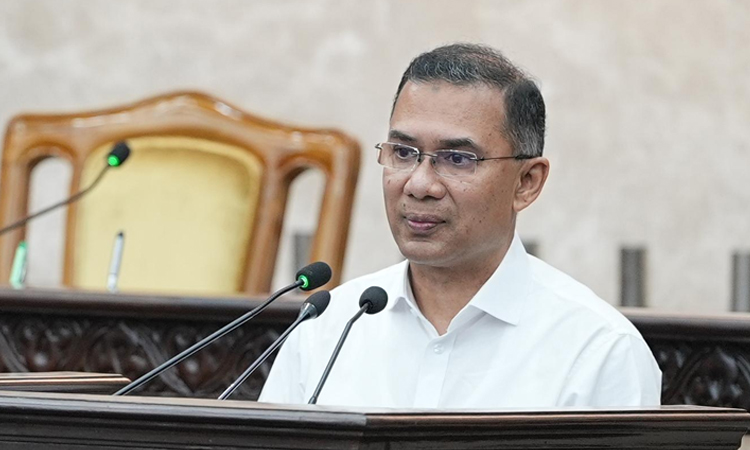
The Bangladeshi delegation was led by Commerce Minister Khandaker Abdul Muktadir, accompanied by Commerce Secretary Mahbubur Rahman and other senior officials, said a press release here today.
The South Korean delegation was headed by Trade Minister Yeo Han-koo.
During the discussions, Muktadir highlighted that a new government led by Prime Minister Tarique Rahman was formed in February 2026 following a participatory election.
He emphasized the administration's visionary trade policies, market diversification strategies, and the ongoing pursuit of Free Trade Agreements (FTA) and Economic Partnership Agreements (EPA) as Bangladesh prepares for its LDC graduation.
The Commerce Minister informed his counterpart that Bangladesh has already concluded an EPA with Japan and is currently negotiating FTAs and Comprehensive Economic Partnership Agreements (CEPA) with several nations, including South Korea and Singapore.
He also expressed Bangladesh's interest in joining the Regional Comprehensive Economic Partnership (RCEP), noting that the country's strategic geographical location and large consumer market would be mutually beneficial.
Citing the success of South Korean investments in the Readymade Garments (RMG) sector, the Minister invited further investment, asserting that Bangladesh offers an attractive business environment for foreign investors.
South Korean Trade Minister Yeo Han-koo congratulated the newly formed Bangladesh government and characterized the country as a promising economy.
He expressed a keen interest in visiting Bangladesh soon and suggested that the Bangladesh-Japan EPA could serve as an effective model for ongoing bilateral trade negotiations.
Minister Yeo Han-koo noted that while current trade volumes are below their potential, there is significant room for growth in sectors such as shipbuilding, steel, manufacturing, and investment.
Both sides agreed to maintain regular communication at ministerial and expert levels to ensure tangible progress.
The meeting concluded with a reaffirmed commitment from both nations to strengthen bilateral relations and build a mutually beneficial trade and investment partnership.