News Flash
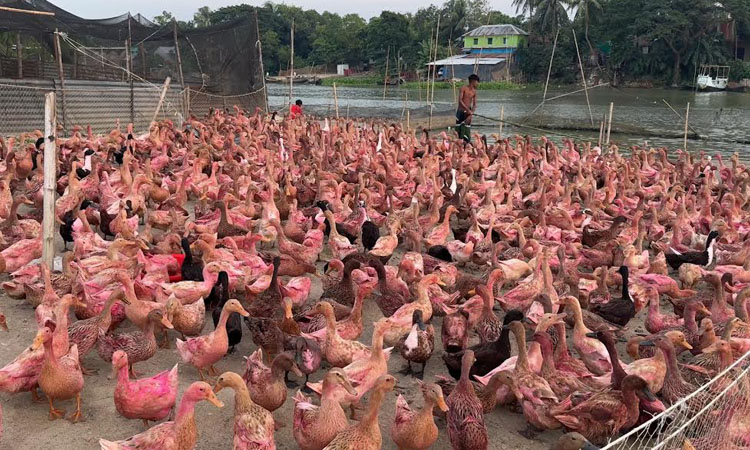
KISHOREGANJ, Nov 03, 2025 (BSS) – Hundreds of temporary duck farms have sprung up along both banks of the Ghorautra River in Nikli upazila, where local ducks swim freely in the monsoon waters by day and rest in bamboo-and-net shacks on the riverbanks at night.
According to farmers, with low capital investment, these ducks can easily access natural food such as snails and oysters, along with a small amount of grain. This sector has now created a profitable income opportunity, changing the lives of many families in the haor area.
Along with Nikli, the trend of raising ducks in rivers and flowing waters of haors is also increasing rapidly in upazilas like Itna, Mithamoin, Ashtagram, and Tarail during the monsoon season.
This is creating economic prosperity as well as new employment opportunities.
According to local sources and the District Livestock Department, about two crore duck eggs are produced annually from farms in the haor area of Kishoreganj. Even after meeting local demand, the area supplies around 25 percent of the country’s total demand for eggs.
These eggs are sent to Dhaka, Chattogram, Sylhet, and other major cities. In addition, haor duck meat is also very popular across the country. Over a hundred hatcheries have been established in the Damiha area of Tarail upazila, producing two to two and a half lakh ducklings daily using bran or steam methods, which are sent to local farms and different districts.
Alamgir Hossain, a farmer from Nikli, said, “If you farm in flowing water, you don’t need separate land. We release the ducks with nets and bamboo enclosures, and most of their food comes from snails and grain. The cost is low, so profits are good during the season.”
Rabeya Khatun from Mithamoin said, “Our egg wholesalers take them directly to Dhaka and Chattogram. But if the ducks get sick, we can’t get a doctor quickly. A mobile vet team would greatly reduce losses.”
Shahadat Hossain, a hatchery entrepreneur from Damiha, said, “There are now many hatcheries in Damiha. We can raise thousands of chicks daily. With stable electricity and a permanent collection center, production could expand further.”
District Livestock Officer Dr. Md Abdul Mannan said, “Duck meat and eggs produced in the flowing waters of the haor are pure, delicious, and nutritious. Therefore, their market demand is always high.”
He added that farmers are receiving necessary support, including training, vaccination, and advisory services, to develop this potential sector.
Currently, there are about 2,000 duck farms in Kishoreganj, raising more than 2.5 million ducks. About 1,500 farmers or entrepreneurs are involved, directly or indirectly benefiting around 12,000 families. Total egg production is about 20 million per year.
Farmers complain that veterinary assistance is not available quickly when duck diseases occur. They seek mobile vet services, vaccinations, medical support, low-interest loans, feed and egg collection centers, and price assurance.
According to stakeholders, with increased government support and market linkages, haor duck farming could grow from a local livelihood activity into a major economic sector in the country.