News Flash
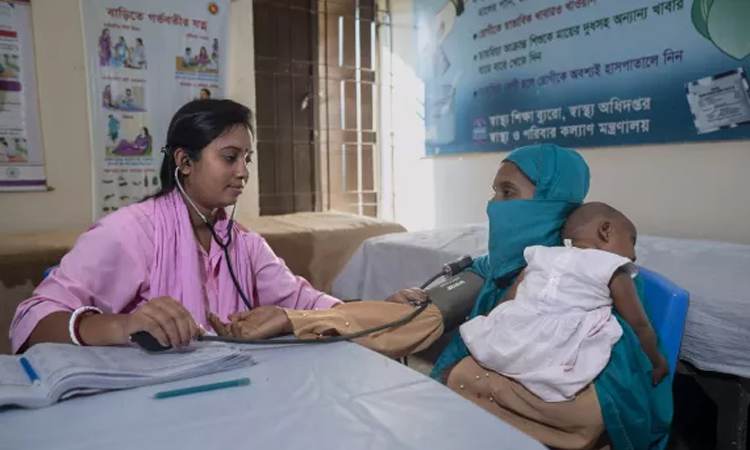
DHAKA, April 26, 2026 (BSS) – Women, especially mothers, must remain careful and well-informed about childbirth, as many aspects of a child’s wellbeing depend on reproductive health.
However, women in Bangladesh still face considerable uncertainty regarding reproductive health, and this situation persists not only in remote rural areas but also in urban centres.
Experts have emphasised that a shift in mindset, along with greater care for mothers, is essential to improve awareness in this regard.
According to a report titled ‘Bangladesh Maternal Mortality and Health Care Survey 2016: Preliminary Report’, 13 percent of deaths among women of reproductive age (15–49) occur during childbirth.
Sources said the Maternal Mortality and Health Care Survey was also conducted in 2001 and 2010. The 2001 survey found that 20 percent of women’s deaths were related to maternity.
Women aged between 20 and 34 are more likely to die from maternal complications. In addition, 24 percent of deaths are caused by cancer and 23 percent by blood infections.
According to the survey, the rate of childbirth at health centres has increased over the years. It was only nine percent in 2001, rose to 23 percent in 2010, and reached 47 percent in 2016.
However, 53 percent of mothers still give birth with the assistance of unskilled birth attendants. Only three percent of healthcare facilities across the country meet the minimum standards for normal delivery.
Experts attribute this largely to a lack of adequate knowledge and persistent misconceptions about reproductive health among mothers.
According to the 2010 survey, 31 percent of maternal deaths are caused by excessive bleeding during childbirth, 20 percent by convulsions, seven percent by complications or prolonged labour, one percent by abortion, 35 percent by indirect causes (such as heart disease and jaundice), five percent by other direct causes, and one percent by unknown causes.
The 2016 survey similarly found that 31 percent of maternal deaths were due to bleeding and 24 percent to convulsions.
Kamrun Nahar, a member of the survey’s research team, said the findings clearly identify priority areas, including the main causes of maternal death. Bleeding and convulsions continue to be the leading causes, yet effective programmes to address these issues remain insufficient, she added.
She also noted that many mothers lack adequate knowledge about reproductive health and are often not interested in learning about it.
She said mothers in rural areas are still largely unaware of these issues.
Reproductive health expert Dr Nazmun Nahar said many women still feel uncomfortable discussing such matters openly. “We need to plan pregnancies before conception and act accordingly. However, the issue has long been neglected. Such situations are evident even in educated families and urban areas,” she said.
According to a source at the Directorate General of Health Services (DGHS), around 5,000 to 6,000 mothers die each year during childbirth, 95 percent of which are preventable. Such deaths are therefore unacceptable, the source added.
A midwifery education programme is currently being run under the James P. Grant School of Public Health at BRAC University.
Highlighting conditions across different parts of the country, the programme’s head, Selina Amin, said maternal deaths could be significantly reduced by strengthening midwifery services.