News Flash
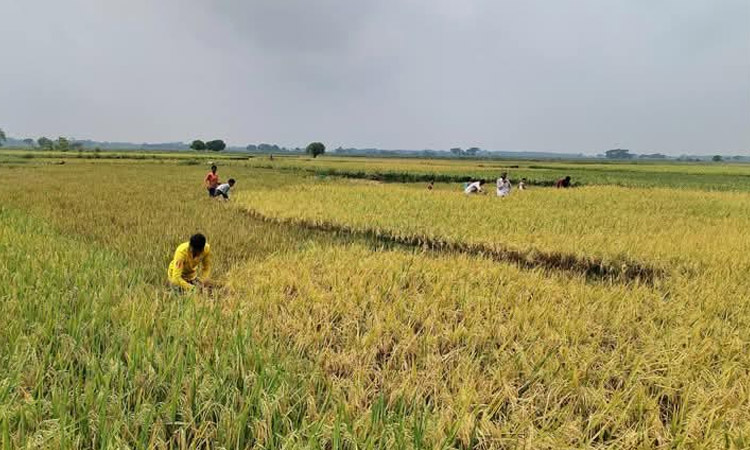
SUNAMGANJ, April 26, 2026 (BSS) - Farmers in Sunamganj are rushing to harvest ripe Boro paddy following an urgent directive from the Water Development Board, as looming floods and ongoing rainfall threaten crops across the haor area.
Authorities have instructed farmers to complete harvesting by April 28 to minimize potential losses from rising water levels caused by heavy rainfall and upstream flow. In response, harvesting activities are in full swing across the district, with farmers working against time under increasingly difficult conditions.
However, the situation on the ground remains challenging. Continuous rain and early Baishakh showers have caused waterlogging in many low-lying haors, submerging both semi-ripe and fully ripe paddy fields. Agriculture equipment, particularly harvesting machines, cannot operate effectively in waterlogged land, forcing farmers to depend on manual labor.
This has pushed up harvesting costs significantly. Due to labor shortage, farmers are paying between Taka 800 and Taka 1,000 per laborer, while mechanical harvesting costs around Taka 2,000 per kedar (30 decimal) of land.
Local farmer Rashid Ullah from Naluar Haor described the distressing situation: “Our ripe paddy is going under water, and we are helpless. Labor is expensive, and machine costs are also high. Meanwhile, paddy prices are low. If we don’t get a fair price, we will be in serious trouble.”
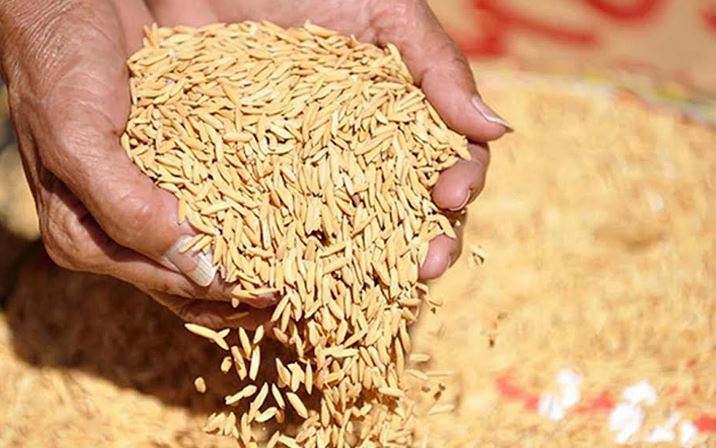
At present, raw paddy is selling around Taka 500 per maund, while dry paddy is priced at maximum Taka 800 per maund in local markets—figures farmers say do not cover rising production costs.
Mill owners confirm the market trend. Amir Ali of Ekta Mills in Jagannathpur said they only purchase good quality dried paddy at up to Taka 800 per maund. Businessman Tajul Islam said that although there were recent fuel shortages affecting harvester operations, the situation has improved after securing diesel supplies.
Despite favorable yields this season, farmers remain concerned about profitability due to low market prices and increased harvesting expenses.
According to the District Department of Agricultural Extension (DAE), Boro paddy has been cultivated on 2,23,511 hectares of land this year, slightly exceeding the target. The production target has been set at about 14 lakh metric tons.
However, adverse weather has already caused damage to 1,331 hectares of crops in two phases. Currently, harvesting is underway in all upazilas of the district, with about 37 percent completed so far.
Deputy Director of Department of Agriculture Extension (DAE) Mohammad Omar Faruk expressed cautious optimism, stating that if weather conditions remain stable, harvesting could be fully completed by May 15.
As farmers battle natural challenges and economic uncertainty, the call for fair pricing remains central to ensuring their survival this season.