News Flash
By Ibrahim Khalil Mamun
COX'S BAZAR, May 15, 2026 (BSS) - With Eid-ul-Azha approaching, cattle trading has already gained momentum at the farm level in Cox's Bazar, although the district's seasonal livestock markets are yet to formally open.
Local farms are witnessing a growing influx of buyers and visitors as farmers showcase a wide range of sacrificial animals ahead of the festival.
District livestock officials said there would be no shortage of sacrificial animals this year, as local production has exceeded the estimated demand in the district.
However, farmers and traders voiced concern over cattle entering through illegal routes from Myanmar, warning that such smuggling could spread contagious diseases among domestic livestock and financially harm local farmers.
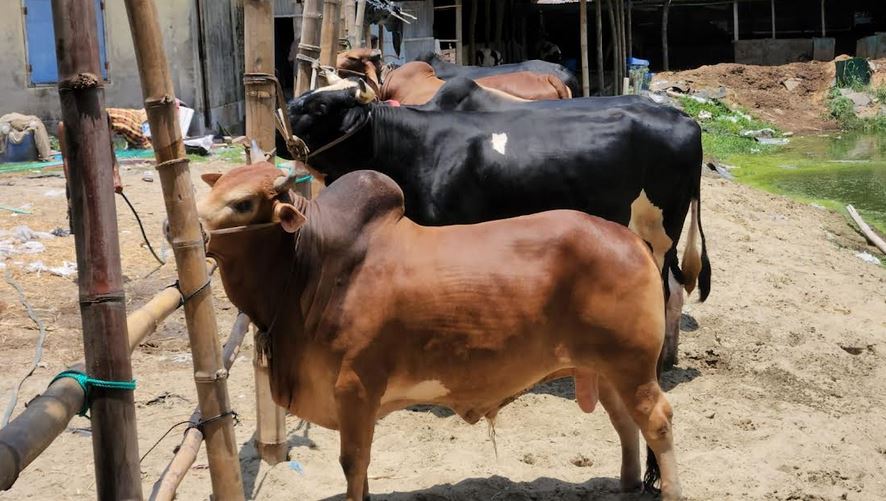
A visit to "Mayer Doa Dairy Farm," located beside the Central Jame Mosque in Ward No. 1 of Cox's Bazar town, revealed rows of well-groomed cattle of different breeds being prepared for Eid sales.
Farm owner Nurul Islam said more than 40 cattle, including Shahiwal, Australian, Damsi and local breeds, have been readied for this year's sacrificial market.
Among the animals drawing the most attention are specially named bulls such as "Kalo Manik," "Tiger," "Bahubali," "Shahenshah," "Kala Bahadur," "Bullet King" and "Danger Lalu."
Founded eight years ago, the farm now houses around 100 cattle, including dairy cows, calves and bulls.
Nurul Islam said the animals are being raised naturally without the use of fattening drugs or harmful injections. Instead, they are fed grass, bran, oilcake and other conventional feed under hygienic conditions.
The farm's most talked-about attraction is "Kalo Manik" - a massive black bull measuring nearly 16 feet in length and weighing more than 22 maunds.
The bull has been priced at Tk 800,000 due to its striking appearance and size.
"Several buyers have already offered between Tk 500,000 and Tk 650,000 for Kalo Manik," Nurul Islam told BSS, adding that rising feed prices have significantly increased production costs.
He said cattle at the farm are being sold for prices ranging from Tk 200,000 to Tk 800,000.
Farm workers caring for the animals said they have become emotionally attached to the cattle after raising them with great care over the years.
Meanwhile, crowds of visitors continue to flock to the farm daily. Some inspect the cattle closely, while others inquire about prices or negotiate deals.
Visitors said the farm's cattle stand out for their appearance, quality and comparatively attractive pricing.
According to the district livestock office, the demand for sacrificial animals in Cox's Bazar this year stands at 134,295, while local farms have produced 158,163 cattle, buffaloes, goats and sheep.
Authorities have designated 56 permanent and seasonal cattle markets across the district for Eid trading.
To ensure healthy livestock sales, 27 veterinary medical teams have been formed to conduct health checks and provide treatment services at cattle markets.
Cox's Bazar Sadar Upazila Livestock Officer Dr Md Mahabubur Rahman warned that illegally smuggled cattle from Myanmar could spread infectious diseases among local livestock and negatively impact domestic farmers.
District Livestock Officer Dr A M Khalekuzzaman said farmers have been advised to feed more green grass and straw to reduce costs amid rising feed prices.
"We will take action against anyone using harmful methods to fatten cattle. Veterinary medical teams will remain active at every cattle market to ensure that no sick animal is sold," he added.