News Flash
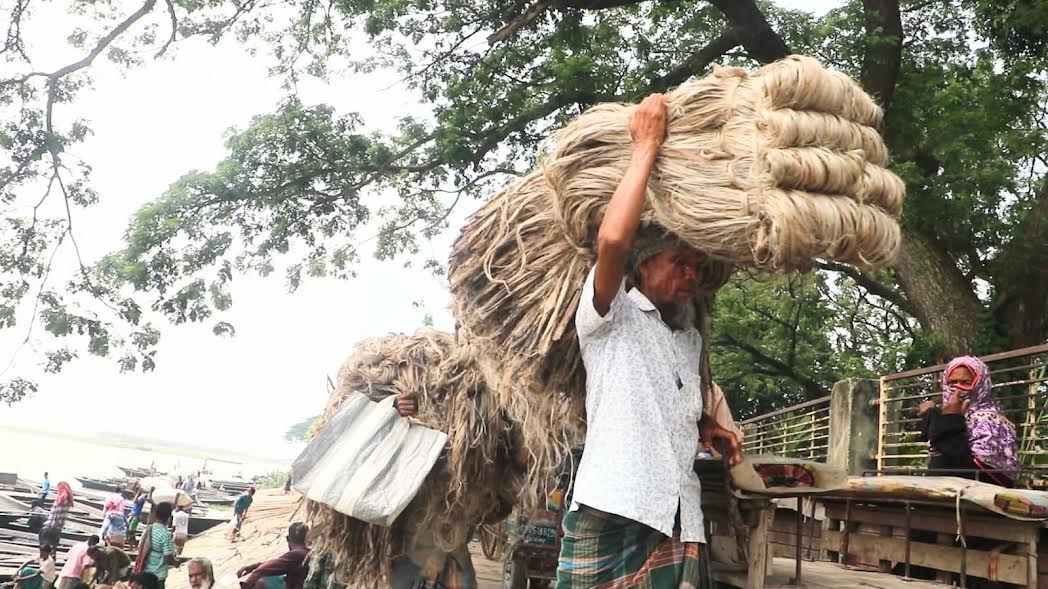
GAIBANDHA, Sept 9, 2026 (BSS) - Jute, known as the golden fiber of Bangladesh, has regained its good days in Gaibandha as prices of the cash crop reached a record high during the peak harvesting season, bringing smiles to farmers across the district.
Farmers said they had not received such a high price for jute during the peak season in at least the past 10 years. The improved market price has enabled them to cover production costs and make profits, helping revive their interest in jute cultivation after years of frustration.
A visit to Kamargani and Fulchhari haats in Sadar and Fulchhari upazilas respectively found a festive atmosphere as farmers and traders were busy buying and selling jute.
Farmers from the riverine char areas arrived at the markets by boat from early morning, while trading was also taking place on boats beside the market grounds.
Jute was selling at Taka 3,800 to Taka 4,100 per maund depending on quality,
according to farmers.
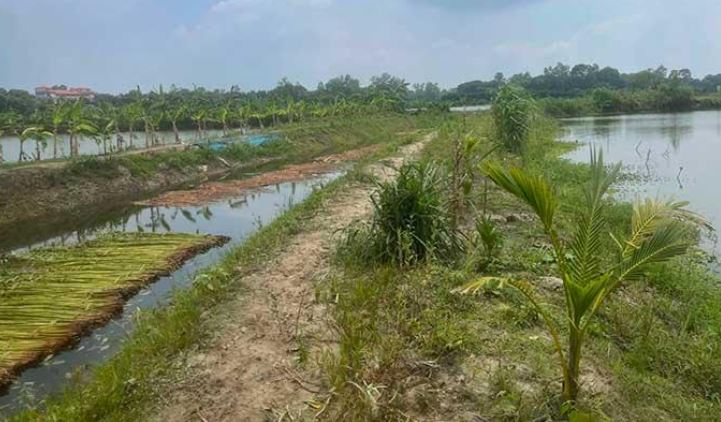
Farmers in several areas of Fulchhari upazila, including Udakhali, Uria, Fazlupur and Kanchipara Unions, were also seen drying and stripping jute and preparing it for sale. Many were working alongside family members, with happiness visible on their faces as they hoped for better returns this year.
Jute farmer Abdus Salam of Bagbari area under Fulchhari Union said, "We are happy with the price of jute this year. If such a market continues, we will cultivate more jute."
Another farmer, Abed Ali Bepari, said farmers were making profits after meeting all production expenses.
"We are getting such a price during the peak season after around 10 years. However, we are worried about how long the current price will remain," he said.
Wholesale jute buyer Khorshed Alam, who comes from Ghutail Bazar in Jamalpur, said the best-quality jute was being purchased at Taka 4,050 to Taka 4,100 per maund, medium-quality jute at Taka 3,900 to Taka 4,000 and relatively low-quality jute at Taka 3,800.
"The price of jute is very good this year," he added.
According to data from the Department of Agricultural Extension (DAE) in Gaibandha, jute cultivation has increased slightly over the past two years after witnessing a sharp decline in previous years.
Jute was cultivated on 13,987 hectares of land in the district this year, an increase of 170 hectares from 13,817 hectares in 2025. In 2022, jute was cultivated on 16,460 hectares in the district's seven upazilas.
The cultivated area fell by around 1,400 hectares in 2023 to 15,060 hectares, while it declined further by 1,210 hectares in 2024 to 13,790 hectares.
The agriculture department has, however, failed to achieve its cultivation and production targets in recent years, including this year. Government incentives in the form of seeds and fertilizers have continued to support farmers.
This year, jute production in the district is estimated at 34,987 metric tonnes from 13,987 hectares of land. Crops on around 48 hectares of land were damaged this season.
Local farmers said jute cultivation involves considerable risks, including floods, droughts and other natural calamities, besides heavy labour and dependence on loans. They alleged that prices are often influenced by middlemen, traders and mill-owner syndicates, leaving farmers with little bargaining power.
As a result, many farmers had lost interest in jute cultivation after suffering losses in previous years. However, cultivation has started to increase gradually over the past two years.
Farmer Faruk Hossain of Uttar Rasulpur in Kanchipara Union said traders often formed syndicates to purchase jute when around 90 percent of farmers still had jute stored at home.
Another farmer, Jahangir Alam Sarker of Kholabari, said farmers depend heavily on jute sales to meet household expenses and repay loans.
He called for government monitoring of jute buying and selling from the beginning of the season to ensure farmers receive fair prices.
Jute farmer Ziarat Uddin said farmers in the char areas have few alternatives to jute cultivation during the season.
"We are people of the chars. Jute is the only crop we can cultivate in the char areas during this season, so we are compelled to grow it," he added.
He urged the government to stand by farmers and take effective measures in this regard, saying farmers face both production risks from floods and other disasters and uncertainty in the market.
Deputy Director (in-charge) of the DAE in Gaibandha Asaduzzaman said the jute market in the district was currently good.
"Farmers are being encouraged to increase jute cultivation alongside other crops," he added.