News Flash
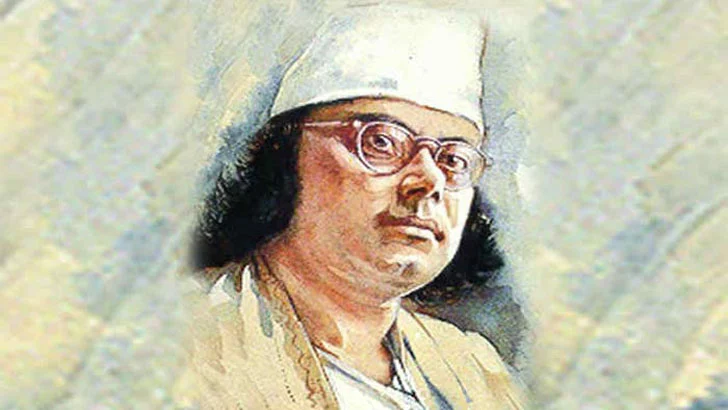
DHAKA, Sept 09, 2026 (BSS)- It was mid-February 1924. National Poet Kazi Nazrul Islam arrived at Parbatipur of Dinajpur from Kolkata by Darjeeling Mail train.
Mahfuzar Rahman Khan, then a student of Kurigram High School and his friend Khedmat Ullah welcomed Nazrul at Parbatipur.
They later boarded a Cooch Behar bound metre-gauge train with Nazrul and travelled via Rangpur to Teesta Junction. From there, they changed trains to a narrow-gauge line and reached Kurigram at dawn.
Babu Indubhushan Roy, the then headmaster of Kurigram High School had sent two consecutive invitations to Nazrul, requesting him to attend the school's annual Milad Mahfil held to mark Eid-e-Miladunnabi as the chief guest.
After Nazrul agreed, Taka 50 was sent to him by telegraphic money order to cover his travel expenses. The invitation was basically initiated by Mahfuzar Rahman Khan, a Class-X student and later became a distinguished writer, researcher and publisher.
In previous years, eminent personalities including Dr Muhammad Shahidullah, Jamiruddin Vidyabinod, Sir Azizul Haque and Ismail Hossain Siraji decorated the annual gathering of the institution as chief guests. Continuing that tradition, the proposal to invite Kazi Nazrul Islam as the chief guest in 1924 was adopted.
AKM Samiul Haque Nantu, a Language Movement veteran from Kurigram, told BSS that headmaster Indubhushan Roy was keen to foster closer bonds and goodwill among the school's teachers, students and guardians.
As part of this effort, he used to organise an annual Puja for Hindu students and an annual Milad Mahfil for Muslim students.
Nantu said his maternal grandfather, distinguished educationist and headmaster of Kurigram Minor School Farid Uddin Ahmed was present at the historic event at Kurigram High School in 1924.
In his reminiscences, Nantu also recalled that Nazrul visited Kurigram again in 1949, when Nantu was a Class-IV student. At the time, the main school building was at town's Madhabram area.
The original school building was later lost to erosion by the Dharla River, forcing the institution to shift to the present location at New Town. The school was nationalised in 1968.
During his stay in Kurigram, Nazrul was hosted by Mahfuzar Rahman Khan at his residence. Khan later wrote an essay titled “Kazi Nazrul in Kurigram and Proximity with Nazrul”, in which he recorded the full speech delivered by the poet at Kurigram High School.
According to Khan's account, he transcribed Nazrul's entire speech, which lasted for more than three hours.
That evening, Mahfuzar Rahman, Kazi Enamul Haque and several other students sat on the grass beside the turbulent Dharla River and had a long conversation with the poet.
Nazrul spoke on a wide range of subjects and showed particular curiosity about the origin of the name Kurigram and other important historical aspects of the region.
He also shared experience from his life with the students. Sitting beside the Dharla, his head held high and his bushy hair swaying in the breeze. The poet kept the young students closely attached in an animated exchange about literature, history and life.
Nazrul researcher Abu Hena Abdul Awal in his book titled “Nazrul in Bangladesh: Visits and Receptions” wrote- Nazrul agreed to extend his stay in Kurigram at the request of local people following the school gathering.
The next day, at 4 pm, he addressed a huge public meeting on the Kurigram Bazar premises, speaking in support of Congress politics.
Amid enthusiastic applause and calls from the crowd, he then performed a series of his own revolutionary and inspirational songs.
On the day of his return to Kolkata, Nazrul held an informal meeting with students, discussing poetry, literature, religion, politics and history. Later, a large and enthusiastic crowd of students and local people gathered at the railway station to bid a warm farewell to the poet.
Nearly a century later, those encounters remain vivid in the Kurigram's cultural history. The banks of the Dharla still evokes the memories of Nazrul, successful evening engagement with youths, and the attachment the poet showed to the people.