News Flash
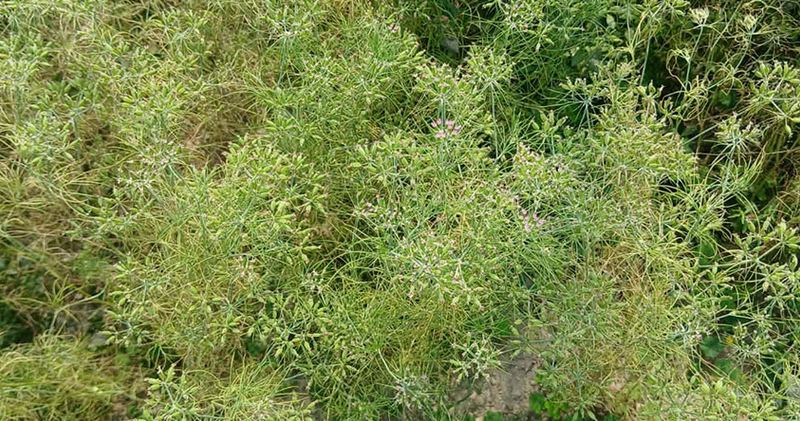
DINAJPUR, March 25, 2026 (BSS) - A farmer in Dinajpur's Hakimpur upazila has achieved notable success in the experimental cultivation of cumin, sparking interest among local farmers and agricultural officials.
Hamidur Rahman, 42, a resident of Satkuri village near the Hili border, cultivated cumin on a small portion of his land using modern agricultural techniques.
According to Hakimpur Upazila Agriculture Officer Arzina Begum, the farmer managed to produce around 5 kilograms of cumin from approximately three decimals of land, marking a promising start for spice cultivation in the area.
Rahman said he collected cumin seeds online and undertook the cultivation initiative independently. "Cumin has never been grown in our area before. I decided to try it on a small scale, and the yield has been encouraging," he said, adding that the quality and aroma of his produce are superior to those available in local markets.
Local Union Parishad member Md. Rafiqul Islam expressed optimism about the development. "This is the first time cumin has been cultivated here. The plants and yield are impressive. Considering the relatively low cost and short cultivation period, it could be a profitable option for farmers," he said. He also mentioned that imported cumin currently sells for Taka 600 to Taka 700 per kilogram in the Hili market.
Echoing similar sentiments, Hakimpur Municipality BNP General Secretary Sakhawat Hossain Shilpi described the initiative as commendable and said it has already begun to inspire other farmers in the region.
He urged the Agriculture Department to take steps to promote cumin cultivation domestically to reduce reliance on imports.
Deputy Director of Department of Agriculture Extension (DAE) Md. Afzal Hossain attributed the success to the use of quality seeds and proper care. He said agricultural officials have started providing guidance to farmers interested in cultivating cumin and expressed hope that expanding spice cultivation could open new economic opportunities in the region.
The success of this pilot initiative is expected to encourage more farmers to explore cumin cultivation, potentially contributing to local agricultural diversification and reducing import dependence.