Wednesday
19 August, 2026
DHAKA, Dec 1, 2025 (BSS) - As Bangladesh heads toward its scheduled general election in February 2026, the economic outlook is cautiously optimistic.
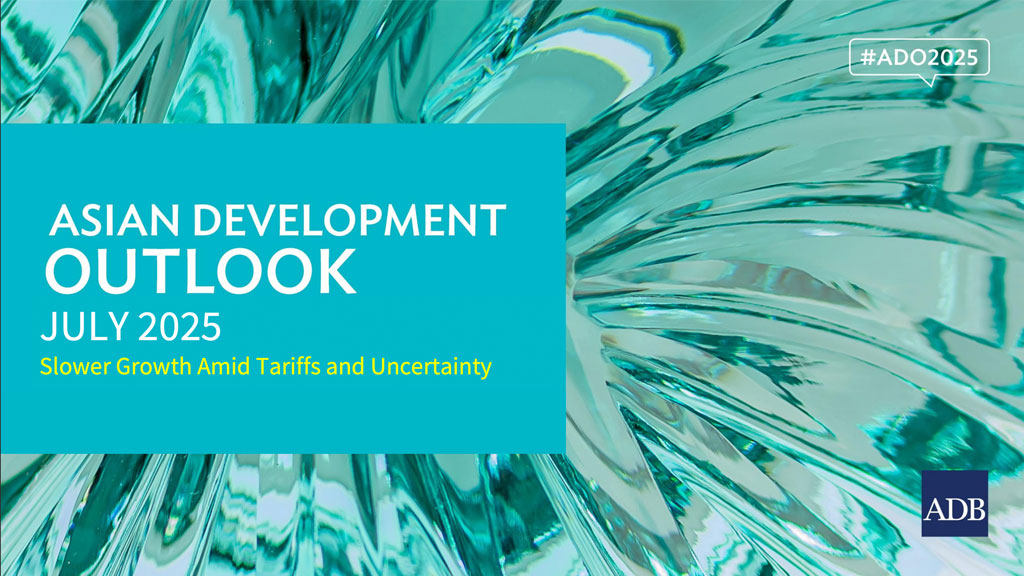
On the one hand, growth is expected to rebound: the Asian Development Bank (ADB) forecasts around 5% GDP expansion in FY26, after a slower period, while remittances and exports, especially garment exports, remain key sources of foreign exchange and economic resilience, according to a new publication of the Planning Ministry.
The November 2025 issue of Economic Update and Outlook, published by the General Economics Division (GED) of the Planning Commission, offers a cautiously optimistic view but warns that deep structural weaknesses—along with the political transition period—could constrain economic momentum.
According to the analysis, the economy could regain pace if the election produces a clear political direction and the next government decisively undertakes long-delayed reforms, particularly in improving the business climate, stabilising the banking system, and ensuring fiscal and energy security. Without such reforms, the recovery may be short-lived.
The Asian Development Bank (ADB) has forecast around 5 percent GDP growth for FY26 following a sluggish period. Remittances and garment exports continue to provide much-needed resilience. But, the GED notes that the broader economic environment remains fragile as both investors and entrepreneurs appear to be “waiting” for political stability before committing to new ventures.
Election-related spending and possible disruptions during the transition are expected to add further pressure on inflation and the foreign exchange market, complicating stabilisation efforts.
Overall inflation dropped to 8.17 percent in October 2025, from 10.87 percent a year earlier, driven almost entirely by a sharp fall in food inflation. Food inflation plunged from 12.66 percent in October 2024 to 7.08 percent in October 2025 as rice supply improved due to the Aman harvest, imports and public procurement.
However, non-food inflation inched up to 9.13 percent, reflecting persistent pressure in housing, transport and healthcare—an indication that inflation remains far from under control.
The report points out that rice alone accounted for about 47 percent of total food inflation in October. While vegetables exerted a strong negative contribution due to seasonal abundance, protein items such as beef, chicken and hilsa saw steady inflation, influenced by feed and transport costs.
While bank deposits grew at nearly double-digit rates through August and September, private-sector credit growth fell to just 6.29 percent—the lowest in at least four years and well below the Bangladesh Bank’s FY26 target of 7.2 percent.
High lending rates, cautious bank behaviour and political uncertainty have depressed investment appetite. Meanwhile, government borrowing from commercial banks surged 24.45 percent in September, raising concerns about crowding out private borrowers.
Interest rate spreads also exposed deep structural distortions. Foreign commercial banks maintained spreads close to 9 percent—far higher than state-owned and private banks—highlighting issues such as high operational costs, non-performing loans and market concentration.
Revenue collection in October 2025 fell short of the target by Tk 8,324 crore, achieving only 77.37 percent of the month’s goal. All major revenue streams—import duties, domestic VAT, and income tax—underperformed.
Although collection was slightly higher than in October 2024, the growth of just 2.2 percent was described as “pessimistic” given inflationary pressures and increased public spending needs.
ADP utilisation continues to lag despite marginal improvements. Up to October, utilisation stood at 8.33 percent, only a slight increase from 7.90 percent last year. Lower overall allocations and reduced spending under own-financing components indicate financial strain and weak project execution.
The report notes that while utilisation rates improved marginally in some categories, the decline in total expenditure—from Taka 8,762 crore last year to Tk 7,720 crore this year—reflects ongoing bottlenecks in planning, fund release and implementation.
Foreign exchange reserves improved significantly, rising from US$24.35 billion in November 2024 to US$ 32.34 billion in October 2025. BPM6 reserves also rose sharply, supported by stronger remittances and prudent reserve management.
Remittances surged in the first four months of FY26, with each month outperforming the previous year and September recording the highest inflows.
However, export earnings remained volatile. Exports peaked in July at US$ 4.77 billion but suffered sharp declines in April and June. RMG exports mirrored these fluctuations, while non-RMG exports also experienced mid-year downturns.
Imports—especially capital machinery—saw steep contractions year-on-year, signalling depressed investment demand. A slight month-on-month recovery in August and September suggests only tentative stabilisation.
The real effective exchange rate (REER) appreciated notably, indicating eroding external competitiveness. The report warns that large-scale dollar purchases by the central bank—unless sterilised—could fuel inflation and distort market-based exchange rate mechanisms.