News Flash
By Md Mamun Islam
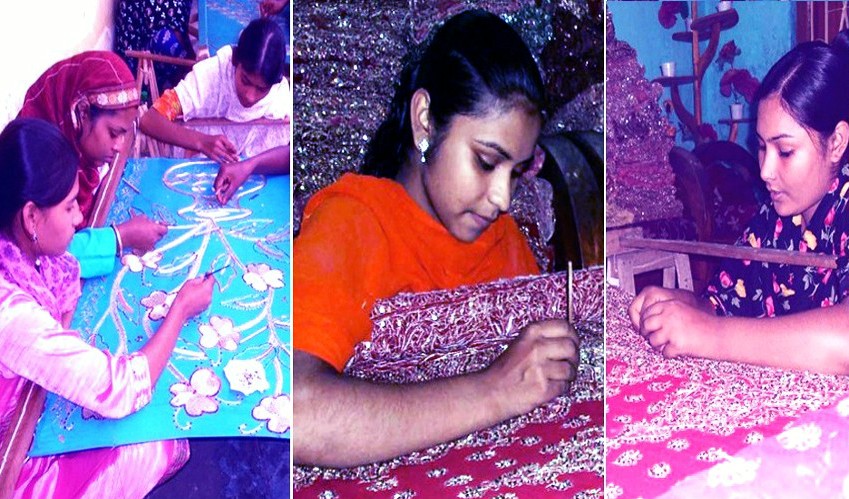
RANGPUR, March 2, 2026 (BSS) - Many female artisans are extremely busy
stitching ornaments to add extra value, fashion, and elegance to women's
clothing ahead of Eid-ul-Fitr, as their handicrafts are in high demand in the
upscale markets.
Officials and development experts said that around 25,000 women in Rangpur
division are now busy with decorative needlework at home or in local
enterprises to earn a better income during this special time of year.
"These women are recognized as skilled artisans for their work in embroidery,
spangle, and decorative stitching on sarees, three-pieces, and other
garments," Deputy General Manager of Bangladesh Small and Cottage Industries
Corporation (BSCIC) for Rangpur Md Ehesanul Hoque said.
Over the past decade and a half, embroidery on women's clothing has become a
profitable venture in all eight districts of Rangpur division, alleviating
poverty, making unemployed women self-reliant, and having a huge positive
impact on the rural economy.
The BSCIC, Department of Youth Development (DYD), Bangladesh Rural
Development Board, Department of Women Affairs (DWA), Department of Social
Services, other departments and NGOs are working with entrepreneurs and
businessmen to help expand this sector.
Deputy Director of the DYD, Rangpur, Md Abdul Khaleque said that in Rangpur
district alone, with the help of DYD, about 3,500 rural women have changed
their fortunes through this initiative to lead a better life along with their
family members.
The DYD provides necessary training on sewing and embroidery to unemployed
young women, divorced and distressed women and distributes easy term loans
and materials to make them self-reliant.
"This type of home-based or enterprise-based embroidery work has taken the
form of a growing cottage industry that has created huge employment
opportunities for unemployed young women, alleviating poverty, transforming
the rural economy," he said.
Deputy Director of the DWA for Rangpur Mst Saloara Begum said that over 4,500
unemployed women in Rangpur district are earning a good income after
receiving training in sewing and embroidery and assistance from the
department.
Talking to BSS, female entrepreneur Sanjida Lopa said she has established
'Taimur Boutique' in Dhal Lalkuthi area of Rangpur city where 15 young women
are working as expert craftsmen and many of them are earning up to Taka
16,000 per head per month.
"Currently, we are facing immense pressure to supply pre-ordered oak for
embroidery, spangle and decorative stitching on sarees, three-pieces and
other women's wear before the Eid-ul-Fitr festival, like previous years,"
said Sanjida.
Chand Mia, an entrepreneur from Chankuthi Danga village in Badarganj upazila
of Rangpur, said that he has transformed many poor rural women into skilled
spangling and embroidery artisans by expanding the spangling industry.
Artisans Farida Parveen, Shamima, Marjina, Rubi Begum and Kamrun Nahar said
that they, like other women in the upazila, have become self-reliant through
ornamental needlework, like unemployed girls and teenagers from Chankuthi
Danga village.
Successful artisans Fatema Khatun, Anar Koli, Mariyam, Julekha Begum, Saleha
and Noorjahan from Saidpur upazila of Nilphamari said that before Eid, they
usually earn Taka 12,000 per month and up to Taka 20,000 through embroidery.
Dr Syed Shamsuzzaman, chairman of the Rangpur-based 'North Bengal Institute
of Development Studies', said embroidery and spangling have emerged as a
cottage industry as rural women have taken up their own initiatives to
transform the rural economy.
"Most of the successful women initially started their ventures from their
homes. However, these home-based embroidery and spangling activities have now
emerged as a potentially growing cottage industry sector in Rangpur
division," he said.
Many successful rural women have now launched their own ventures after
receiving training and necessary support to expand this sector in
collaboration with local businessmen.
"Women artisans earn double their income before the Eid-ul-Fitr festival as
they work harder to produce more high-quality clothing, including ornamental
stitching, for women during this special time of year," he added.