News Flash
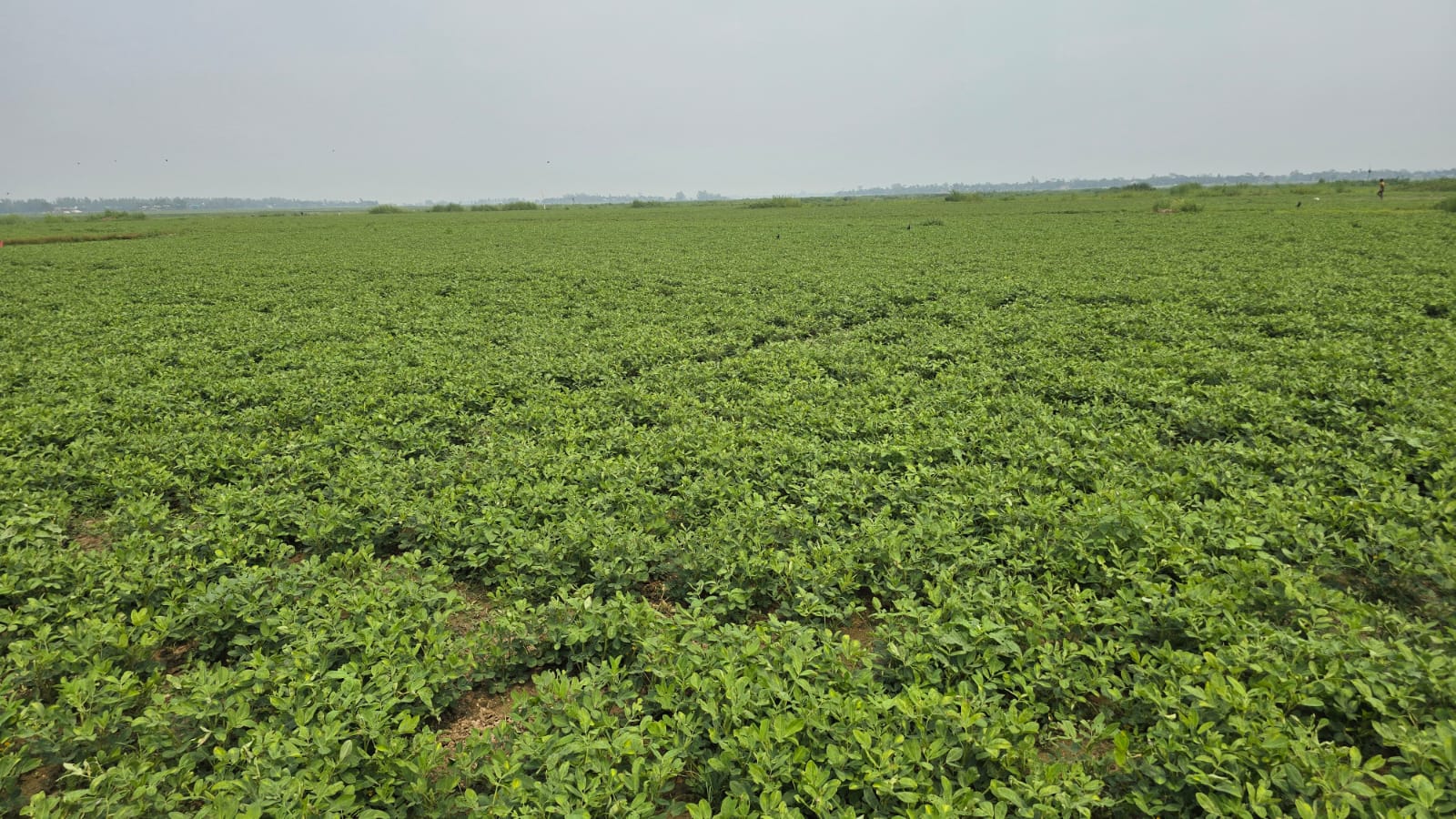
NARSINGDI, April 1, 2026 (BSS) – Groundnut cultivation is gaining significant popularity among farmers in the char areas of Narsingdi, driven by low production costs, minimal labor requirements, high yields, and attractive market prices.
The quality of locally produced groundnut has created strong demand across the country, encouraging more farmers to adopt the crop.
According to the Department of Agricultural Extension (DAE) in Narsingdi, various initiatives are underway to support and motivate farmers. These include the distribution of seeds, financial incentives, training programs, and agricultural exhibitions under different development projects and research initiatives in the Dhaka region.
Large-scale groundnut cultivation is particularly expanding in the char areas along the Meghna River in Raipura upazila. Areas such as Chanpur, Majher Char, Mauhinipur, Sadagar, Kandir Char, Chardighaldi, Alokbali in Sadar upazila, and Char Belabo have seen a notable increase in groundnut farming this season.
Farmers report that groundnut is more profitable compared to many traditional crops. The crop requires little to no fertilizer or pesticides, making it cost-effective and environmentally friendly.
Additionally, the land used for groundnut cultivation can later be utilized for other crops, increasing its overall productivity.
On average, farmers spend between Taka 15,000 and Taka 20,000 per bigha for cultivation and can earn between Taka 35,000 and Taka 40,000 from sales.
Jalal Uddin, a farmer from Majher Char village in Raipura, shared his experience: “This year, I cultivated groundnut on about 10 bighas of land, investing around Taka 200,000. If conditions remain favorable and flooding does not occur, I expect to earn nearly Taka 500,000.”
The growing groundnut industry is also creating employment opportunities for local residents, including women, who are involved in drying, processing, and sorting the produce.
Officials from the Agriculture Department are providing continuous guidance to farmers on expanding cultivation, as well as managing pests and diseases.
Salauddin Tipu, Additional Deputy Director (Crops) of DAE, said that groundnut is being cultivated on previously fallow land, contributing to increased agricultural production and farmers’ income.
He added that although the cultivation target for this year was set at 290 hectares, the actual cultivated area has exceeded expectations, reaching 310 hectares of land.
With rising demand and continued institutional support, groundnut cultivation in Narsingdi’s char areas is expected to grow further in the coming years.