News Flash
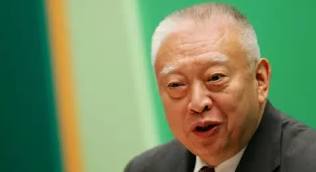
HONG KONG, 9, 2026 (BSS/AFP) - Tung Chee-hwa, Hong Kong's first leader after the city's return to Chinese rule, has died aged 89, his office said Wednesday.
He was a divisive figure, with Chinese state media hailing him on Wednesday as a "renowned patriot" and "close friend of the Communist Party", though some of his policies sparked widespread protests.
Tung, a former shipping tycoon hand-picked by Beijing to run the former British colony after its 1997 handover, resigned in 2005 after a rocky tenure.
He steered the city as it was battered by the Asian financial crisis, the deadly SARS epidemic and mass protests in its turbulent early years back under Chinese rule.
Tung "passed away peacefully in the presence of his beloved family members" on Tuesday, a statement from his office said.
His successor Donald Tsang said he was "filled with sorrow", adding that Tung was "an easy-going, gentle and refined man with a broad-minded outlook and far-reaching vision".
The British consulate general in Hong Kong said Tung played a "historic role" as the city's first chief executive after the 1997 handover.
"The United Kingdom worked closely and constructively with his administration in taking forward shared commitments under the Sino-British Joint Declaration," it added, referring to the 1984 agreement that Hong Kong could keep autonomy and some freedoms after returning to Chinese rule under a "One Country, Two Systems" model.
The US consulate said Tung had a "pivotal role" in strengthening ties "during a period of profound transition, both before and after the 1997 handover".
- Rocky tenure -
Known for his distinctive grey crew cut and support for Liverpool football club, Tung was born in Shanghai into one of China's richest shipping dynasties.
Deeply trusted by Beijing's leadership, Tung joined a committee in 1985 to help write the Basic Law, Hong Kong's mini-constitution. He was then selected as the first post-handover executive.
The first years of his tumultuous leadership coincided with the Asian financial crisis, record unemployment and a crash in the city's property market which hit many ordinary citizens hard.
His tenure was also marred by his government's botched handling of a 1997 avian flu outbreak, and the deadly 2003 SARS outbreak.
More than half a million Hong Kongers hit the streets in July 2003 to protest against restrictive anti-subversion laws proposed by China.
The government was forced to shelve the bill, but July 1 protest marches to mark the handover anniversary became an annual fixture.
The 2003 protests set in motion years of pro-democracy rallies in Hong Kong -- including the huge democracy movement of 2019 -- which eventually resulted in an even more draconian security law imposed by Beijing.
Tung and his cabinet were given a public dressing-down in December 2004 by China's then-president Hu Jintao for poor performance.
In 2024, city officials separately passed Article 23, the homegrown security bill proposed by Tung's administration that led to his resignation.
- 'Implementer' -
Tung became known for comfortably inhabiting different skins, and catering his message for mainland, local and international audiences.
But Hong Kongers nicknamed him "old dumb Tung" as his approval ratings slid, with mounting fears over the future of free speech in the city.
Tung resigned with two years left of his second term in 2005, blaming poor health, and was replaced by his deputy Tsang.
Many of Tung's policies set the tone for the city's development following the handover, with some -- including the strengthening of economic ties with mainland China -- spurring deep-seated grievances in Hong Kong over the years.
His abolition of the Urban Council system, which had operated in Hong Kong for more than a century, was criticised for significantly weakening public power to hold officials to account.
Andrew Shum, a former executive of the now-disbanded Hong Kong Professional Teachers' Union, said on social media that Tung was "an implementer" of Beijing's vision.
After stepping down, Tung served as vice chairman of China's top political advisory bodyand as an elder statesman on Hong Kong affairs.
In recent years, Tung remained largely out of the public eye, absent from many official events including the July 1 handover anniversary flag-raising ceremonies.