News Flash
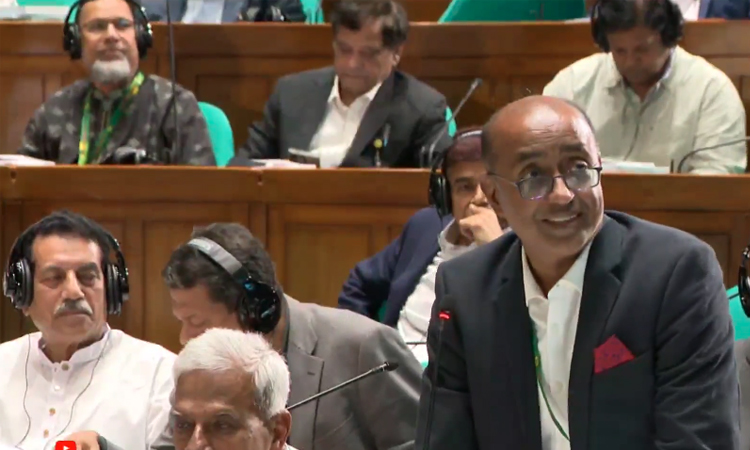
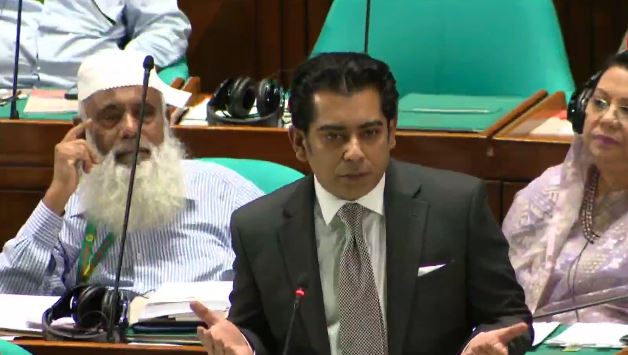
SANGSAD BHABAN, March 31, 2026 (BSS) - Law Minister Md. Asaduzzaman today said that all reform initiatives must be implemented within the framework of the Constitution, stressing that the constitution remains the supreme legal foundation of the state and parliament.
He said this while taking part in a discussion on the motion for summoning the session of the Constitution Reform Council in parliament today.
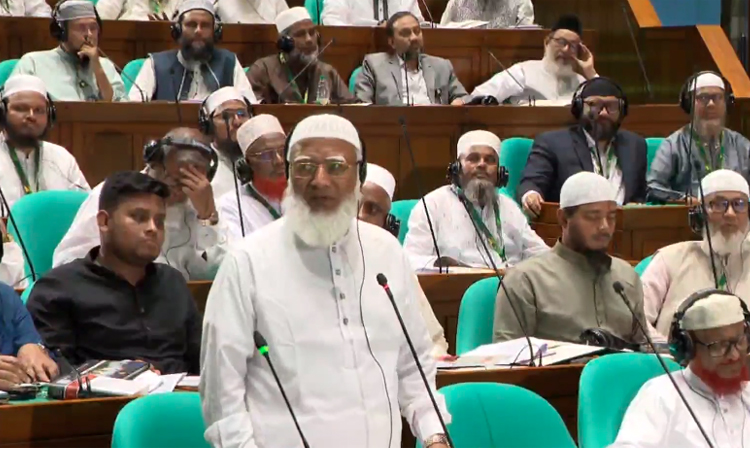
Opposition Leader Dr Shafiqur Rahman placed the motion in the House under the Section 62 of the Rules of Procedure for summoning the session of the Constitution Reform Council in line with July National Charter (Constitution Reform) Implementation Order, 2025.
The Law Minister said that opposition members who questioned the legitimacy of the constitutional process should carefully read the relevant ordinance and provisions.
He said the July Charter is the central focus of current political discourse and that it represents the public mandate following the July 24 mass uprising. "The people have given us the mandate to conduct all activities under the constitution and bring necessary reforms through parliament," he said.
The law minister explained that the July Charter outlines reform measures that must be adopted through parliamentary processes rather than through extra-constitutional means.
Highlighting key constitutional commitments in the July Charter, Asaduzzaman referred to provisions on women's representation and the proposal to appoint a deputy speaker from the opposition.
He noted that the government had demonstrated commitment to democratic values by offering the deputy speaker position to the opposition in line with the July Charter spirit.
The minister stressed that the Constitution is deeply connected with the sacrifices of the Liberation War martyrs and the democratic struggles of the people, adding that the constitution has been amended at different times to restore democracy, judicial independence and multi-party governance.
He recalled the restoration of parliamentary democracy in 1991 under Begum Khaleda Zia and said that constitutional continuity and democratic reform have always been achieved through parliamentary processes. "Our commitment is to move forward through constitutional amendments in line with the July Charter and the people's mandate," he added.
Asaduzzaman further stated that any order or directive without constitutional backing cannot be treated as law, explaining that ordinances issued under Article 93 of the constitution carry legal validity, whereas other orders without constitutional authority cannot bind parliament.
He emphasized that parliament is sovereign in law-making and cannot be compelled by unauthorized orders.
The law minister also highlighted historical precedents, noting that many countries adopted constitutions through political consensus and parliamentary processes. He said Bangladesh must follow the same path by amending the constitution through a parliamentary committee and democratic deliberation.
Welcoming the proposal to form a special parliamentary committee on constitutional reform, he urged the Speaker to constitute a committee where all parties can discuss and analyze the July Charter provisions and bring a constitutional amendment accordingly.
"The July Charter should guide reforms, but all actions must be taken through constitutional and parliamentary procedures," he said, adding that national unity and democratic consensus are essential for sustainable constitutional reform.