News Flash
SANGSAD BHABAN, June 28, 2026 (BSS) - Water Resources Minister Md. Shahiduddin Chowdhury Anee today said the government is firmly committed to
implementing the Teesta Master Plan to ensure a permanent solution to the Teesta River's problems and transform the economy of the country's
northwestern region, adding that China has assured full technical support for the initiative.
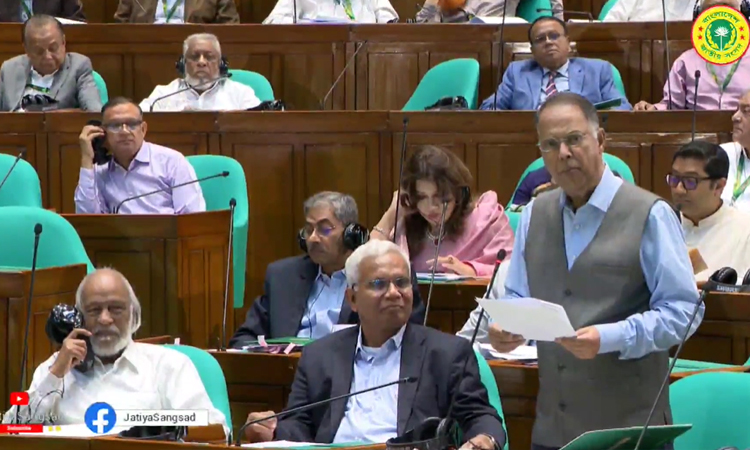
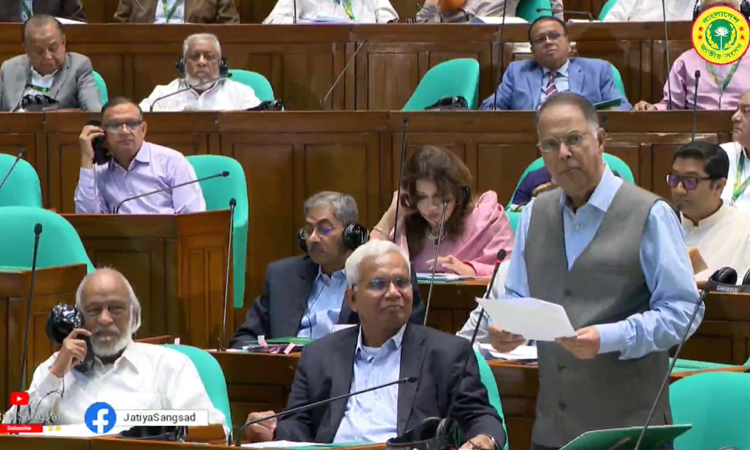
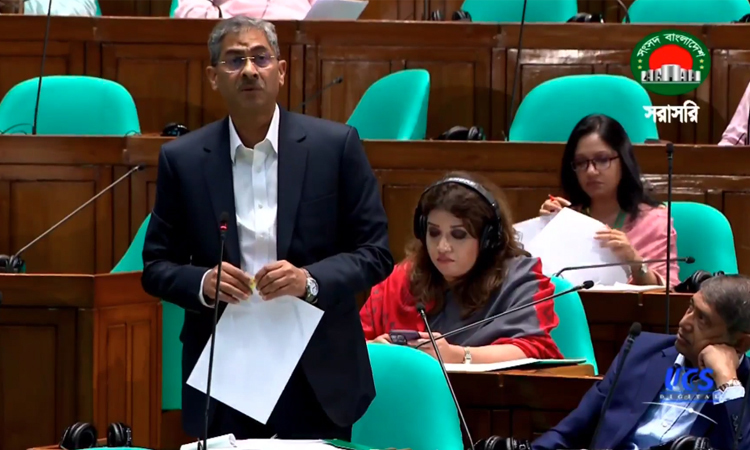
Participating in the discussion on the proposed national budget for FY2026-27 in the Jatiya Sangsad, he said millions of people continue to struggle with
river erosion, water scarcity and floods, while those living along nearly 4,000 kilometres of erosion-prone riverbanks, including the Teesta, Padma,
Meghna, Jamuna and Brahmaputra, face constant uncertainty.
"People affected by river erosion do not understand budgets; they simply want to survive. Riverbank erosion is occurring somewhere in the country every moment. Ensuring a permanent solution for these people is our goal," he said.
The minister said that before visiting the Teesta basin on July 19, he met Prime Minister Tarique Rahman, who instructed him to convey the government's commitment to the people of the Teesta region.
According to him, the Prime Minister directed that work on implementing the Teesta Master Plan would move forward during the current fiscal year to
fulfil the long-standing aspirations of nearly 70 million people in the country's northwestern region.
"He asked me to assure the nearly 20 million people living along the Teesta that, whatever name the project carries, we will move ahead with its implementation during this fiscal year," Anee said.
The minister said he accompanied the Prime Minister during his recent visit to China, where the Teesta project featured prominently in meetings with
China's Minister of Water Resources, Premier, National People's Congress leaders and finally the Chinese President.
He said the Chinese President, an expert on water resources management and author of books on the subject, assured Bangladesh of China's cooperation in finding a lasting solution to the Teesta issue.
According to Anee, China has pledged not only to support the Teesta project but also to cooperate in improving Bangladesh's overall river management system.
He said China has agreed to provide the necessary technical assistance for implementing the Teesta Master Plan. Bangladesh has already formed a team of
experts and initiated the required surveys. A world-class project will be developed after completing the studies with the participation of both local and international experts.
"We will ensure the necessary budgetary allocation and move forward with implementing a world-class Teesta Master Plan," he said.
Referring to the proposed Padma Barrage Project, the minister said the government has already decided to implement the long-awaited project for the northwestern region and the tender process will begin soon.
He said farmers in the region suffer significant production losses every year due to inadequate water during the dry season, particularly in March and April.
He added that insufficient flow in the Mathabhanga, Ichamati, Barasia and other rivers and canals connected to the Padma has caused waterlogging while
also affecting the ecological balance of the Sundarbans. The Padma Barrage would help address these problems and significantly increase agricultural production.
The minister said implementation of both the Teesta Master Plan and the Padma Barrage Project would bring transformative changes to agriculture, irrigation, inland navigation and the overall economy of northern Bangladesh.
He also said the government has completed emergency riverbank protection works along nearly 500 kilometres of riverbanks over the past four months.
In addition, the government has set a target of re-excavating 20,000 kilometres of canals nationwide, with plans to expand the programme to 25,000 kilometres if necessary.
He said canal re-excavation would not only improve water flow but also
strengthen irrigation, rural connectivity, agricultural production and local
economic activities.
Highlighting the benefits of the government's Family Card programme, Anee
shared the story of a beneficiary from his constituency. Asked how she would
spend the monthly allowance of Tk 2,500, the woman said she would use Tk
1,000 for family healthcare, another Tk 1,000 for her two children's
education and save the remaining Tk 500.
"The response demonstrates that the government's social safety net programmes are bringing tangible changes to people's lives and encouraging them to plan for the future," he said.
The minister said public welfare remains at the centre of every initiative undertaken by the Ministry of Water Resources, adding that the government is
working to improve people's quality of life through river erosion control, expanded irrigation, canal re-excavation and implementation of the Teesta Master Plan.