News Flash
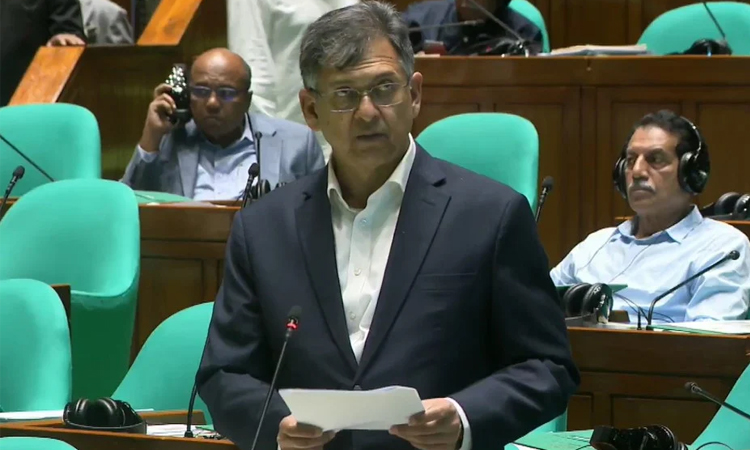
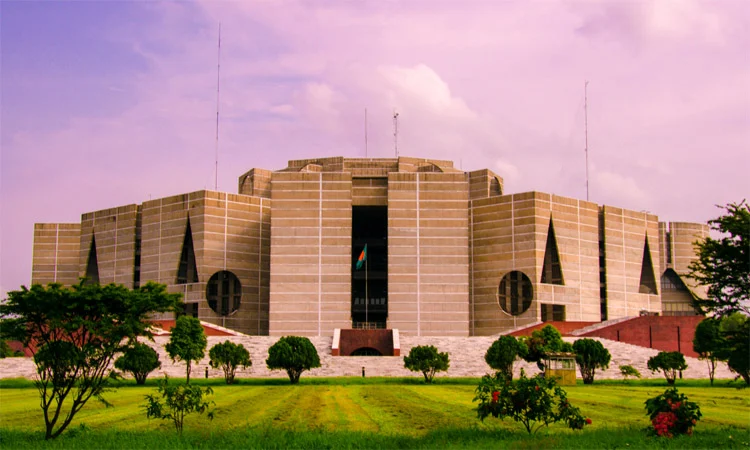
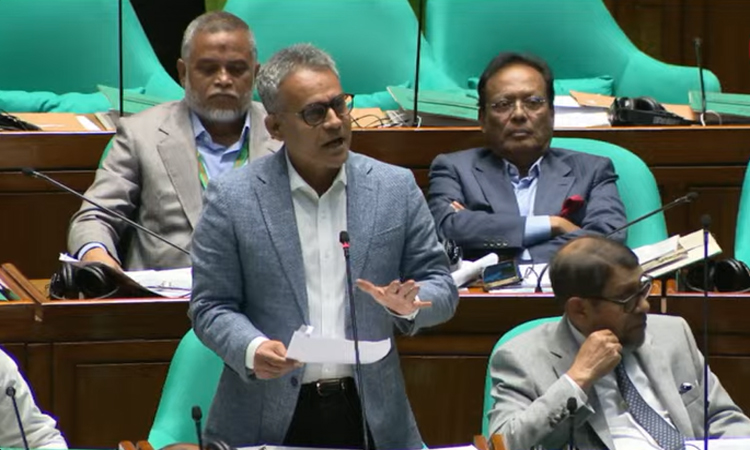
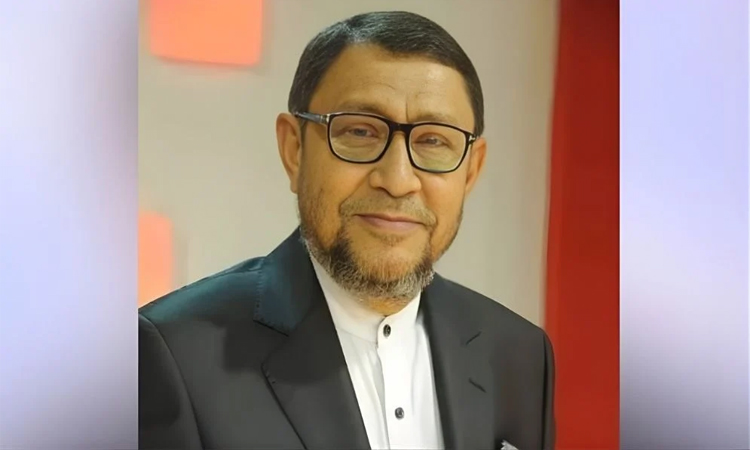
SANGSAD BHABAN, Sept 7,2026 (BSS) – Home Minister Salahuddin Ahmed today said the government will bring the fast growing non-motorized battery autorickshaw under registration aiming to bring an order in the city’s traffic management system.
The illegal electricity use due to charging the battery-run autorickshaw causing a revenue loss of nearly Taka 4,000 crore yearly by the government, he said.
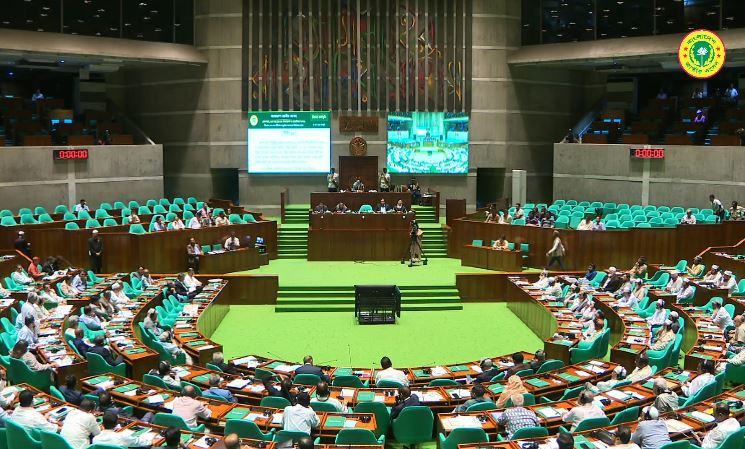
The home minister said this while responding to an emergency notice brought by BNP lawmaker Rehana Akhter Ranu of women seat -4 under rule 71 of the rules of procedure at the Jatiya Sangsad here.
Deputy Speaker Barrister Kayser Kamal was in the chair.
“The government already has formulated a policy aiming to bring all the non-motorized battery autorickshaw under registration as these non-motorized vehicles can be tracked by the traffic authority”, he said.
The spreading of huge battery-powered autorickshaws, easy-bike and such similar battery-run vehicles have created a non-formal economic activities and huge employment for the last one decade, but quick and uncontrolled dissemination of such non-motorized vehicles posing an important challenges on electricity management, road security, traffic congestion, environment pollution, public health and institutional authority.
The home minister said charging of such huge number of vehicles at a time resulting to create extra pressure on the local electricity distribution system, commercial use of unapproved or residential connection, extra load on transformer and distribution line and increasing electricity demand during the peak hour.
Even these vehicles are using nearly 5 percent of the electricity generated by the country.
The country has nearly 3300 legal charging stations against the huge demand while 48000 illegal charging stations are being operated solely in the Dhaka city which ultimately creating huge pressure on the national grid and local power distribution system, the minister added.
On the other hand, unsafe management and non-formal recycling of lead-acid battery used by the battery-run vehicles, lead contamination, soil and water pollution ultimately posing serious health hazard for the children and workers in the country.
Even the smoke which is being emitted from the battery recycling also posing severe air pollution and damaging the adjacent poultry firms.
Quoting a statistics of road accident in 2025, Salauddin Ahmed said around 6729 road accidents were happened during that time, adding that 9,111 were killed and 14,812 injured where 13.54 percent battery-run auto-rickshaws were involved with these incidents.
Although there is no definite count, the Bangladesh Road Transport Authority (BRTA) estimates that there are over 60 lakh battery-run rickshaws in the country with 10 to 12 lakh operating in Dhaka alone.
To bring discipline in their operation, the draft of the 'Electric Three-Wheeler Management Policy 2025' has been prepared by the Road Transport and Highways Division under the Road Transport and Bridges Ministry.
As per the draft policy, all battery-operated three-wheelers must be registered with the Bangladesh Road Transport Authority (BRTA) and drivers must obtain valid driving licenses.
The vehicles will be restricted to designated routes outside national highways with separate limits set for medium- and low-speed electric three-wheelers.
A passenger and goods transport committee formed under the Road Transport Act will determine how many vehicles can operate in an area.
According to the Road Transport and Highways Division sources that the uncontrolled growth of fitness-lacking battery-run rickshaws has disrupted traffic systems nationwide.
"We hope the policy will be approved very soon. Once implemented, it will end the ongoing disorder caused by unregulated electric rickshaws," he added.
As per the draft,he said, one person can own a maximum of three medium-speed and five low-speed rickshaws.
All rickshaws must be transformed into safe models within a year, according to the draft.
It says medium-speed rickshaws will be limited to a maximum speed of 50 km/h, and low-speed rickshaws to 30 km/h.
The vehicles must be constructed following BRTA-approved designs and only parts and components approved by the Bangladesh Standards and Testing Institution (BSTI) will be allowed.
All components such as motors, controllers, gearboxes, axles, wheels, brakes, headlights, shock absorbers, batteries and chargers must be BSTI-approved and manufacturers and assemblers must be registered with BIDA (Bangladesh Investment Development Authority).
All imported or locally assembled electric three-wheelers and parts must have BRTA approval and only new vehicles and new parts (BSTI-approved) can be imported.
Charging stations must comply with the 2021 guidelines issued by the Power Division.
BRTA will set fares for these vehicles.
Manufacturers must be listed by BRTA and cannot operate without being listed.
The vehicle must display the owner and driver's contact numbers visibly for passengers.
BRTA will arrange district-level training for drivers in consultation with local transport committees.
According to the draft, electric three-wheelers will not be allowed on national highways except in service lanes.
These will be allowed to operate in designated areas, including city corporations, 'A' category municipalities, district, upazila and union-level local roads.
Only local passengers and goods transport committees will determine the number and route allocations in these areas.
On the matter of penalties, the draft clearly states that violations will be addressed as per the Road Transport Act 2018, and necessary legal action will be taken against offenders.
Regarding the timeline, all current unsafe low-speed vehicles must be converted to safe models within one year as per the Electric Motor Vehicle Registration and Operation Policy 2023.
After this deadline, unapproved vehicles will be subject to legal action.
The draft also stressed the need for a complete phase-out of unauthorized locally made vehicles such as diesel and petrol-engine vehicles used in agriculture and waterways.
Local transport committees are to replace them with approved alternatives.