News Flash
By Md Shariful Islam
CHAPAINAWABGANJ, May 16, 2026 (BSS) - Vast stretches of water during the monsoon and endless sandbanks in the dry season due to the Farakka barrage - this is now the reality of the Padma, Mahananda, Pagla and Punarbhaba rivers, the lifelines of the district.
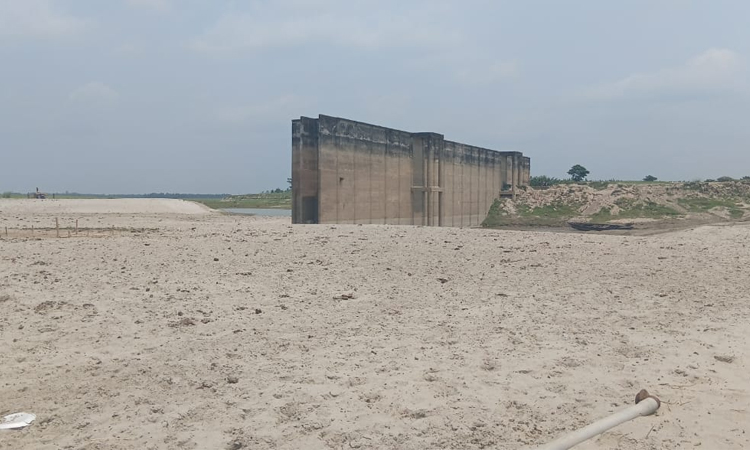
During this Bengali month of Baishakh, the rivers are barely recognizable, with only thin streams of water flowing through otherwise barren sandy expanses.
Today marks the anniversary of the historic Farakka Long March. On May 16, 1976, veteran political leader Maulana Abdul Hamid Khan Bhashani led a historic protest march against India's Farakka Barrage. At that time, Bhashani warned that the construction of the barrage on the Ganges would reduce the water flow in Bangladesh's rivers and lead to the emergence of sandbars.
Five decades later, experts say those warnings have become a reality. According to them, the Farakka Barrage is the main reason behind the drying up of the rivers.
The Padma, Mahananda, Pagla and Punarbhaba rivers in Chapainawabganj are now nearly dead. Large sandbanks have emerged across wide areas, threatening agriculture, biodiversity and river-based livelihoods.
Local residents say the natural flow of the rivers now largely depends on India's decision regarding water release. During the monsoon, sudden releases of excessive water often trigger floods and severe river erosion.
Kabirul Haque, 65, a resident of a char area at Alatuli union of Chapainawabganj Sadar upazila, told BSS that the Padma once carried water throughout the year, but now people can walk across parts of the river during the dry season. He said fishermen are struggling as fish productions have sharply declined, creating the uncertainty in their livelihoods.
Jamal Uddin, a fisherman from Panka Union under Shibganj upazila, said the river is eroding in some places while drying up in others. As a result, people are losing land and crop production is being disrupted due to water shortages.
"Once, the Padma provided abundant fish," he said. "Now there is a very little water in the river, so fish have also become scarce. It has become difficult to support our families."
Panka Union Parishad Chairman Abdul Malek said the issues that prompted Bhashani to launch the anti-Farakka movement still remain unresolved. He urged the authorities concerned to ensure the natural flow of the rivers.
Executive Engineer (Ex En) of the Bangladesh Water Development Board (WDB) in Chapainawabganj Md. Ahsan Habib said the long-term impact of the Farakka Barrage has reduced the navigability of the district's rivers. Due to insufficient water during the dry season, maintaining the rivers' normal flow has become difficult. However, the WDB is working on various plans to restore navigability and conserve water, he added.