News Flash
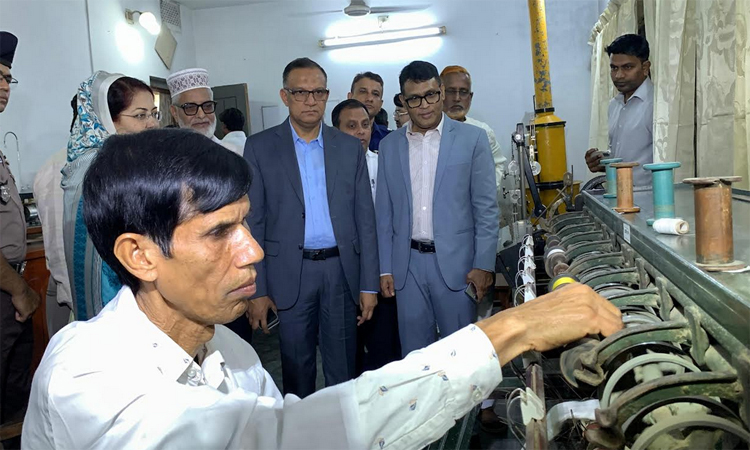
RAJSHAHI, April 11, 2026 (BSS) - State Minister for Textiles and Jute Md. Shariful Alam said the government has begun field-level initiatives to modernise the traditional silk industry and restore the lost glory of Rajshahi silk, describing it as a national heritage.
He made the remarks after inspecting the Rajshahi Sericulture Research and Training Institute today, where he reviewed the current state of the sector and outlined plans for its development.
"Rajshahi silk is not just an industry; it is part of the country's heritage and pride," the state minister said, adding that the government is working to revive the sector through modern technology, research and training.
He said the visit was aimed at assessing field-level challenges and identifying necessary steps to rejuvenate the industry.
Highlighting its historical background, Shariful Alam noted that the Rajshahi Silk Board was established in 1977 under the leadership of former President Ziaur Rahman. He added that former Prime Minister Khaleda Zia also undertook various initiatives to support the board.
Under the guidance of Prime Minister Tarique Rahman, the government has now set a target to modernise the industry further through research and innovation, he said.
The state minister said the country currently requires 400 to 450 metric tonnes of silk annually, but nearly 90 percent of the demand is met through imports due to the decline of local factories.
To address this, the government is prioritising research to improve sericulture practices, develop mulberry cultivation and enhance the quality of silk yarn, he added.
Shariful Alam also voiced concern over the declining number of traditional artisans, locally known as 'Bosnis'. He said there are around 11,500 Bosnis in the country, but their numbers are gradually decreasing due to ageing.
"If the next generation is not trained, there is a risk that this heritage could be lost," he warned.
He further said the government plans to reopen closed factories, expand market access and attract both local and foreign investment, noting strong export potential in markets such as China and Japan.
Earlier, Director General of the Bangladesh Silk Development Board Md Toufiq Al Mahmud presented an overview of the board's activities.
Among others present were Textiles and Jute Ministry Secretary Bilkis Jahan Rimi, Rajshahi Zilla Parishad Administrator Advocate Ershad Ali, Rajshahi Deputy Commissioner Kazi Shahidul Islam and senior officials.