News Flash
DHAKA, April 12, 2026 (BSS) - A group of experts in the country today said that fever alone should not immediately be assumed to be measles and emphasized that if rash appears after four days, the patient should be placed in isolation.
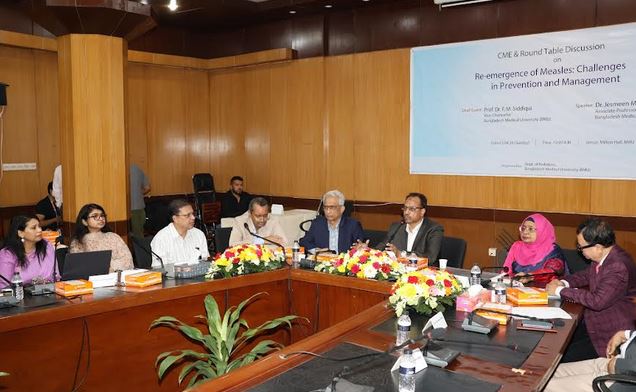
The observations were made at a roundtable discussion organised by the Department of Pediatrics of Bangladesh Medical University (BMU) at Shaheed Dr Milton Hall of the university.
The discussion highlighted the growing concern over the resurgence of measles among children in the country and stressed the need for adopting effective prevention and management strategies.
The experts also warned that the re-emergence of measles signals a potential major public health risk. They urged the authorities to identify the gaps in vaccination programs and take necessary measures promptly.
The event was attended by leading medical experts from various medical colleges along with public health specialists from the World Health Organization, UNICEF, and the ICDDR,B.
BMU Vice Chancellor (VC) Professor Dr F M Siddiqui attended the function as the chief guest while Dean of the Faculty of Pediatrics Professor Dr Md Atiar Rahman moderated the session.
The participants emphasized strengthening immunization programs, implementing effective isolation measures and adopting integrated disease management strategies. They also noted that although measles is preventable through timely vaccination, recent gaps in immunization coverage and lack of awareness have contributed to rising infections.
Professor Siddiqui said that the recommendations from the discussion should be conveyed to policymakers and that proper utilization of allocated vaccine funds must be ensured.
He also highlighted the need to consider introducing booster doses for adolescents and called for large-scale research on immunity among the pregnant women.
The experts also expressed their concern that measles infections are now being detected even in infants less than six months of age, challenging the previous assumptions about maternal immunity. This indicates that maternal antibodies may not be sufficient in all cases. As a result, they recommended considering additional vaccination strategies for the adolescents.
The keynote paper was presented by Associate Professor Dr Jesmin Morshed, who noted that an isolated ward for measles patients already exists at the university and emphasized the urgency of strengthening timely vaccination efforts.
The discussion also underscored the importance of coordinated case management, avoiding unnecessary use of antibiotics, enhancing case-based surveillance, increasing public awareness and strengthening community engagement. Greater emphasis was also placed on preparedness, research and capacity building to face the future outbreaks.