News Flash
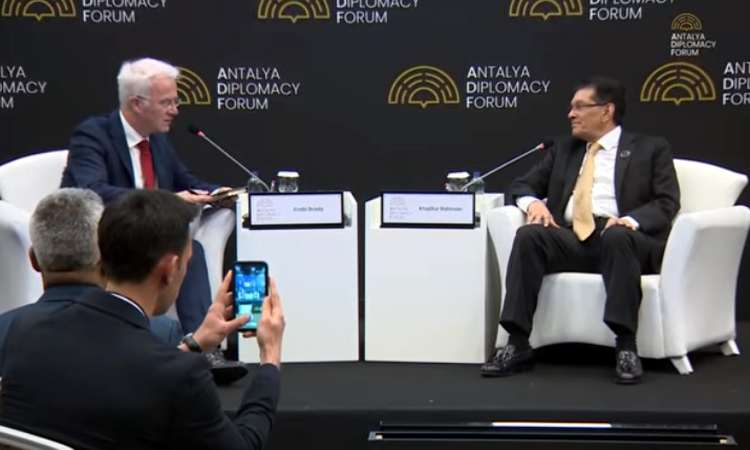
DHAKA, April 29, 2026 (BSS) – Foreign Minister Dr Khalilur Rahman has urged coordinated international action to contain the global energy crisis, warning that developing countries could face severe economic shocks if supply disruptions persist.
Speaking at an interview during ADF Talks on the sidelines of the Antalya Diplomacy Forum recently, he said the present turmoil in energy markets could have consequences broader than the oil shocks of the 1970s if left unresolved.
“Young nations and developing economies suffered deeply in the 1980s after earlier oil shocks. We do not want a repetition of history,” he said.
The minister said Bangladesh, being a net energy-importing country, remains vulnerable to fluctuations in oil, LPG and fertiliser supplies, particularly as the country depends on imports routed through key maritime channels.
He stressed the importance of keeping strategic sea lanes open for navigation and global commerce, saying the free flow of trade through maritime routes is essential for economic stability.
Dr Rahman said any prolonged disruption would affect agriculture, industry and household energy consumption in Bangladesh, especially during the current sowing season when diesel and fertiliser demand is high.
Despite global pressure, he said the government is trying to shield citizens from excessive hardship through prudent measures, including energy conservation, fuel rationing and adjustments to office and institutional schedules.
On domestic politics, the foreign minister described the February 2026 parliamentary elections as one of the most peaceful in the country’s history, saying people celebrated the restoration of democratic rights.
He said the landslide victory of the ruling BNP brought immense responsibility and the government had already launched people-centric programmes such as family cards for disadvantaged households and farmers’ cards for agricultural support.
Outlining Dhaka’s foreign policy, Dr Rahman said Bangladesh would pursue a “Bangladesh First” approach, prioritising national interests while maintaining balanced and mutually beneficial relations with all countries.
“Bangladesh First does not mean Bangladesh alone,” he said, adding that the policy is rooted in mutual respect for sovereignty, territorial integrity and national dignity.
Regarding his candidacy for President of the UN General Assembly, the minister said his long diplomatic experience at the United Nations would enable him to assume responsibilities from day one if elected.
He said he would work for all member states, while keeping the concerns of the Global South, smaller nations and vulnerable countries at the centre of his agenda.
Dr Rahman also praised the Antalya Diplomacy Forum as a valuable platform for dialogue, saying he was impressed by the quality of discussions and bilateral engagements held there.