News Flash

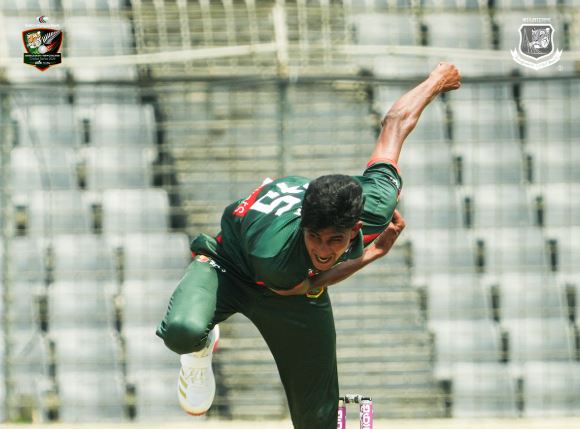
Dhaka, April 20, 2026 (BSS) - Bangladesh fast bowler Nahid Rana attributed his
match-winning five-wicket haul to improved execution and sustained fitness
after bouncing back from an expensive outing in the previous game.
Nahid, who conceded 65 runs in his last match, said inconsistency is part of
a fast bowler's journey but sticking to plans made the difference this time.
"Every day is not the same for a player. The previous match was not my day as
I couldn't execute my plans properly. Today, I focused on execution and it
worked," he told reporters after the match.
He claimed 5-32, his second five-wicket haul in his brief career, today to
wrap up New Zealand innings for just 198 in 48.3 overs. Bangladesh batters,
then led by Tanzid Hasan Tamim's 58 ball-76 and Najmul Hossain Shanto's 50,
chased down the target with ease, guiding the side to six-wicket victory.
Nahid impressed with consistent high pace throughout his spell, maintaining
speeds above 145 km/h despite the intense heat.
"Alhamdulillah, I am fit. I work with trainers outside practice - gym,
running, and maintaining myself - so that I don't feel tired during matches,"
he said.
Nahid also highlighted his emphasis on delivering impact performances rather
than chasing individual milestones.
"I always try to contribute to the team. Whether it's an over or a spell, if
it helps the team win, that's what matters most," he added.
He said he learned from his mistakes in the previous match and applied those
lessons effectively.
"The wicket was good in the last match as well, but my execution wasn't. This
time I corrected those mistakes," he said.
Providing an update on teammate Najmul Hossain Shanto, who had to retire hurt
after reaching his half-century, Nahid said the batter's discomfort was due
to cramps caused by heat and workload.
"He fielded and batted for a long time in hot conditions, so it was just
cramps. He is fine now," he confirmed.
On managing workload and injury risks, a concern for Bangladesh pacers in the
past, Nahid said the team management closely monitors players.
"There are physios and trainers who manage our workload. They decide how many
matches we should play, so everything is well managed," he said.
Asked about his approach in balancing wicket-taking and run control, Nahid
said he adapts according to match situations.
"It depends on what the situation demands whether taking wickets or
controlling runs. I try to respond accordingly," he noted.
Nahid further said coordination among the pace unit, including sharing
information on conditions and strategies during matches, has been crucial in
improving collective performance.