News Flash
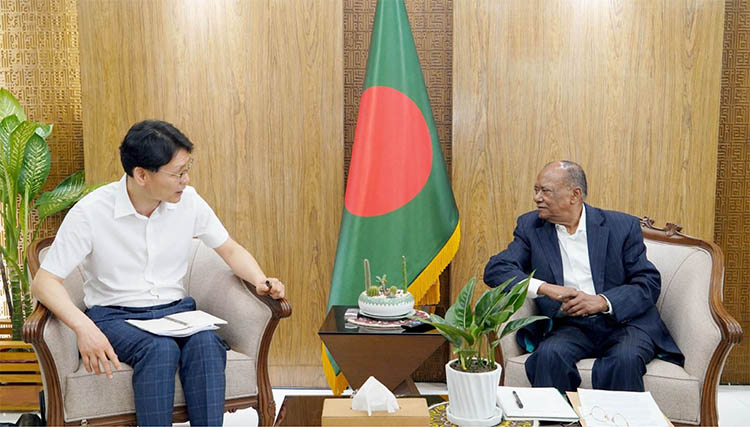
DHAKA, March 30, 2026 (BSS) – Dr Rashed Al Mahmud Titumir, Prime Minister’s Adviser on Ministry of Finance and Planning, has called upon Japanese investors to significantly increase their footprint in Bangladesh, urging a shift from traditional Official Development Assistance (ODA) toward robust private sector investment in manufacturing and technology transfer.
“While Japan has been a long-term partner in Bangladesh's development through ODA, the current government seeks a new economic model where investment leads to production, employment generation, and sustainable growth,” he said.
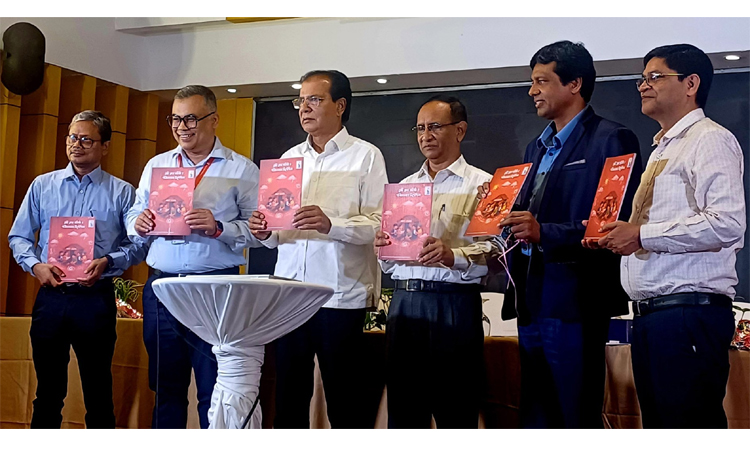
The adviser made the remarks while speaking as the chief guest at an event marking the Japan Business Day at a hotel in the city today.
The Embassy of Japan and the Japan External Trade Organization (JETRO) Dhaka Office organised the event.
Chowdhury Ashik Mahmud Bin Harun, Executive Chairman of the Bangladesh Investment Development Authority (BIDA), also spoke on the occasion as the chief guest.
In his speech, Titumir emphasized the deep civilizational and historical ties between the two nations, symbolized by the ‘rising red sun' shared in both national flags.
He noted that while Japan has been a long-term partner in Bangladesh's development through ODA, the current government seeks a new economic model where investment leads to production, employment generation, and sustainable growth.
The adviser urged Japanese stakeholders to ensure that their investment in Bangladesh exceeds the average per-country parity for Japanese global investments.
He specifically invited Japanese firms to invest in the manufacturing sector, highlighting that this is essential for creating sustainable jobs and upholding labour and human rights.
"We would really like to see that Japan is investing in manufacturing because ... that would ensure sustainable jobs," the adviser stated, adding that the embassy should act as a champion for driving this investment flow.
He proposed a model of joint ventures where risks and profits are shared between Bangladeshi and Japanese partners, citing this as a potential global best practice to avoid debt-related concerns.
To reassure investors, the adviser highlighted the government's track record and commitment to deregulation, liberalization, and privatization.
The adviser stressed that the interim government is focused on walking the talk through concrete administrative mind-set changes.
He expressed hope for a future epoch-making summit between the Prime Ministers of Bangladesh and Japan to solidify these future-oriented steps.
"We are looking forward to moving from the talking ... to seeing that we walk the talk," he concluded, while extending an invitation for the Japanese Prime Minister to visit Bangladesh at a convenient time.
In his speech, Chowdhury Ashik Mahmud Bin Harun, signalled a fundamental paradigm shift in the nation’s economic relationship with Japan, announcing a transition from an "aid-based" model to an "investment-based" story.
Addressing the investment climate, Chowdhury highlighted the post-election environment as a cornerstone of social and political stability.
He characterized the recent national elections as "free, fair, and festive," noting that the resulting majority government provides international partners with the continuity and comfort necessary for long-term capital commitments.
The Chairman identified the ongoing Economic Partnership Agreement (EPA) negotiations with Japan as a historic trade milestone.
Asserting that the EPA is not just another crazy trade document, he described the agreement as a foundational benchmark for Bangladesh’s future economic engagements.
He acknowledged the rigorous 1.5-year negotiation process, highlighting the challenges overcome in navigating the system to establish this inaugural agreement.
The EPA serves as a clear signal of intent to the Japanese business community that Bangladesh is open to business and fully committed to the Japanese investment narrative, he added.
Having established this initial framework, the Chairman expressed confidence that Bangladesh is now positioned to successfully negotiate multiple EPAs with other nations over the next three to five years.
Chowdhury revealed that the government intends to transfer sick and unused assets to the private sector to catalyze growth.
"These are actually very good assets, but they are effectively costing taxpayer money," the Chairman stated, emphasizing the need to transform liabilities into productive entities.
By inviting local and foreign investors to revitalize these assets, the government aims to generate employment and create new economic development case studies, he added.
While acknowledging that time-consuming tax procedures and licensing regimes still require significant reform, he reiterated that the administration’s top levels are committed to a private sector-led economic model.
The Executive Chairman lauded the JETRO survey as the government’s most structured feedback tool but noted a critical need for more real-time data.
He observed that the current survey results are pre-election and reflect data from last year, resulting in a lag that can hinder responsive decision-making.
In a notable move toward transparency, Chowdhury challenged the investor community to hold the government accountable.
He requested that investors use the specific metrics in the next survey to evaluate whether BIDA’s 180-day plan and the government's manifesto have successfully moved the needle on investor concerns.
"If we do not improve in some of these specific metrics, you should hold us accountable," he added.
Reflecting on the long drawn history between the two nations, the Chairman cited major flagship projects such as the Japanese Economic Zone and the construction of Terminal 3 at Hazrat Shahjalal International Airport as evidence of a special relationship.
Concluding his remarks, Chowdhury urged Japanese investors to maintain a continuous loop of candid feedback.
He reaffirmed BIDA’s commitment to turning investor concerns into opportunities, ensuring that the Bangladesh-Japan partnership remains a premier example of successful economic cooperation.
At the closing remarks of the event, Shinichi Saida, Ambassador of Japan to Bangladesh, highlighted that the EPA represents a fundamental shift in the economic and diplomatic landscape between the two nations.
He called for a multi-sectoral approach to navigate the complexities of the new economic landscape.
He emphasized that the success of the bilateral relationship depends on a Triple Helix of cooperation involving the public sector, private sector, and academia.
These three pillars must work together jointly to build upon the foundation laid by the EPA, he added.
The ambassador concluded by emphasizing the necessity to further deepen dialogue across every field to ensure the partnership continues to evolve effectively.