News Flash
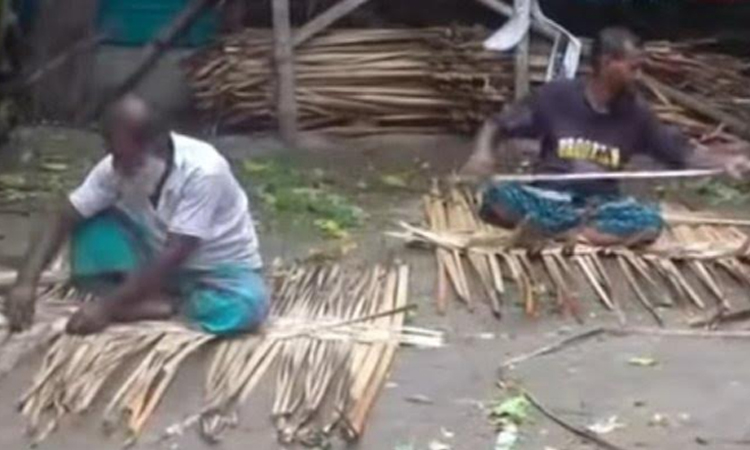
KHULNA, July 3, 2026 (BSS) – Once known as a crime-prone village, Anandanagar in Terokhada upazila of Khulna has transformed into a thriving centre of traditional hogla mat production, earning nationwide recognition as the "Hogla Mat Village".
The village, under Ajgora Union, is now home to a flourishing cottage industry where more than 200 families are directly or indirectly involved in producing eco-friendly mats made from hogla reeds.
The mats are supplied to districts and upazilas across the country, creating sustainable livelihoods and contributing significantly to the local economy.
Hogla, a naturally growing reed found along riverbanks, canals, wetlands and marshes, was once largely ignored. Today, it has become the primary source of income for hundreds of villagers, reshaping the socio-economic landscape of Anandanagar.
Mat weaving is a common sight in courtyards and open spaces throughout the village. Alongside men, women play a vital role in the production process, weaving mats during their spare time and making valuable contributions to household incomes.
Talking to BSS, local trader Ebadat Molla said many families depend entirely on the industry for their livelihoods.
“Demand remains steady throughout the year, but sales increase several-fold ahead of Eid-ul-Azha. During the festival season, we have to increase production to meet market demand," he said.
Local traders and artisans said the mats produced in Anandanagar are marketed not only in Terokhada but also in Khulna, Jashore and many other districts through wholesale traders.
Hundreds of mats are transported daily to markets across the country, creating an extensive distribution network.
Artisans, including Billal Hossain and Parul Begum, said the village has been producing hogla mats for nearly five decades. Currently, around 400 to 500 mats are produced every day, generating substantial annual turnover and strengthening the rural economy.
Environmentalist Mahmudul Hasan told BSS that demand for products made from natural materials is increasing as environmental awareness grows.
"Hogla mats are completely eco-friendly, and their demand has remained strong for many years. The industry is contributing positively to both environmental protection and the rural economy," he said.
He added that the mats are widely used for transporting vegetables, religious events, social functions and various household purposes in rural areas. Demand rises sharply during Eid-ul-Azha, leading to increased production and sales.
Elderly resident Atiar Rahman said what was once considered a neglected natural resource has now become a source of economic empowerment for many families.
"The entire process—from collecting and drying hogla leaves to processing and weaving the mats—involves a large number of villagers. It has evolved beyond a cottage industry into a vibrant rural economic activity," he said.
He also noted that the growing preference for environmentally friendly products over plastic and synthetic alternatives is expanding the market potential for hogla mats across the country.
Mahmudul Hasan, however, said the industry still faces several challenges, including limited access to capital, inadequate marketing facilities and insufficient institutional support.
He suggested that easy-term loans, technical training and greater government patronage could help expand production and unlock the industry's full potential.