News Flash
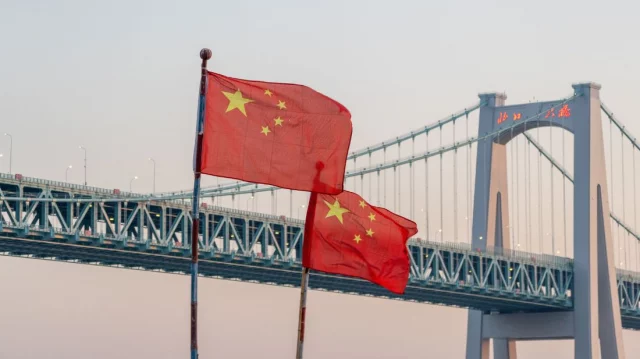
BEIJING, June 29, 2026 (BSS/AFP) - China put 20 more Japanese organisations
on a blacklist Monday over the export of items with both military and
civilian possible uses, adding fuel to a months-long row with Tokyo.
The new additions, including major companies, "have participated in enhancing
Japan's military capabilities", the Chinese commerce ministry said in a
statement.
Japan's government spokesman Minoru Kihara called the measures "unacceptable
and deeply regrettable" and said Tokyo had "lodged a strong protest and
demanded that the measures be withdrawn".
The two countries have had strained relations since Japanese Prime Minister
Sanae Takaichi suggested in November that Tokyo may react militarily to an
attack on Taiwan, the self-ruled island Beijing has vowed to seize control of
by force if necessary.
China responded furiously, including by advising its citizens -- previously
the biggest cohort of foreign tourists -- to avoid Japan.
Chinese authorities ramped up pressure in February by imposing export
restrictions on dozens of Japanese firms over their alleged involvement in
building up the country's military.
The 20 additions to the export blacklist named Monday include specialised
subsidiaries and technology firms involved in supplying components and
engineering support for Japan's defence sector.
Among them are the National Institute for Defense Studies and Mitsubishi
Electric Defense and Space Technologies Corporation, the statement said.
China's commerce ministry said the controls require exporters to submit risk
assessments and guarantees that dual-use items will not enhance Japanese
military strength prior to making shipments.
Those named on the watchlist can apply to be removed by cooperating with
"verification" procedures according to Chinese law, the ministry said.
China is the world's largest producer and refiner of rare earths, which are
crucial for various high-tech products including electric vehicles,
smartphones, missile guidance systems and lasers.
Japan has "strayed further down the wrong path, intensifying its push for a
'new form of militarism'", an unnamed commerce ministry spokesperson said in
a statement on the latest measures.
- China-Russia patrols -
Since Takaichi took office in October, Japan has quickened its pivot towards
a more proactive defence policy, further shaking off -- with US encouragement
-- the pacifist outlook that has been in place since the end of World War II.
Tokyo has loosened rules on exports of lethal weaponry and deepened military
cooperation with other countries in the region at odds with China including
the Philippines.
Japan and the United States, as well as many other countries, are seeking to
curb dependence on China in rare earths.
Japan on Monday also joined South Korea in criticising joint flights by
Chinese and Russian bombers and fighters over the weekend.
Fellow US allies South Korea and Japan both scrambled fighter jets in
response to the patrols by the convoy of around 15 aircraft.
"This marks the 10th instance of such long-range activities by Chinese and
Russian bombers in the vicinity of Japan since December last year," Japanese
government spokesman Kihara said Monday.
Beijing's defence ministry said that the Chinese and Russian air forces had
conducted a "strategic air patrol... demonstrating their determination and
capability to jointly uphold regional peace and stability".
Japan's defence ministry separately said on Monday that several Chinese and
Russian navy vessel had been spotted sailing between islands in the
archipelago's south in recent days.
One vessel has been identified in Japan's north.
Tokyo last week also rejected Beijing's accusations that the Japanese
military "harassed" a Chinese aircraft carrier strike group during 40 days of
exercises in the Pacific.