News Flash

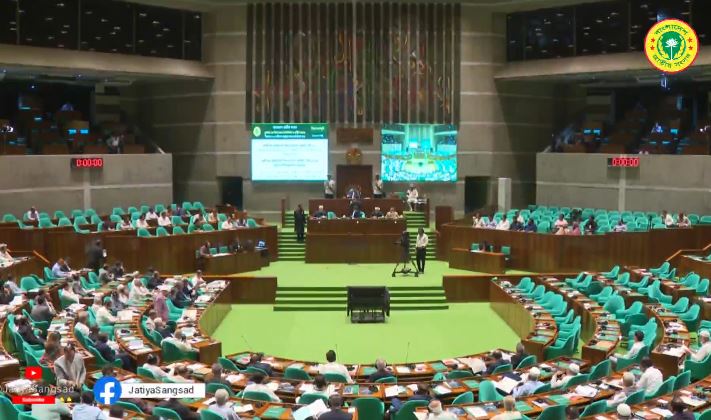
SANGSAD BHABAN, April 8, 2026 (BSS) - The "Public Accounts Audit Bill 2026" was passed in the Jatiya Sangsad today aiming to enhance transparency and accountability in public accounts, and ensuring the optimal use of public resources in alignment with the Constitution of Bangladesh.
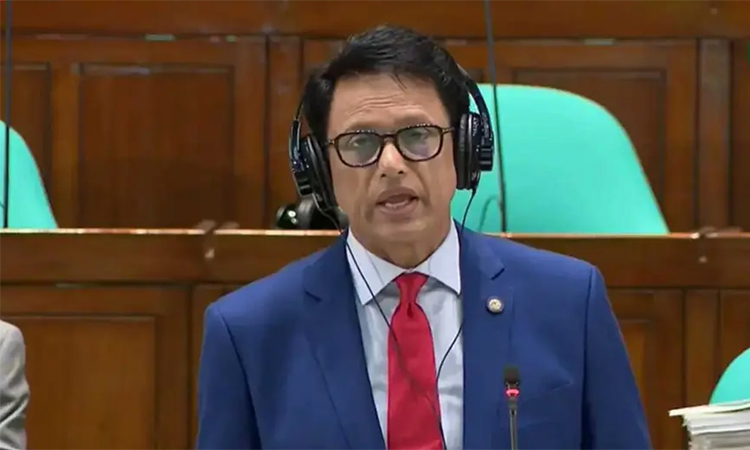
The bill moved by Finance Minister Amir Khosru Mahmud Chowdhury seeks to formalize and replace the "Public Accounts Audit Ordinance 2025," which was previously promulgated by the President under Article 93(3) of the Constitution when the Parliament was not in session.
The proposed legislation provides a comprehensive legal framework for the Comptroller and Auditor-General (C&AG) to audit all public accounts of the Republic, including courts, government authorities, and employees. According to the bill, the law will be deemed effective from May 4, 2025.
Key provisions of the bill grant the C&AG the authority to determine the scope, methodology, and timing of audits.
It specifically covers auditing all funds spent from the consolidated fund, examining the financial records of government-run commercial enterprises like the Railway and Postal departments, and auditing the government’s interest in Public-Private Partnership (PPP) projects.
It also allows for the verification of conditions tied to loans or grants provided to private organizations.
Moving beyond traditional financial auditing, the bill empowers the C&AG to conduct "Economy, Efficiency, and Effectiveness" audits.
This applies to all government offices, corporations, state-owned banks, and local government institutions where the government holds at least a 51 percent stake.
To ensure high standards, the C&AG is authorized to appoint external experts for specialized tasks and establish an independent oversight committee to review the professional ethics and performance of the office.
The bill mandates that once the President lays the audit reports before parliament, they must be made accessible to the general public.
Furthermore, the legislation establishes a mechanism for complaints and redress. If an audited institution raises valid concern regarding the professional conduct of auditors, the C&AG is required to initiate a formal investigation.
Regarding financial management, the bill grants the C&AG final authority over the office’s allocated budget, though government approval remains necessary for organizational restructuring or the creation of new posts.
The bill also allows the C&AG to enter into agreements with international audit agencies with prior government approval.
In the objective of the Bill, the minister said that as the Parliament was not in session, it was not possible to present it in the form of a bill in the Jatiya Sangsad.
In this context, the 'Government Accounts Audit Ordinance, 2025' was issued by the President.
The ordinance issued in accordance with Article 93 (4) of the Constitution must be presented in the Parliament in the form of the 'Government Accounts Audit Act, 2026'.
This provision has been sought to be made in the interest of ensuring transparency and accountability in financial management and the best use of government resources through the audit and reporting of the government accounts of the Republic, all courts, government authorities and employees by the Auditor General.
Later, the bill was passed by voice vote.